I have always appreciated succulents and I live in the part of the world where most of the world's popular and collectible succulent species are found. In an arid country like mine, it is encouraging to see a larger appreciation of these plants in the current climate of rising temperatures and water shortages. It makes sense to grow plants that are naturally adapted to hot, dry conditions than to waste scarce resources by creating gardens that cannot survive without regular watering.

Gardening with succulents has also became more popular worldwide and many growers are breeding colourful, interesting looking plants, enabling gardeners to create truly eye-catching displays although plants can only be grown outdoors all year round in warm, dry climates because most succulents are sensitive to frost and all will rot from too much water. Because succulents are easy to care for and many plants are naturally small, many are sold as indoor plants.
Although most succulents thrive on neglect, some people find it hard to grow them because they assume that all succulents should be treated like cacti. Cacti evolved to live in desert conditions of near-constant sun, high temperatures and very little water. Many non-cacti succulent plants aren't found in the desert but in areas of infrequent rainfall and evolved to conserve water. Many only grow in the shadow of rocks and other plants. While many succulents will be fine if you forget to water them, one of the quickest ways to kill succulents is to place them in the sun all day, or on a hot windowsill in a small pot, which will overheat the roots. Most do well with a few hours of direct morning sun only, although it also depends on growing location. The farther North or South of the equator, the weaker the sunlight and more light exposure will be needed. Many Northern Hemisphere succulent growers require grow lights to keep their plants alive during the winter months whereas people in hotter climates need to be wary of sunburn. Here is the same pot pictured above after a few really hot sunny days. While one plant cracked and almost died, others flourished. I have since split up the plants in that pot so that the ones with lower sun tolerance can grow in a safer spot. Luckily the burned plant, an Echeveria 'Painted Lady' will survive my carelessness.

Most succulents thrive when watered regularly but it is important to find out about the needs of the plant in question as water requirements can be quite variable. The main universal requirement for watering succulents is that the soil should drain quickly. Succulents do well in gravelly soils but not building sand, which has too many different-sized particles that tend to compact. Large particles allow roots to breathe and don't hold water for long periods, preventing rot. Too little water makes plants vulnerable to pests such as red spider mite or mealie bugs and it can be trial and error to get a plant's watering needs just right. Many pest infestations can be prevented without resorting to pesticides just by getting watering requirements correct for the climate that plants are grown in. Some people grow succulent in terracotta pots because they dry out quickly but in some climates, this is too drying. Observation teaches what is suitable for different climates. I like growing my plants in recycled ceramic containers such as old teapots or vases.

Many people think of succulents need to be grown in hot houses but the correct term for a specialised succulent growing area is "dry house". Succulents dislike humid conditions and tend to get rot or fungus when humidity is high and air flow poor. I personally think that most succulents do best when grown outdoors although outside plants are vulnerable to being damaged by rodents, birds, snails or hail storms.
When we first start growing succulents, most of us are attracted to expensive plants and are heartbroken when they die. The best advice I was ever given was to buy cheap plants. Plants that are easy to propagate and care for are inexpensive. As your growing skill and experience improves, you are less likely to kill more difficult plants with rookie mistakes.
My sister loves succulents. She has several that she keeps in containers that she can move indoors during the winter. I agree that they make beautiful ornamentals...except for cacti. I hate cacti! But, maybe I am a bit biased against it, since I stepped in on when I was a little kid.
I'm not much of a fan of Cacti either. I'm not very good at growing them either, it seems
I love succulents very much' and planning to have a succulents section in my garden. Like I always do, it will take some time till this fantasy become reality. in the meantime I have this two:

Haworthia: Attenuata on left and Tesselata on right. My favourite succulent family and very easy to grow. Whereabouts in the world do you live?
Today I took a day trip to Mount Carmel, and went down to the beach near the sea, where I encountered something that looked like a Succulent. Recognize it?
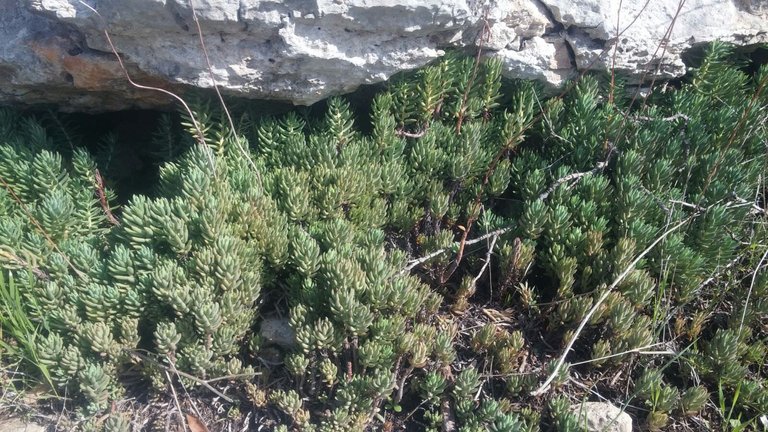
The picture is a little small, a close-up of the leaves and flowers (if any) would make it easier. It may be Sedum sediforme which you can google and compare results in an image search
A closer look:
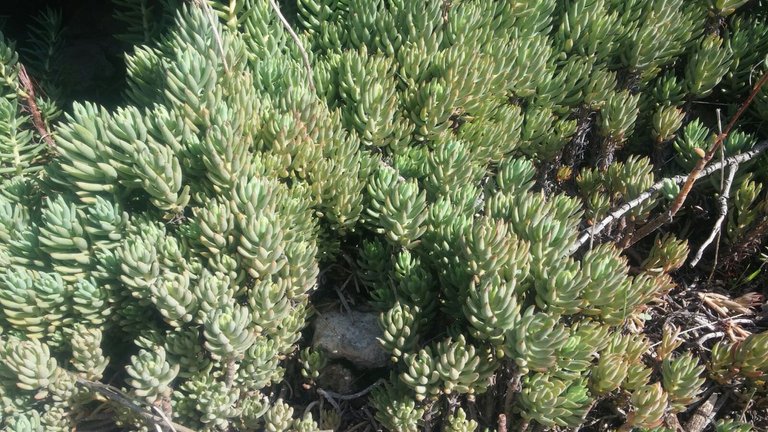
I was excited to find this in it's natural habitat.
Israel.
Cacti do well here, but I prefer the succuents.
Succulents will also do well if you grow them in partial shade
succulents are so cute! :)
Nice article, pretty awesome looking plants as well :)
My first plant ever was one of those. I remember my mother giving my brother and my tiny pots with those plants. Thank you for share it
Hello @nikv.
I love your succulent plants. These are quite popular here.
Now, I ask you: do you know if aloe vera is considered succulent?
Thank you and congratulations on your walk.
The aloe family are also succulents
Ahh, thanks @nikv.

Hi Nikv 8 }
One of the tricks we do in the north usa for soil water retention and compost is to bury softwood wood chips at max root level of plants and a layer on top.
What we found is that the wood chips on top will retain water and slowly leach it to the ground while protecting the ground from to much sun evaporation.
The layer at root level or a bit below, like if the plants roots extend 1 foot then at that level or a bit below when the plant needs more water it will actually grow stronger roots trying to stretch to the water being retained by the chips.
Also the top layer cuts down a bit on weeding.
Hope that helps some gardeners
With succulents, you don't want water retention in the soil, that causes roots to rot - good drainage is a must. Mulching works well on other plants, though
Yes my comment was about growing in arid hot climates and the ability to retain water for other plants that need it.
Gorgeous arrangement! I think some of our succulents here in Southern California probably originated in South Africa - I would love to see them growing in nature someday! I am a cement pot maker for succulents. Come check out my first post to see them :)