
The Inspiron 6000 was a low to medium-end laptop from Dell. Like many models, it had a variety of configurations. When this model first came to market, it wasn't the greatest value for the money. However, later configurations were better values. Mine has the following configuration:
- CPU: Intel Pentium M 735 @ 1.7 GHz
- RAM: 1 GB DDR2-533 (PC2-4300)
- Video: ATI Mobility Radeon X300
- Hard Drive: Hitachi HTS541080G9AT00 (80 GB)
- Screen: 1280 x 800
For more details, check out the reports from CPU-Z, HWiNFO, and HardInfo.

This seems to have been a middle of the road model. The CPU was on the faster side of what would have been available for this model and it is a version with a discrete video card vs. integrated video. However, the screen is the lowest end that was available.

The Pentium M was an excellent CPU for its time. It had the speed of a Pentium 4 but was much more efficient, achieving those speeds at lower power and a reduced clock rate. While you could get more raw speed out of the fastest Pentium 4s, the power cost was high with a significant cost to battery life.

When I got this machine, it had 512MB of RAM which I assume is what it probably shipped with. This is a reasonable amount for Windows XP but not if you want to upgrade to a newer version of Windows or Linux. I upgraded it to 1 GB though it can go as high as 2 GB. I upgraded so that this computer could crunch Einstein@home tasks (turns out 512MB wasn't enough) and run Linux. 2 GB would be better for that and still not really a comfortable amount.

The ATI video doesn't offer particularly great performance when it comes to things like games but it is still quite a bit better than using integrated chipset video. It has dedicated video RAM but I'm not entirely sure how much. Different tools in Windows report two different number and I get yet another number in Linux. HWiNFO reports 32MB, ATI drivers report 64MB, and Linux

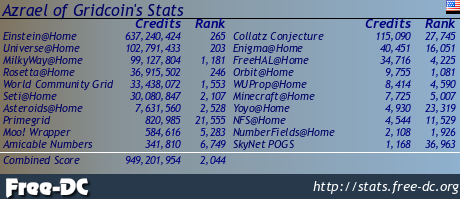
The hard drive is an 80MB model that is most likely original. I have Windows XP and Linux dual booting on it currently. I have BOINC running in both and despite this being a 32-bit CPU, there are still a few projects that it gets work for including Asteroids@home (1), Einstein@home (1, 2), and World Community Grid. You can also see how it is doing overall on FreeDC (1, 2).

Check out some of my other recent posts:
Vintage Photos - Lot 4 (125-128)
https://ecency.com/photography/@darth-azrael/vintage-photos-lot-4-125
MegaCon 2012: Emerald Rose (14) - Star of the County Down
https://ecency.com/hive-181335/@darth-azrael/ynzhhtyf
Vintage Photos - Lot 4 (121-124)
https://ecency.com/photography/@darth-azrael/vintage-photos-lot-4-121
PC World (November 1988)
https://ecency.com/retrocomputing/@darth-azrael/pc-world-november-1988
Vintage Photos - Lot 4 (117-120)
https://ecency.com/photography/@darth-azrael/vintage-photos-lot-4-117
Digital Archaeology: Floppy Disk #14 – STRANGE.DOC
https://ecency.com/retrocomputing/@darth-azrael/digital-archaeology-floppy-disk-14-e4f9f09d2e3bc
Check out my other Social Media haunts (though most content is links to stuff I posted on Hive or re-posts of stuff originally posted on Hive):
Wordpress: https://www.megalextoria.com/wordpress
Tumblr: https://www.tumblr.com/blog/darth-azrael
Blogger: https://megalextoria.blogspot.com/
Odyssee: https://odysee.com/@Megalextoria:b
Rumble: https://rumble.com/c/c-2385054
Daily Motion: https://www.dailymotion.com/Megalextoria
Books I am reading or have recently read:
Harry Potter and the Sorcerer's Stone by J.K. Rowling.
You Like It Darker by Stephen King.
The Altar Path by Joseph Lisiewski.
Mine Monero in your browser!
Earn Gridcoin while also helping various scientific projects by sharing your computer's idle CPU time!
Xp the way its ui was designed felt like we were a part of the present that has still a long way to go.. and those still on ‘98 felt they were poor.