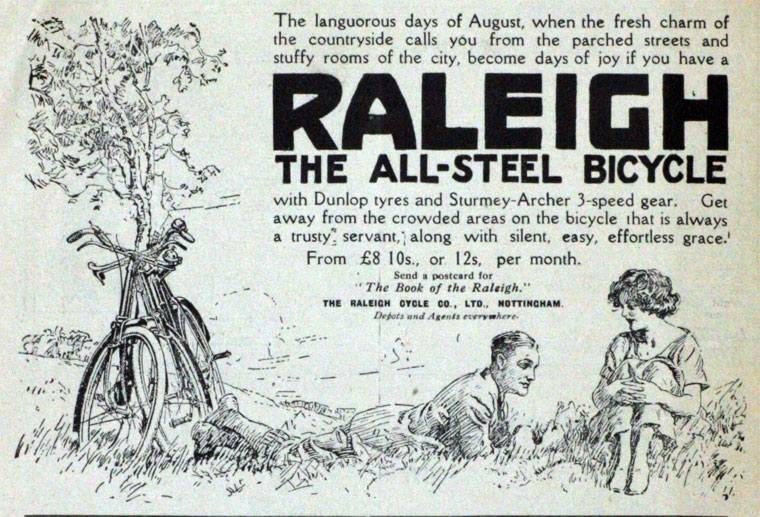
Today I’d like to share a hobby of mine with you, something that has brought me a lot of joy.
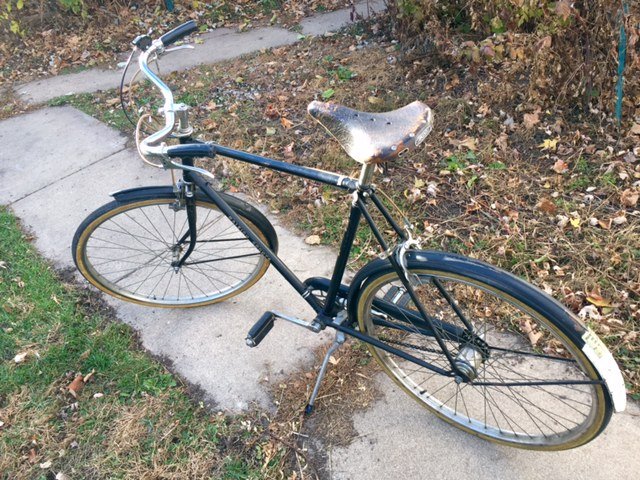
The afternoon I brought her home.
I found this Raleigh Sports on Craigslist in the fall of 2014, it was listed for $150.00. I had originally been looking for a vintage Schwinn but remembered a coworker of mine told me how well built these old Raleigh bikes where a few years before so I thought I’d go take a look. I met the seller at Spyhouse Coffee, a local uptown Minneapolis coffee shop, and was surprised to see how rough it looked in person. Most of the chrome was dully and rusted (you can't really tell from the picture above), the paint was dull and caked with dust and grime. I took it for a short ride and noticed that all of the pieces were there (except for the rear reflector and the air pump) and the bike was rideable so I offered $120.00 and the seller accepted. He had a hippy vibe, a free spirit and was just looking to make some gas money so he and his girlfriend could make it down to Arizona before the snows came.
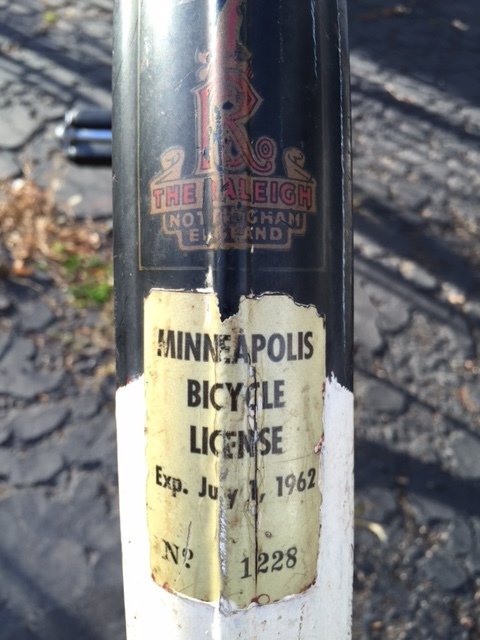
Right away I noticed there was a Minneapolis bike license on the rear fender from 1962, a cool piece of local history.
I had been around bicycles for most of my life and felt comfortable working on them. My father taught me how to dismantle, repair, and paint bikes when I was ten years old. A couple of years before this I had built a custom bike and had converted a cruiser (pedal) bike to an electric bike but the Raleigh was my very first vintage restoration project. I was excited and anxious to get started, it took a lot of restraint not to tear into it right away. I began by researching the best products and methods to restore the chrome and the paint. I also began to scour eBay for replacement parts and accessories. The thing I quickly learned was everything on the Raleigh bike was a non-standard size, even down to the thread sizes on the bolts. Many of the parts are no longer made, so if something breaks or wears out (which thankfully doesn’t happen very often) most often you have to search for it on the used market. This has only deepened the comradery amongst Raleigh owners.
By a stroke of luck, a few months into the project, I discovered two awesome sources of knowledge that have become indispensable to me. One is a website built by the late cyclist Sheldon Brown (http://sheldonbrown.com/oldbikes.html) and the other is a Facebook group called, The Raleigh Bicycle Nottingham (https://www.facebook.com/groups/theraleighbicyclenottinham/). This Facebook group is filled both lifelong Raleigh enthusiasts and newbies from all over the globe. These are men and women who are extremely passionate about these old English bikes and are very willing to share their knowledge with us newbies. Over the past two years I’ve made more than a few friends in this group. These people are like walking encyclopedias filled with the history and important details about these bikes as well as repair and restoration advice. On a few occasions they’ve even offered hard-to-find parts to other members if they have extras. Someone from the group told me that each Raleigh has it’s, “date of birth” stamped into to the Sturmey Archer rear hub. Mine was stamped with, “6-59” so it was made in June of 1959. Ironically, I was born in June as well.
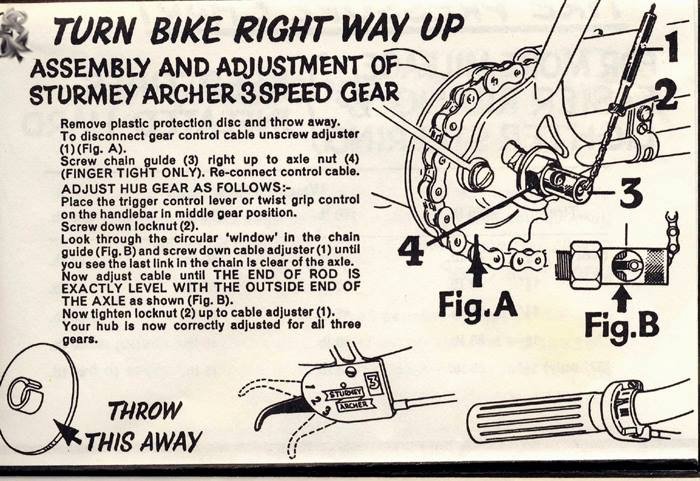
This bike has an internal planetary 3-speed gear that is totally incased inside the rear hub. This makes it much more durable and reliable in all-weather riding verses a bike with an external gears and a derailleur. The bike wouldn’t shift when I got it and I knew nothing about this kind of hub so I took it into my local bike shop (http://morethanabicycle.com/recoverybikeshop.html) for a once-over by professionals. I was fully expecting them to tell me it needed to be rebuilt but they said it was fine. It only needed a slight adjustment, the cable that operates the gears wasn’t adjusted properly. The shop replaced the original brake pads, adjusted the brakes and they said that was all that was needed mechanically. Not bad for a nearly 60 year old bike.
Over the next few weeks I restore the chrome using aluminum foil and a German product called, Simichrome. It worked better than I had expected. I also put a generous amount of car wax over on the clean chrome because I learned the rust comes back quickly. I cleaned the paint with dish soap, water and lots of elbow grease. Layers of brown tarnish came off the paint until the original gloss began to shine through.

I also learned that WD-40 will restore the luster back to the old paint, you just have to be careful around decals. I applied WD-40, wiped it off and then put a layer of protective wax over top.

I found a rear reflector on eBay UK, a vintage Pletscher rear rack, and an air pump. The pump was a reproduction and the only thing on the bike that wasn’t original.

The original Brooks B72 saddle (http://www.brooksengland.com/en_us/b72-1.html) was dry and cracked, it appeared to have been left out in the rain at some point in its life but it was still solid. I applied some of Brooks Proofhide leather reconditioner and it brought the suppleness back to the leather. It wasn’t perfect but it was acceptable and amazingly comfortable. I have since replaced it with a new Brooks B66 saddle (http://www.brooksengland.com/en_row/b66-family). I’ve also added a Crane brand brass bell and wing-nuts for the front axle to make it easier to take off the front wheel and load the bike into my car.
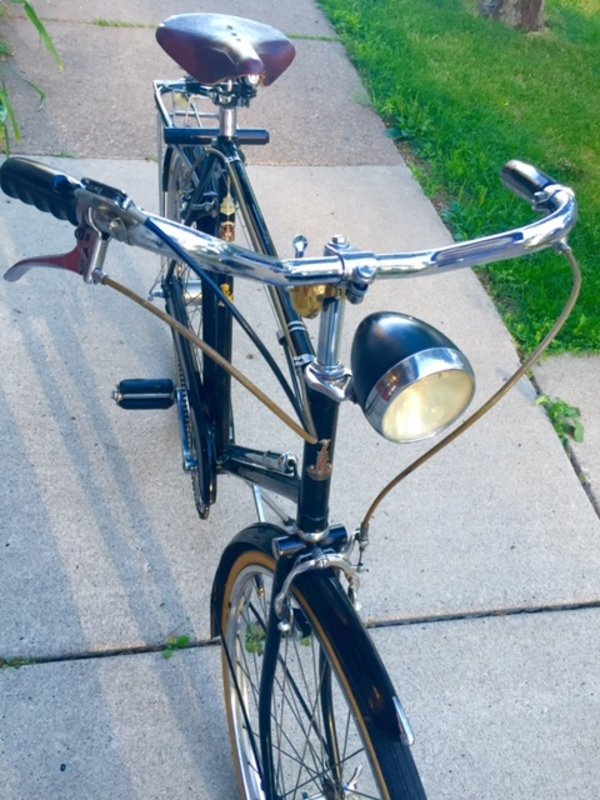
My latest addition was a vintage Sturmey Archer front headlight on eBay UK. The headlamp is slightly older than my bike (late-1940’s) but I loved the look of it. I won the auction (yeah!) but paid a mint for shipping from the UK to the US. Once it arrived I sanded it down, brightened the chrome, repainted it to match my bike, and rewired it to work with a 9 volt battery. I installed a super bright LED bulb that I found here: http://www.home.earthlink.net/~steinborn/gentlemancyclistmerchandise.htm. This bulb was made to be an exact fit into the original light socket and will make me hard to miss by all of the distracted drivers of today.
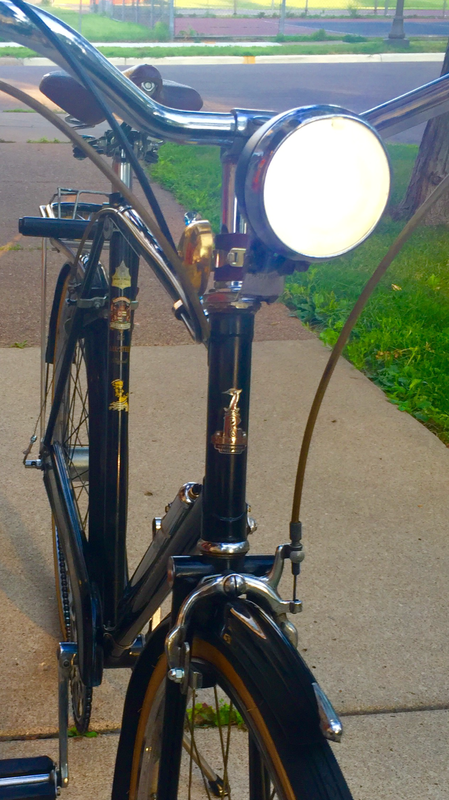
I’ve learned the reason they call them (now I can say “us”) Raleigh “enthusiasts” and not just “collectors”, these aren’t as much bicycles as they are happiness delivery devices. The vintage Raleighs weren’t toys but tough and sophisticated machines.
These bikes were built as a means of primary transportation for a large portion of the British population who couldn’t afford motorized transportation. With their upright riding position these bikes are so comfortable you can ride them all day. There’s something so civilized about knowing you can ride a bike in your regular clothes without worrying about your pant leg getting caught in the bike chain or having a muddy stripe up your back.
It makes you wonder why chain guards and fenders were ever eliminated from modern bikes. Working on these old machines, delving into the history of them, sharing knowledge about them, and most importantly riding them makes a person completely forget how horribly us humans can behave towards one another. When I’m riding this Raleigh, there’s no such thing as police shootings, crooked politicians, terrorist attacks, or senseless war. When I’m riding there’s only the fresh air, the breeze, and joy. Together, this old Raleigh and I have become fast friends and I hope it stays that way for a very, very long time.
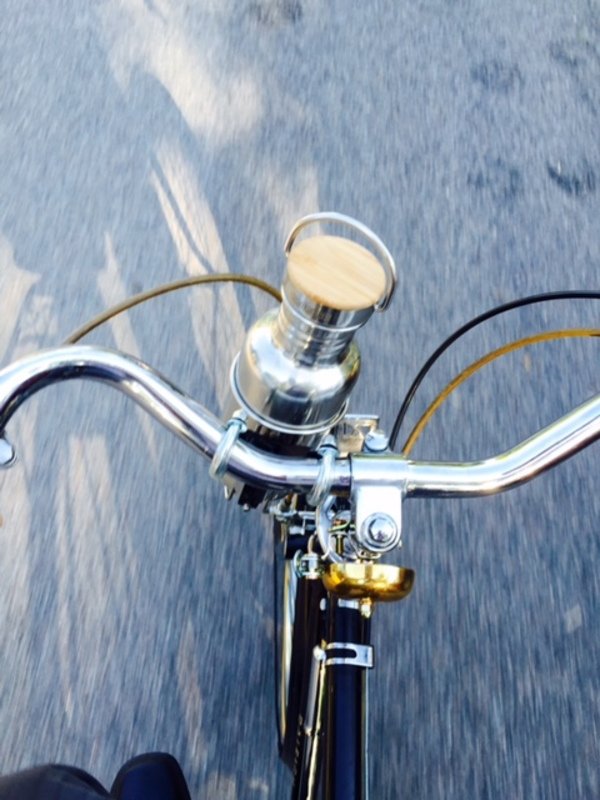
Love is felt to your bike.
So we have to very important.
Now, I like more of the car, it will catch more even a bicycle now.
Nice bike!!
I like bike. I ride on the"Fuji Fether".
Thanks, @mun! Fuji makes an excellent bike as well!
I think too!thanks!
I like Fuji , because I lived in Japan.
Wow sounds nicee :) will love to see a video riding it.
Thanks @timotron!
You mentioned the chain guard and fenders. Were they removed on modern bikes to reduce weight?
You're right, @cryptobarry, but they don't weigh much at all. The convenience of having them is well worth the weight.