
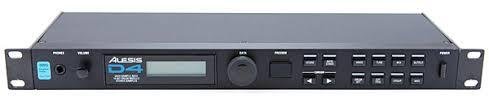
Over 500 studio quality wave file drum samples.
The Alesis D4 Drum Module, released in 1991, remains one of the most enduring pieces of rackmount gear in the history of electronic percussion. At its core, the D4 is a high-density sound library packed into a single-space rack unit, featuring 500 internal 16-bit drum sounds. These samples cover a vast sonic territory, ranging from natural acoustic kicks and snares to processed electronic hits and a diverse array of ethnic percussion. Because these sounds were recorded at a 48kHz sampling rate, they possess a punchy, crisp quality that helped define the drum tones of 1990s music and early video game soundtracks.
Beyond its role as a sound module, the D4 gained legendary status for its 12 analog trigger inputs. This feature allowed drummers to connect standard piezo pickups from acoustic drums or electronic pads directly into the unit, effectively turning an acoustic kit into a MIDI-capable powerhouse. The internal software was sophisticated for its time, featuring "Dynamic Articulation," which subtly changed the timbre and volume of a sample based on how hard the trigger was struck. This provided a level of realism that made the D4 a staple in both project studios and live touring rigs where reliable, consistent drum reinforcement was required.
Navigating the D4 is straightforward, utilizing a minimalist interface of a few buttons and a data entry knob. While it lacks deep synthesis capabilities, it offers essential parameters for every sound, including tuning across an 18-semitone range, panning, and volume. Users can organize these sounds into 21 programmable drum kits, which can be instantly recalled via MIDI program changes. The unit also features four independent outputs, allowing engineers to route kicks and snares to separate mixer channels for individual processing, a professional touch that kept the D4 relevant long after newer modules hit the market.
Today, the Alesis D4 is sought after by producers looking for "period-correct" vintage tones and by budget-conscious drummers needing a reliable trigger-to-MIDI interface. Although its successor, the DM5, offered more sounds and faster trigger response, many enthusiasts prefer the D4 for its specific grit and simplicity. On the used market, it remains a high-value entry point for anyone needing a dedicated drum brain that bridges the gap between the tactile feel of acoustic drumming and the infinite possibilities of digital sequencing.
Amazing to think of all the greatest hits we love having some Alesis in them!