
We all fear something. Some people fear loneliness, heartbreak, violence, illness, death, economic hardship, or the lack of opportunities. However, if there is one thing all these fears have in common, it is that they stem from something real. No one can permanently avoid death, illness, or conflict; these three factors are part of nature and have existed in every society and every era.
For thousands of years, fear was a survival mechanism. Fear of fire prevented accidents, fear of predators kept our ancestors alive, and fear of rejection helped preserve social bonds within communities. The modern problem is not feeling fear, but becoming trapped in it or ignoring it completely, especially because today there are two extreme tendencies that make it harder for us to confront it.
The first is information oversaturation. Many people believe that remaining permanently connected to global or local conflicts will help them overcome the fear these events create. In reality, this only generates more anxiety, helplessness, and stress. The result is often paralysis when it comes to making decisions to solve a problem or, at the very least, reduce the impact it has on daily life.
Furthermore, in the digital age, fear has become a commodity. Alarmist news, extremist political discourse, and content designed to provoke outrage succeed because they capture our attention. A brain constantly exposed to threats eventually reacts as if it were permanently in danger, even when no immediate danger actually exists.
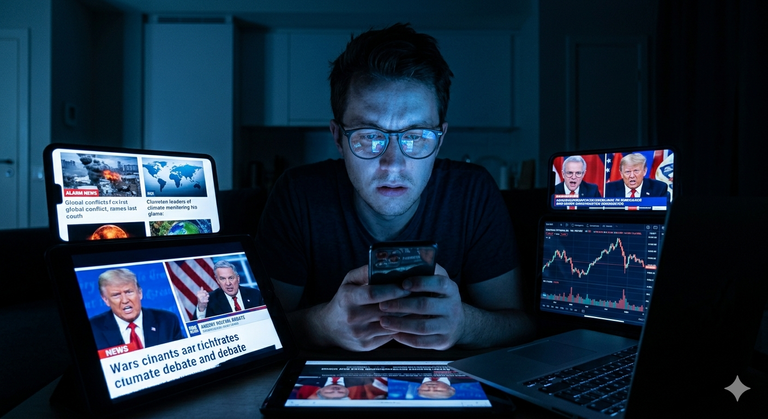
The second tendency is denialism. If the first produces paralysis through excess, this one chooses to deny the existence of the problem, acting as though it were not there and hoping it will not affect us or will simply disappear on its own. This sometimes works when the conflict is caused by an external factor (such as a pandemic or a natural disaster), but it fails completely when applied to human relationships: friendships, workplaces, family relationships, or romantic partnerships.
That is why, if the source of our fears is real, the solution is not to hide from them, but to build mechanisms of resilience that help us manage them. Fear can destroy, but it can also compel us to act.
Fear of economic hardship, for example, can become the motivation to diversify our sources of income. Fear of illness can be addressed through medical consultations that allow us to assess our health. Fear of isolation can encourage us to care for our human relationships. Fear of failure can motivate preparation and learning. Even fear of death can lead us to value our time and the people we love more deeply.
Many times, the worst effects of fear do not come from the original danger itself, but from our inability to respond in a balanced way.
On the other hand, there is also a collective dimension to fear. Societies with high levels of distrust, violence, or instability often develop entire cultures based on fear. In those contexts, resilience depends not only on the individual, but also on families, friendships, communities, and support systems capable of reducing the sense of abandonment and uncertainty.
Perhaps the goal is not to live without fear, because that would be impossible, but to learn how to coexist with it without allowing it to control our lives. Ignoring it makes us vulnerable, but obsessing over it paralyzes us. Between these two extremes, we must seek a balance that recognizes the real dangers of the world without giving up our ability to act, build, and move forward.

Note 1. This post was translated from Spanish to English using Gemini AI.
Note 2. The images were generated using Gemini AI.
Congratulations @jlat1412! You have completed the following achievement on the Hive blockchain And have been rewarded with New badge(s)
Your next payout target is 100 HP.
The unit is Hive Power equivalent because post and comment rewards can be split into HP and HBD
You can view your badges on your board and compare yourself to others in the Ranking
If you no longer want to receive notifications, reply to this comment with the word
STOPThat's why it's good to check the news just to be informed, and not give it so much power over us that it affects us negatively. The key is learning when to disconnect.
Exactly. We must learn to discern what our fear is telling us and whether that fear could actually become a reality. If it does, we must decide what to do to prevent it from happening.