...if you're to stand any chance of leaving it behind, at all.
Atheism has become quite a popular attitude in our modern world. We seem to enjoy the tasteful skepticism of it, the cheek of standing directly in the face of such gullible others and wagging our fingers at them. And certainly, when you see the many ways in which organized religion has misused its tremendous power, atheism seems like the more palatable choice.
I have a strange relationship with churches. The foreign territory. The largely alien custom of them. Still, from time to time, I trespass, yet not bending my knee when I enter, I have a hard time, still, checking my own thoughts at the door.

As a writer, I'm inclined to stare (perhaps too keenly) into the abyss. No doubt about it, there is such creative potential and power in flirting with sorrow and all sorts of terrible things. We artists tend to be drawn to tragedies because we've learned how to pickle them properly so that they don't spoil. How to enshrine and unwind them, carefully, like a gold-thread spool, whenever we have need.
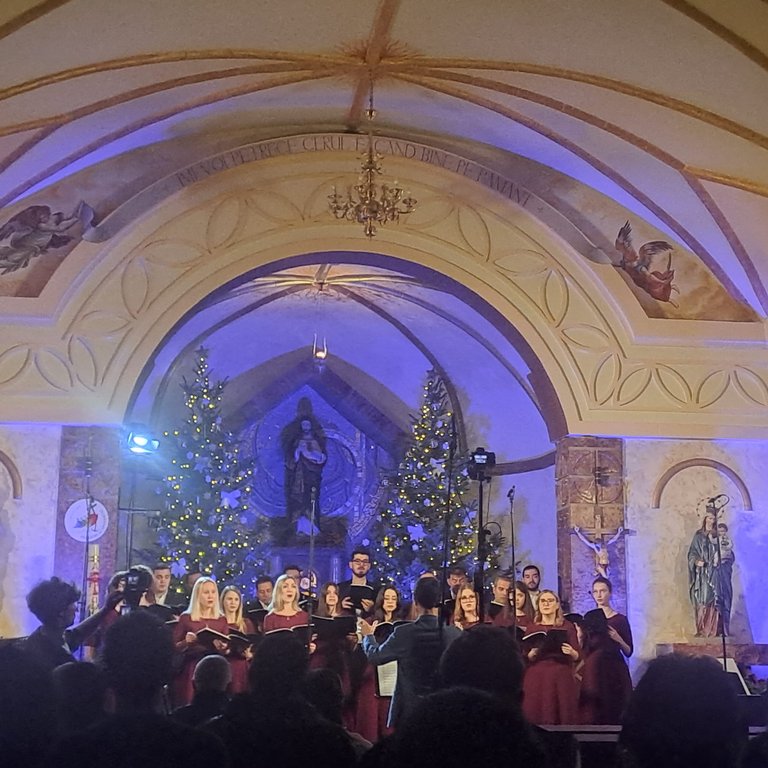
As I huddled in one of the pews, listening to the nice, ethereal chorus last night, I couldn't keep my thoughts from flitting between love and tragedy, wholeness and fragmentation. I had a very interesting experience, a very candid conversation with what I can only describe as my Shadow that, if I think back on it now, feels surreal, like a dream. And through it all, myself struck by the stoicism of it all.
How vastly it differs, the way I carry pain as a writer, from the way these people around me do, as believers. How they get on with things when I feel obligated to pull apart sorrow until nothing's left. I was tempted to dismiss them, to belittle them in some way, the way atheists often do, thinking these are simply people, comforted slyly by a simple bedtime story. Except naturally, nothing that survives this long and so resonantly can be a mere story.
... it has been assumed, perhaps as the result of a growing impatience with the difficult factual material, that Christ was nothing but a myth, in this case no more than a fiction. But myth is not fiction: it consists of facts that are continually repeated and can be observed over and over again. It is something that happens to man, and men have mythical fates just as much as the Greek heroes do. The fact that the life of Christ is largely myth does absolutely nothing to disprove its factual truth--quite the contrary. I would even go so far as to say that the mythical character of a life is just what expresses its universal human validity. It is perfectly possible, psychologically, for the unconscious or an archetype to take complete possession of a man and to determine his fate down to the smallest detail. ("Answer to Job", CG Jung)
I spent a good time thinking about the way we deal with tragedy, and tried to curtail my natural instinct to dismiss religion readily. How "they" tell us suffering is inevitable, how they make us meek. Except, of course, suffering is inevitable, and when it finds you, you'll need something to hold on to that is larger than your solitary person, otherwise you'll be swept up in the deluge of pain, and your life will come to shreds.
The terrifying reality we now live in is we've displaced God from His position at the center of our lives, without much consideration to what we're putting in His stead. What do you have in your life that is sufficiently meaningful, strong, and that can weather storms sufficiently to see you through to the other side?
Family's often an answer, and while it's a phenomenal tool for survival in a moment of crisis (you see mothers surviving unspeakable tragedy simply because they have children that depend on their survival, so anything else is not an option), but it's not a proper answer. After all, if the answer to the question was Jesus, you wouldn't mean it in the same way. You wouldn't be saying I'm surviving because Jesus needs me to be alright and to prepare breakfast tomorrow.
When people say Christ helps them through a tragedy, they are referring to the archetype, the deeper, more resonant story that is within us all, and that the tale of Christ embodies. The story of God is something cyclical and universal that sets the tone for our continued survival. When people in terrible situations - addiction, loss, abuse - credit God with helping them survive, they're not showcasing their own gullibility.
It's not a children's fairytale that usually pulls you out of the abyss. It's the deeper mythical threads woven inside that fairytale that save and redeem us. It isn't necessarily in saying we all go through bad things, but rather hinting at a deeper, more meaningful power than we suspect resides within us. It's the suggestion that we are still inherently good even when we've been dragged (or sometimes have put ourselves) through the muck.
It's foolish and dangerous to assume we're familiar with this strength and noblesse already and don't need reminding. It's not for nothing that many people, when faced with atrocious circumstances, turn to self-harm, substance abuse, and violence.
There's the very real temptation to stare into the abyss once you've been faced with it. I do believe artists feel this more pronounced within themselves, but it's by no means a trait that's unique to us. I think artists often fall back on their art, and end up serving as mere vessels for the terrible things they pluck from the shadows.
If it comes from the abyss and goes into my stories, then it does not remain in me. That is essential.
But the temptation to reach out for what we should not is there within us all, as famous stories remind us, and when we don't have an outlet, and when we don't have a myth to guide and help us make sense of these terrible things, then they have no other option but to remain within us, and corrupt.
"The life of Christ is just what it had to be if it is the life of a god and a man at the same time. it is a symbolum, a bringing together of heterogeneous natures, rather as if Job and Yahweh were combined in a single personality. Yahweh's intention to become a man, which resulted from his collision with Job, is fulfilled in Christ's life and suffering." ("Answer to Job", CG Jung)
We need to believe that we are made in God's image because the shadows of evil are real - we know they're real, and often witness them first-hand - and we are well-aware that in isolation, we are not strong enough to defeat them.
That being said, I do think there are things to put in God's stead, things that create the state of at-onement that underlies saving grace, and give us the strength that we'll be asked to demonstrate sooner or later in our lives. Much as we enjoy the story of Peter Pan, we all as children could sense the warning - the alarm clock in the crocodile's belly rings for everyone in the end. We must make sure we have meaningful, storm-weathering tools at our side, not commodities and childish whims, for when the abyss finds us.
I hope this belief doesn't stem from my own vanity, but rather from the fact that, clearly, we as a group are losing faith in this particular myth. Something needs to be done. We must make sure we choose wisely and that, in replacing God, we don't mistakenly throw out the myth of salvation itself.
I've tried to write this with my own voice shining through - I am not personally interested in religion as a religious person, because I do not see myself as one, not in the slightest, but from a psychological perspective. I do think psychology has been a tremendous gift in past decades to help us shed some light on our inner workings and correct our course. It'd be a shame if we didn't make full use of it.
These are mostly ponderings from last night's carol concert at a local church. I saw something of meaning in them, and thought I'd share.

There's so much in here for me to respond to - as usual it's beautifully written too! I'm pulled elsewhere so perhaps just a brief comment.
Perhaps, and indeed, at the same time. Without other stories to correct it, to offer an alternative. And yes, that's the dilemma with this current climate too - I argue to replace it with the older stories, the animism of nature perhaps, or a worship of it at least. A turning toward the inherent knowledge of the oneness of all things, stripped bare of Christ figures and guilt and stories so easily manipulated to suit agendas and to raise money for fucking cults.
The church as the centre of community, as a place of belonging, and to guide people in the darkest times can't be dismissed, I concede. But perhaps people just busy themselves with one myth without really understanding their individual responsibilities as part of the entire universe. Why can't kindness and empathy be enough??
I had the same conversation with @ladyrebecca, and I agree. I don't think Christianity is the answer, nor do I think we need to turn back to organized religion because most likely, we can't. It wouldn't have the same power anymore, anyway. Naturally, ridding ourselves of Christ figures and stories that get manipulated is the path to hope for, since we all know how much evil has come out of organized religion, too.
I believe so. And no, the Church as it is now doesn't seem to focus enough on individuation and a person's role and inner divinity. I don't know how we get to that, though, from where we are. (Of course) I see a lot of value and resonate with nature worship and older stories, more so than Christianity probably, but I do at the same time wonder if that doesn't just launch us into a loop - we replace God now with Mother Earth, then after a while, we come back to God, and so on. I don't know if our purpose is to jump around from one boon to believe in to another, or if we will somehow, eventually, unearth a deeper, final myth.
I dunno. But it's sure fascinating to speculate.
You've got me. You get a lot of Christians saying "sure, but the world of atheists functions on Christian values anyhow", and that's obviously true. Christ is so deeply woven into the Western psyche, you can quit the organization, but hardly the teachings. But then, Christianity was founded on something. These "Christian" values are older than Christianity itself. So then what happened at some point that saw the tilt towards evil and destruction that required us to veer towards Christianity in the first place?
It's sad how many people organized religion has driven away from a relationship with God.
$PIZZA slices delivered:
@kenny-crane(3/10) tipped @honeydue
Send $PIZZA tips in Discord via tip.cc!
Congratulations @honeydue! You have completed the following achievement on the Hive blockchain And have been rewarded with New badge(s)
Your next target is to reach 490000 upvotes.
You can view your badges on your board and compare yourself to others in the Ranking
If you no longer want to receive notifications, reply to this comment with the word
STOP