
| Latin Name | Observation Date | Location |
|---|---|---|
| Delphacid Planthopper exuvia, | Jun 02, 2026 | Purulia, Natore, Bangladesh |
Hello Nature Observer friends. Hope everyone is well and enjoying the wonderful beauty of nature.
When you look behind the leaves with a macro lens in hand, many unknown secrets of nature unfold before your eyes. Today I am going to share such a magical moment with you. The thing you see on the leaf in the picture, at first glance, is a strange sight, a dead insect. But the surprising thing is, it is not an insect at all. It is an old shell or cover left by an insect, which is called exuvia in scientific language.

I checked a little and found that this wonderful shell is actually a nymph or baby of a Delphacid Planthopper. These insects belong to the Delphacidae family. One of the most well-known species among them is the brown planthopper, whose common genus or genus is Nilaparvata and the scientific name is Nilaparvata lugens. There are about 2000 species of insects in this family all over the world, which mainly hide behind grass or leaves.
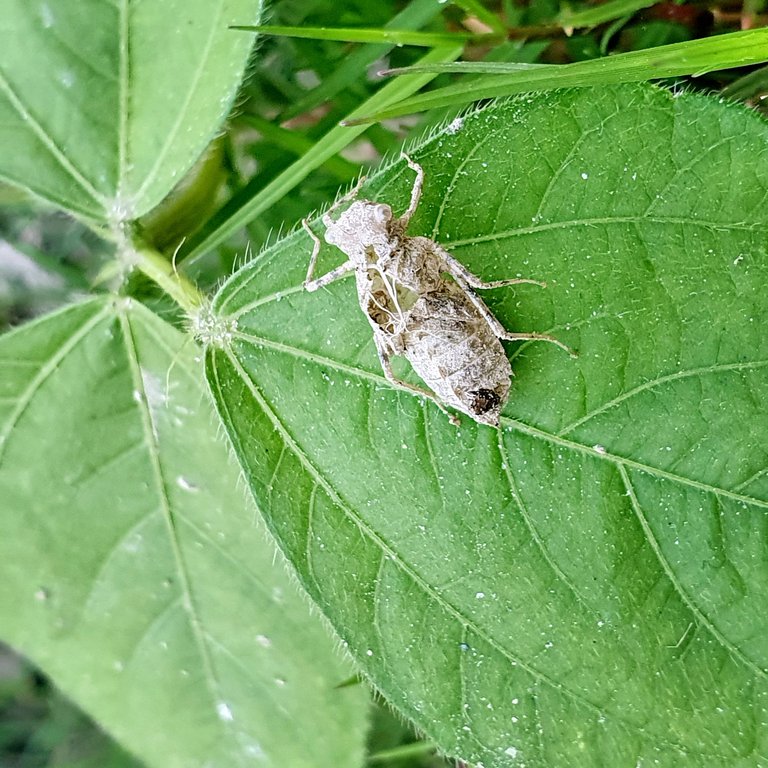
Now the question is, how did such a perfect shell form on the leaf? Insects do not have any bones inside their bodies like us, but rather they have a hard shell outside their bodies called the exoskeleton. When insects start to grow in size, their hard outer shell does not grow anymore. So in order to grow or take a full form, they have to break this old skin or shell and come out. This magical process is called molting or ecdysis in scientific terms.
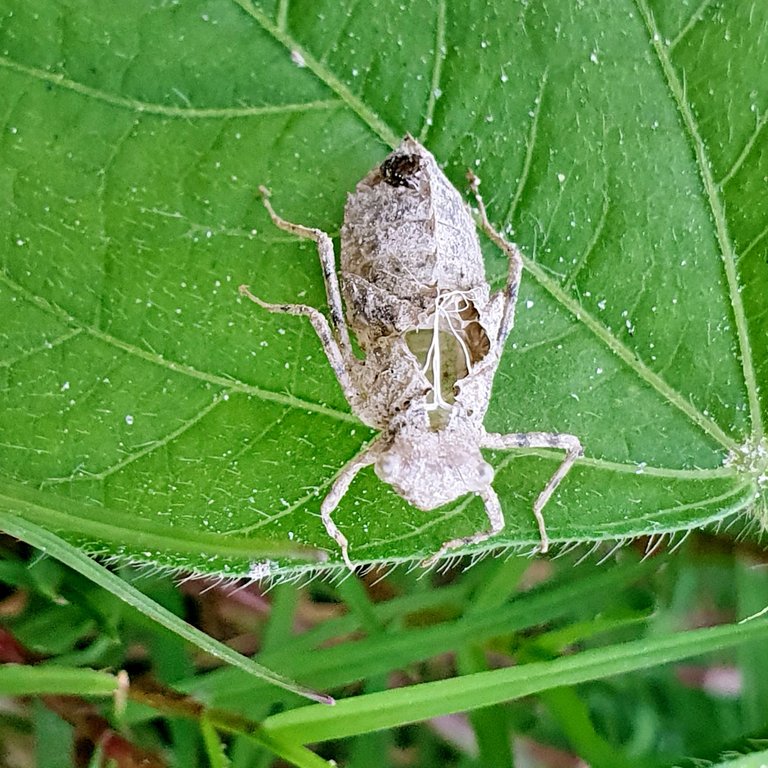
If you look closely at the macro photos I took, you will find excellent evidence of this transformation process. You will see that the back of the shell has burst right in the middle. The insect came out with its new body through this crack.
The white thread-like parts that you can see right in the middle of the crack are actually the inner part of the insect's old respiratory system or trachea, which came out of the body when it molted.
An insect leaves its old body on the leaf like a sculpture and emerges with a completely new form, this is truly an amazing phenomenon of nature.
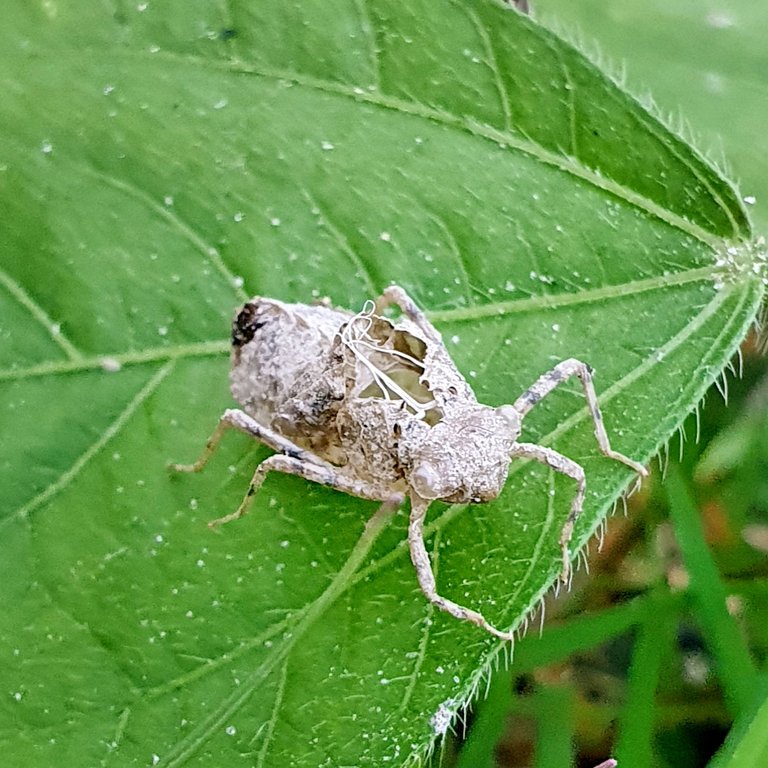
Be sure to comment on how you liked this macro photo of mine and this story of nature's transformation.
I learned about them from various sites including iNaturalist, Wikipedia and Google.
(All posts are written in Bengali and translated into English using Google Translate.)
.
.
| Camera Used | Samsung SM-G973F |
|---|---|
| F-Stop | F2.4 |
| ISO speed | ISO |
| Focal length | 26mm |
| Flash | No |
| Editing app | MIX |
| Photography | (Delphacid Planthopper exuvia) |
| Photographer | @mshbd |
| Location | Purulia, Natore, Bangladesh |
| Link to original community |
|---|
| https://www.inaturalist.org/observations/367825128 |
| Latitude | Longitude | Map Link |
|---|---|---|
| 24.3363 | 89.1127 | https://www.openstreetmap.org/?#map=12/24.3363/89.1127 |
Congratulations @mshbd! You have completed the following achievement on the Hive blockchain And have been rewarded with New badge(s)
Your next target is to reach 500 comments.
You can view your badges on your board and compare yourself to others in the Ranking
If you no longer want to receive notifications, reply to this comment with the word
STOPCheck out our last posts: