As soon as you step through the gate, you are greeted by sculptures, they are impressive, detailed, silent. You feel as if you have entered an open-air museum. For a moment, forget that you are in a cemetery and completely surrender to those works of art, which have been standing there for decades, sometimes even centuries.
I'd be lying if I said I didn't enjoy it. I enjoyed it, despite the fact that I was in a cemetery, because it didn't feel like that. It was more of a journey through art, silence and history than a simple visit to a place of eternal rest.
Tomb in Milan
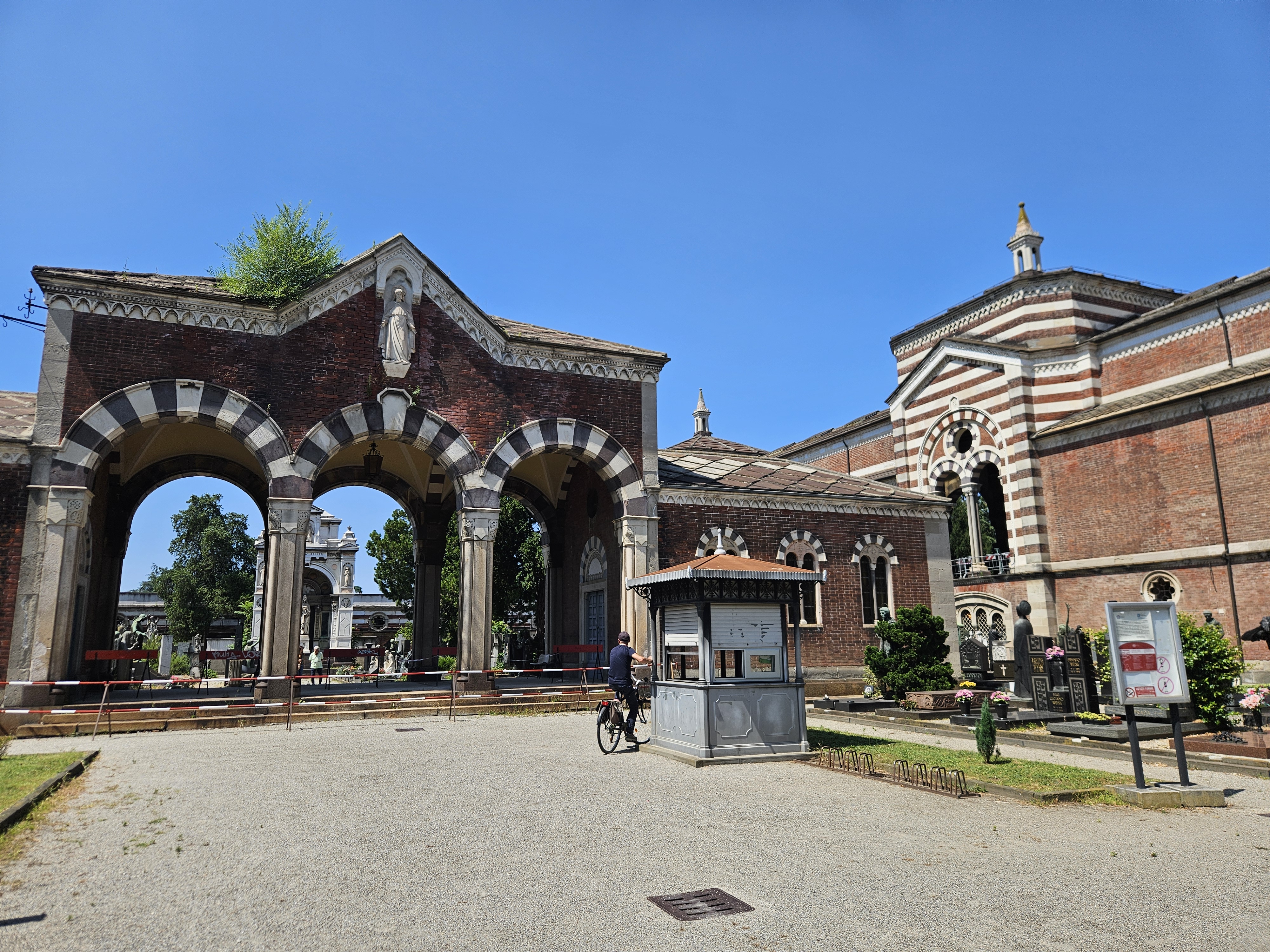
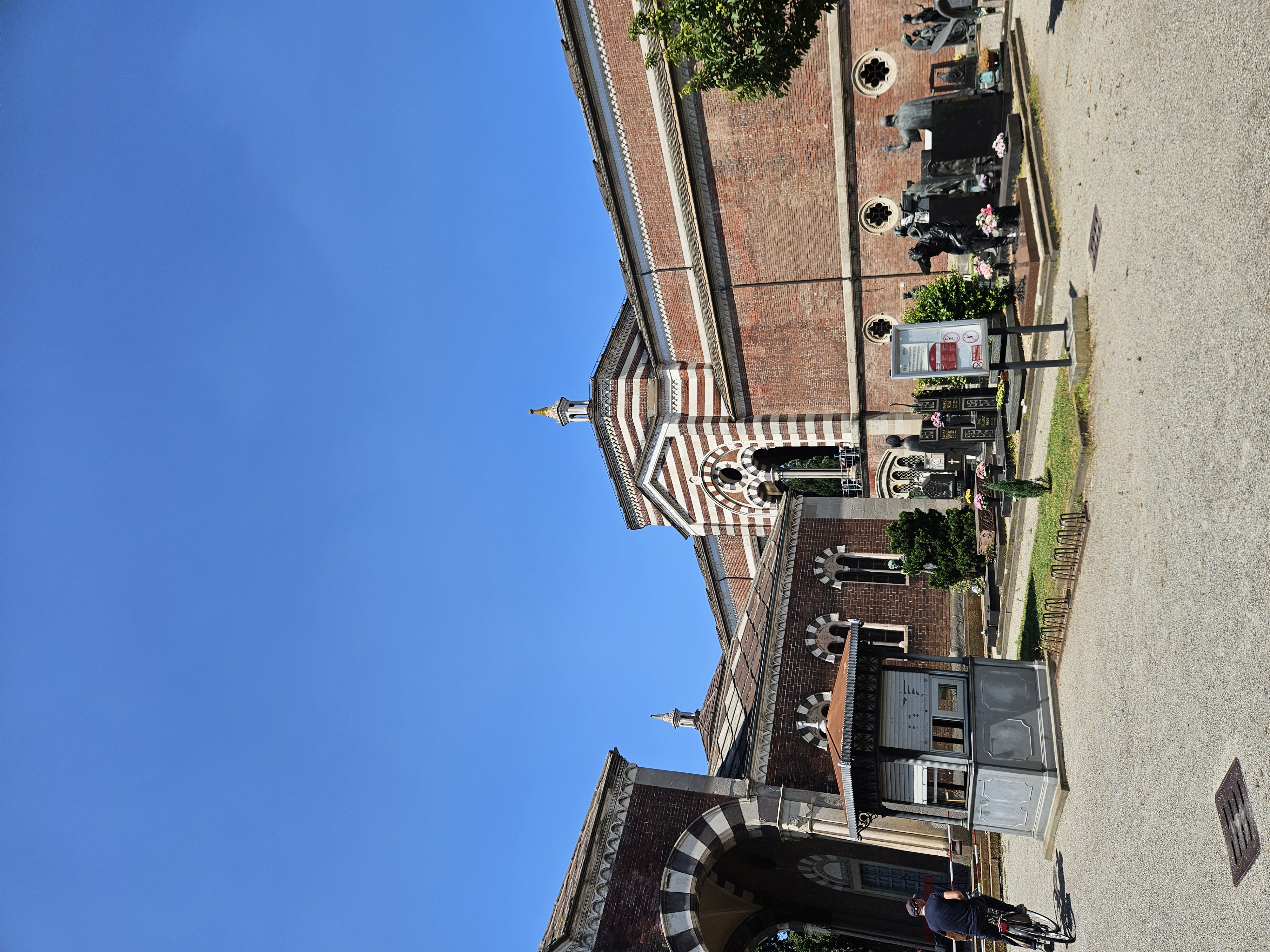
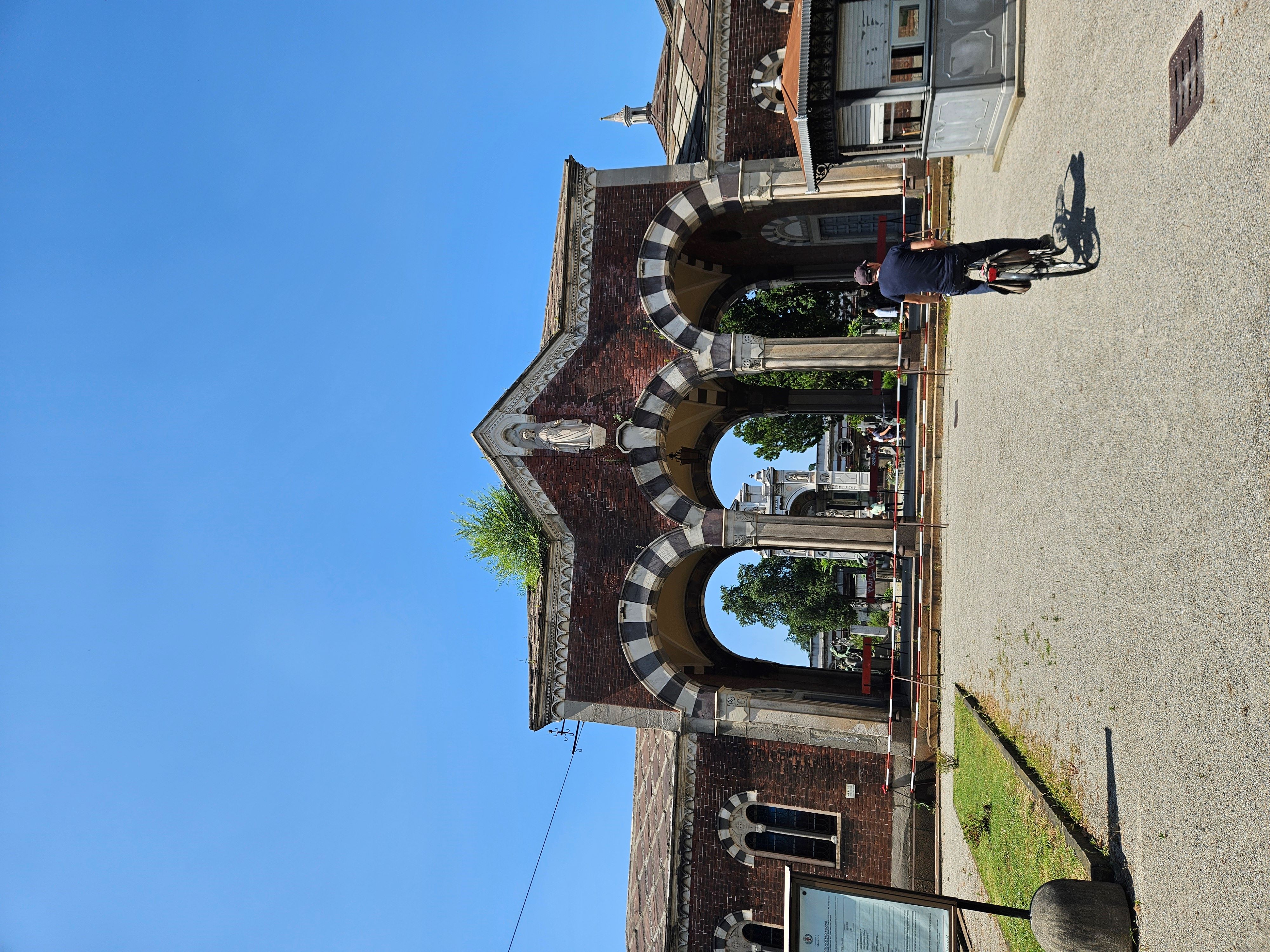
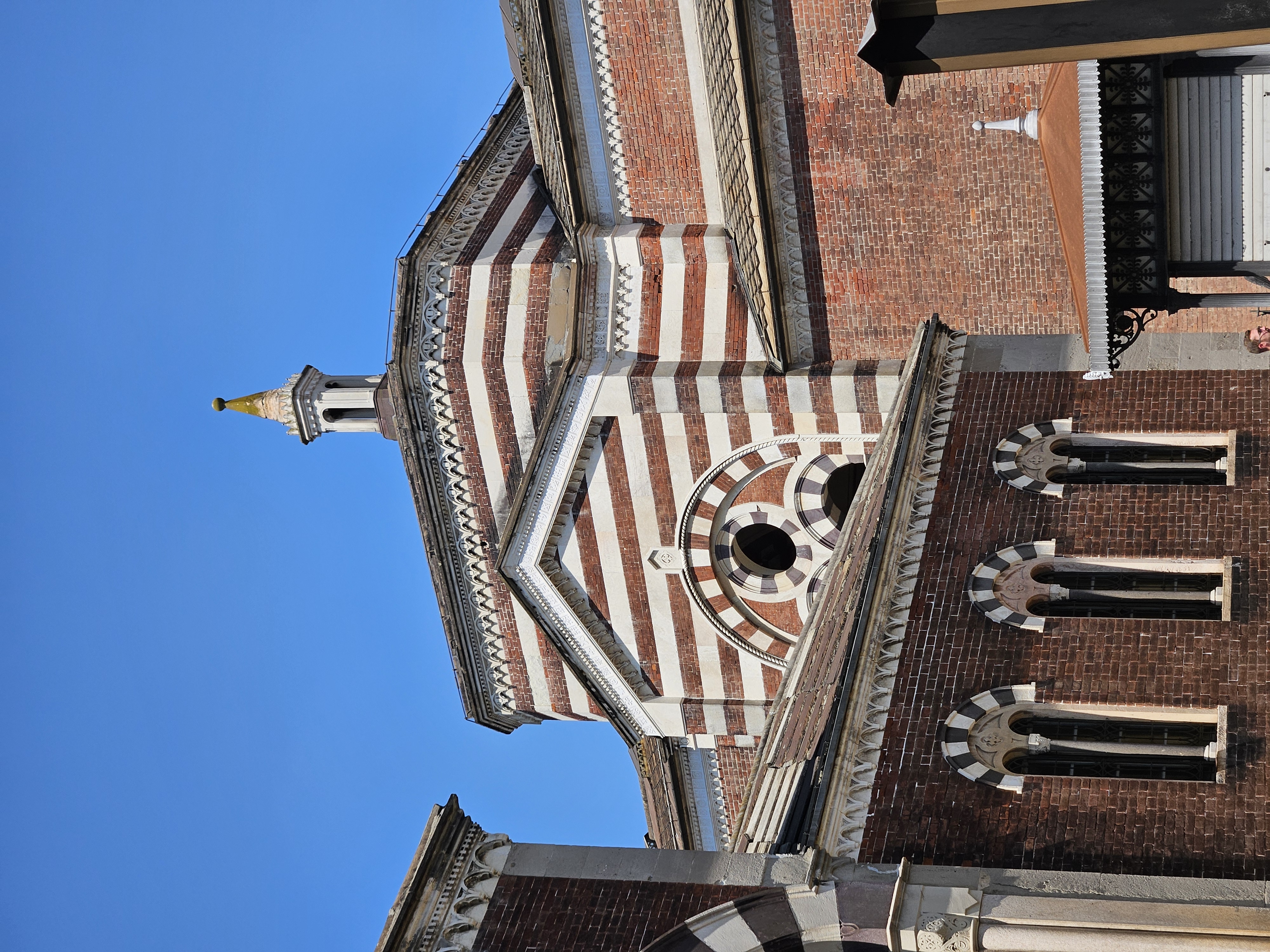
The research of Milan Cemetery has now become more intimate. This time I didn't stop in front of the Famio monumental building I have already written about I was already in directly to the part of the cemetery that precedes it, as if I had passed some side door in time.
It's all in the red stone. Buildings, arches, walls, have an almost church character, but without noise and bells. They act softly, sublime and closed, as gates of eternity. I didn't know exactly what they were to serve. Maybe it's family chapels, perhaps hidden memorials. I didn't ask, I didn't even have anyone, I just stood and absorbed.
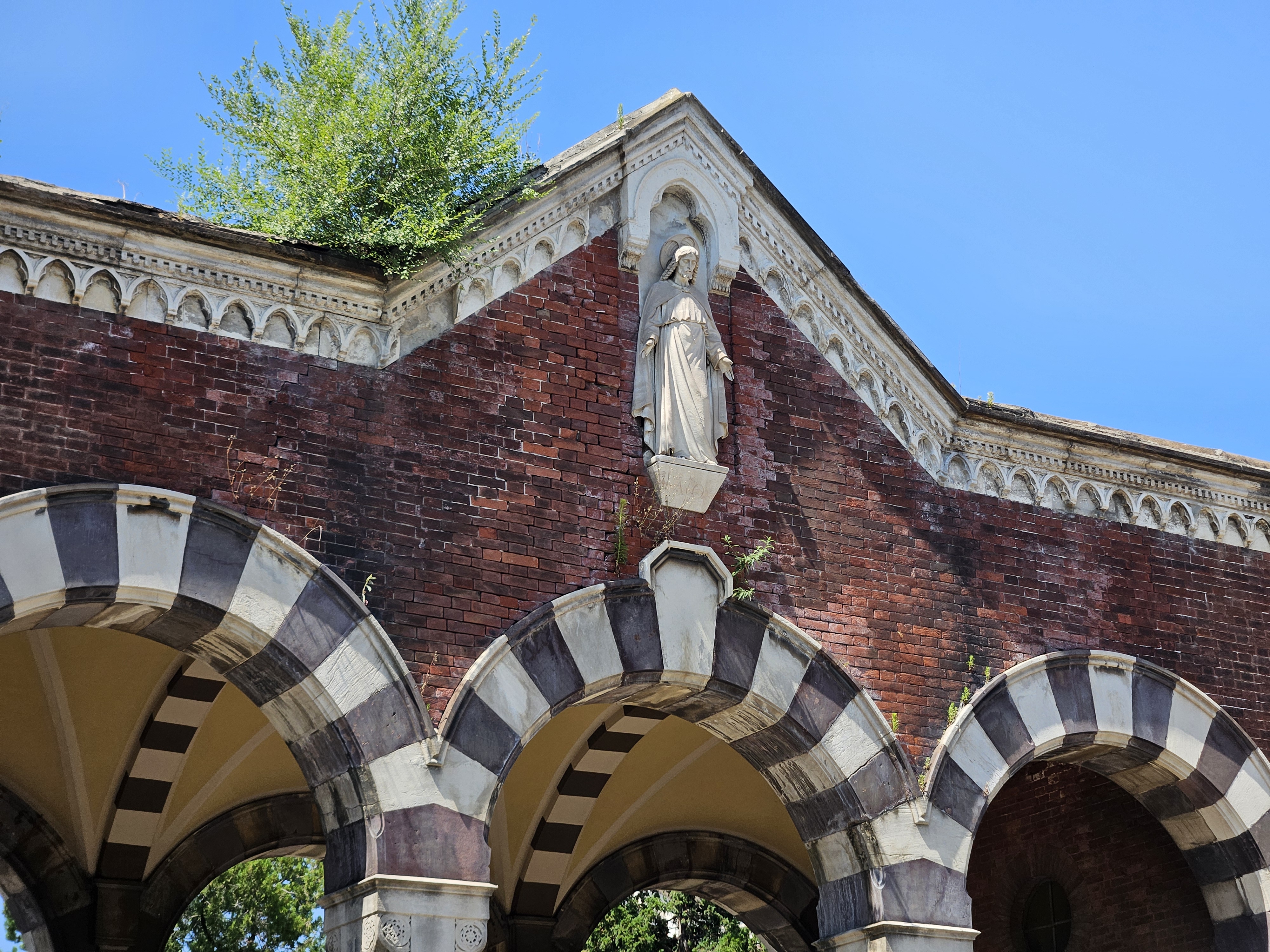
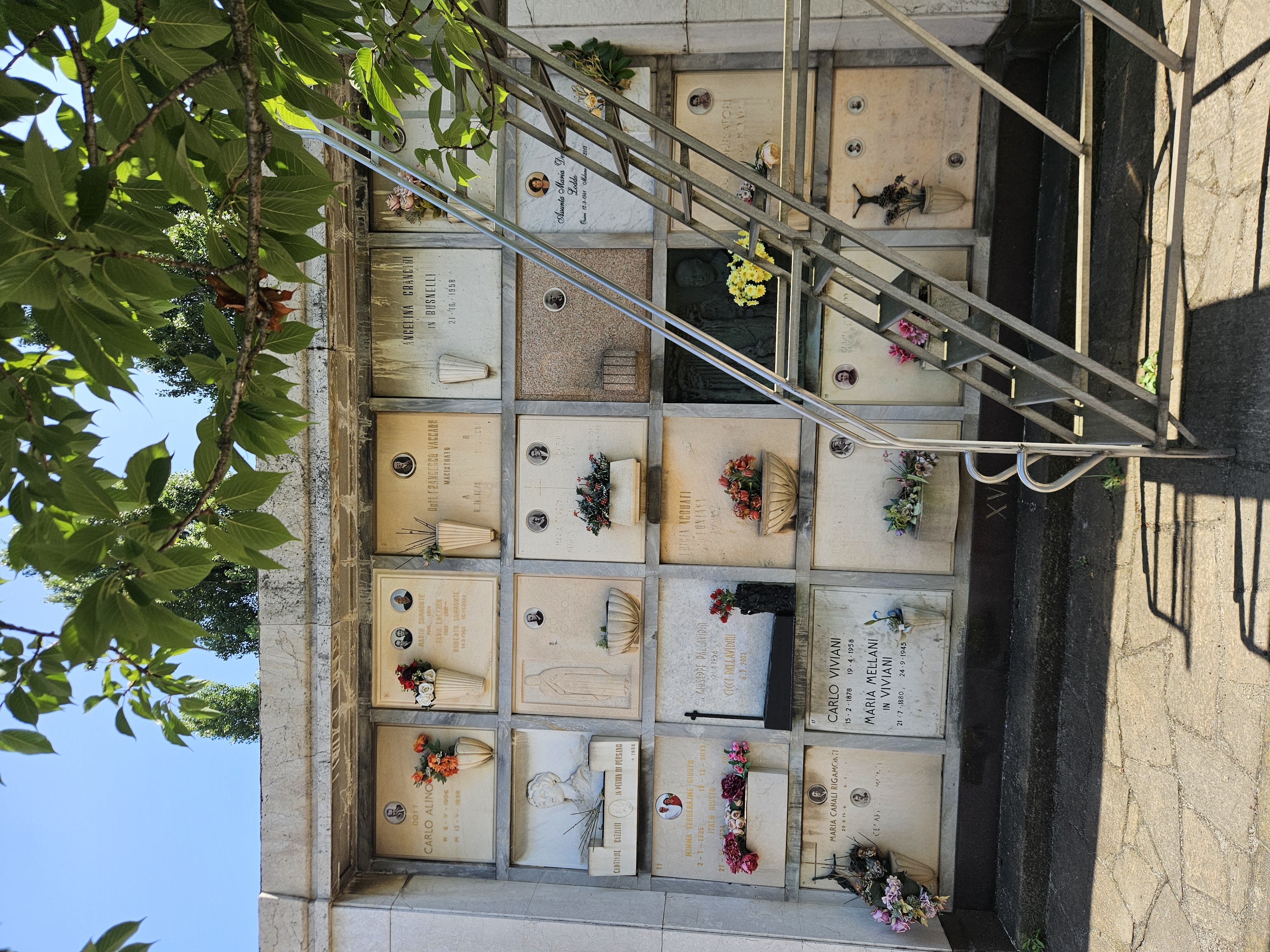
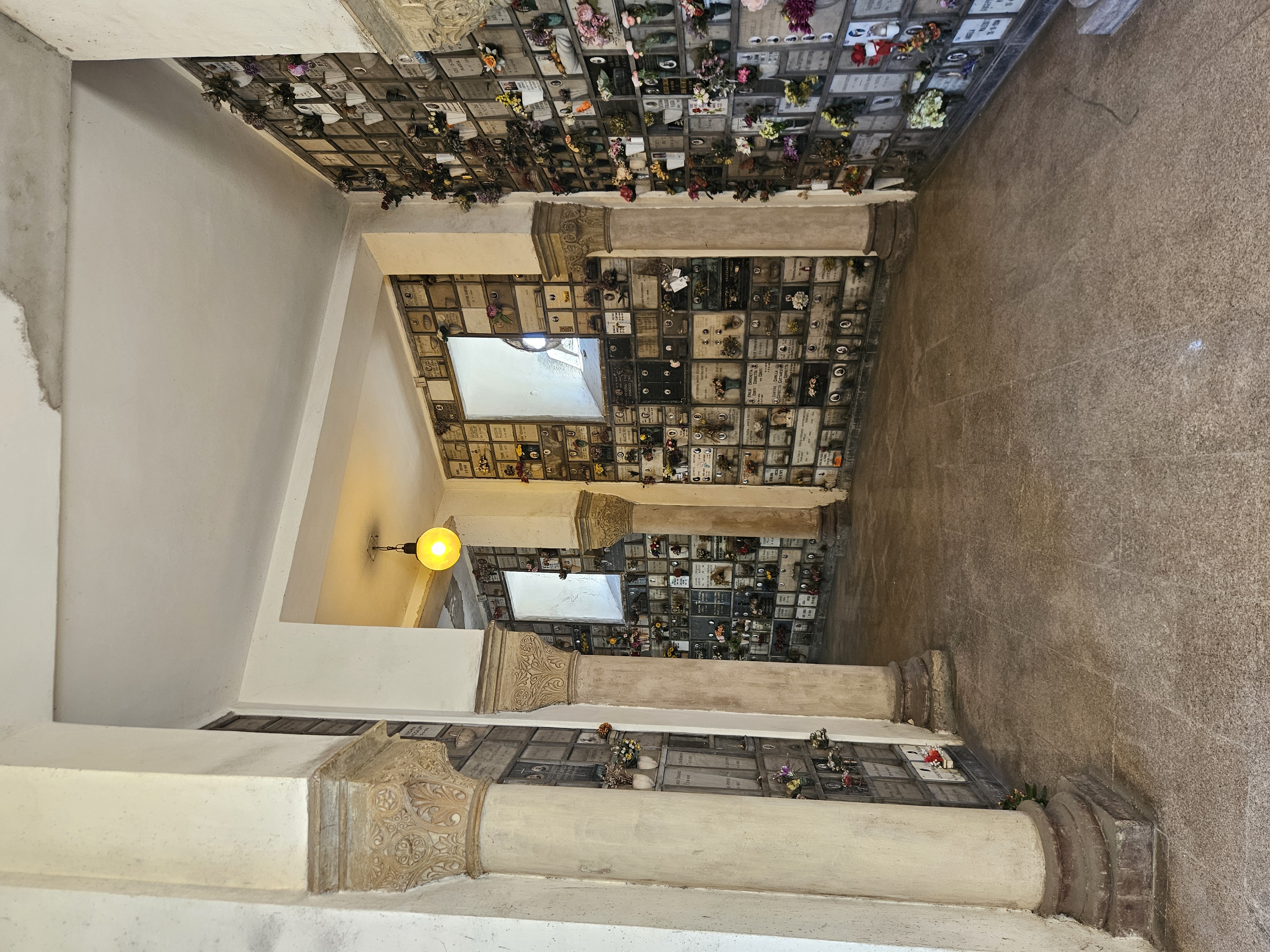
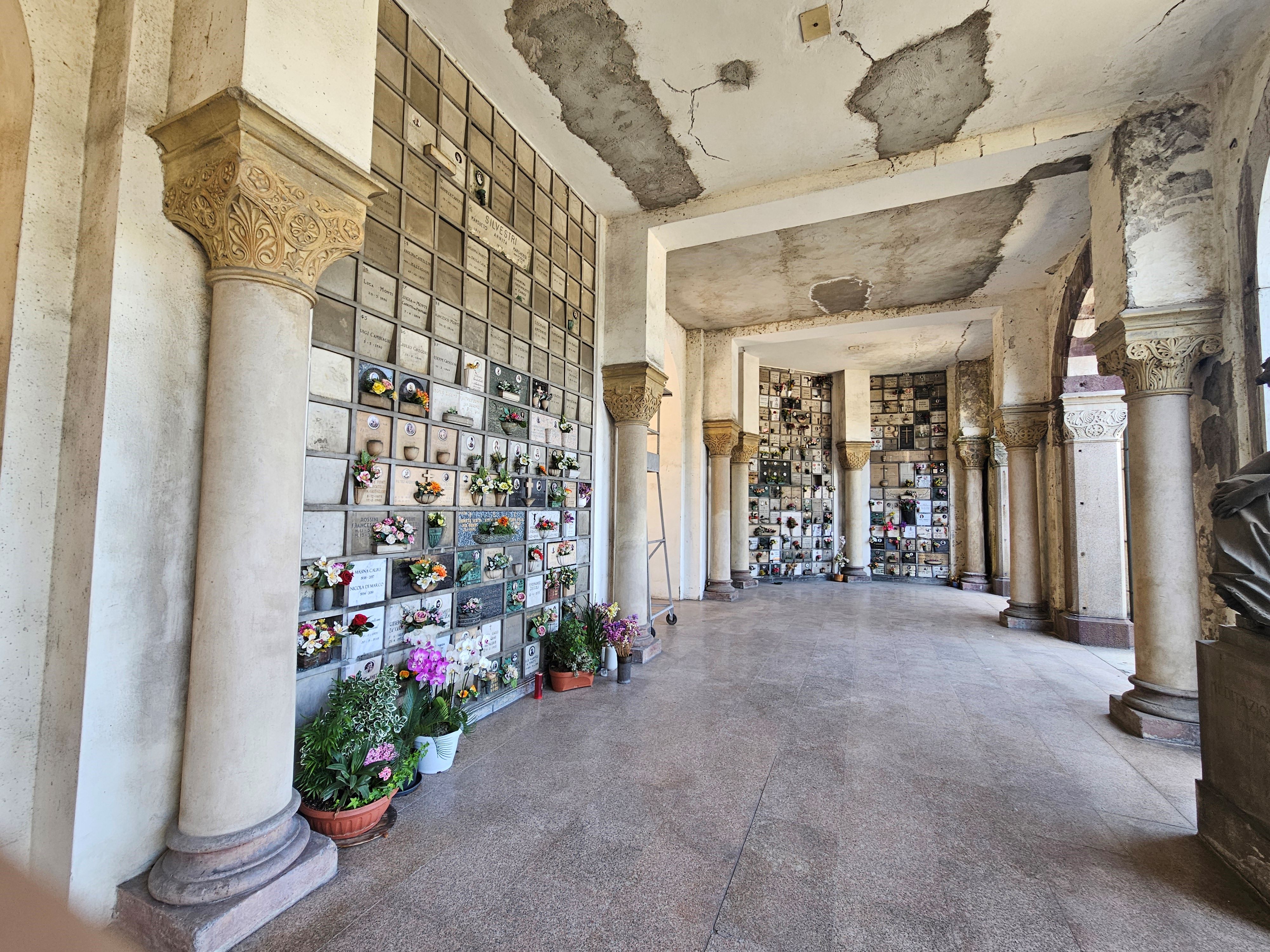
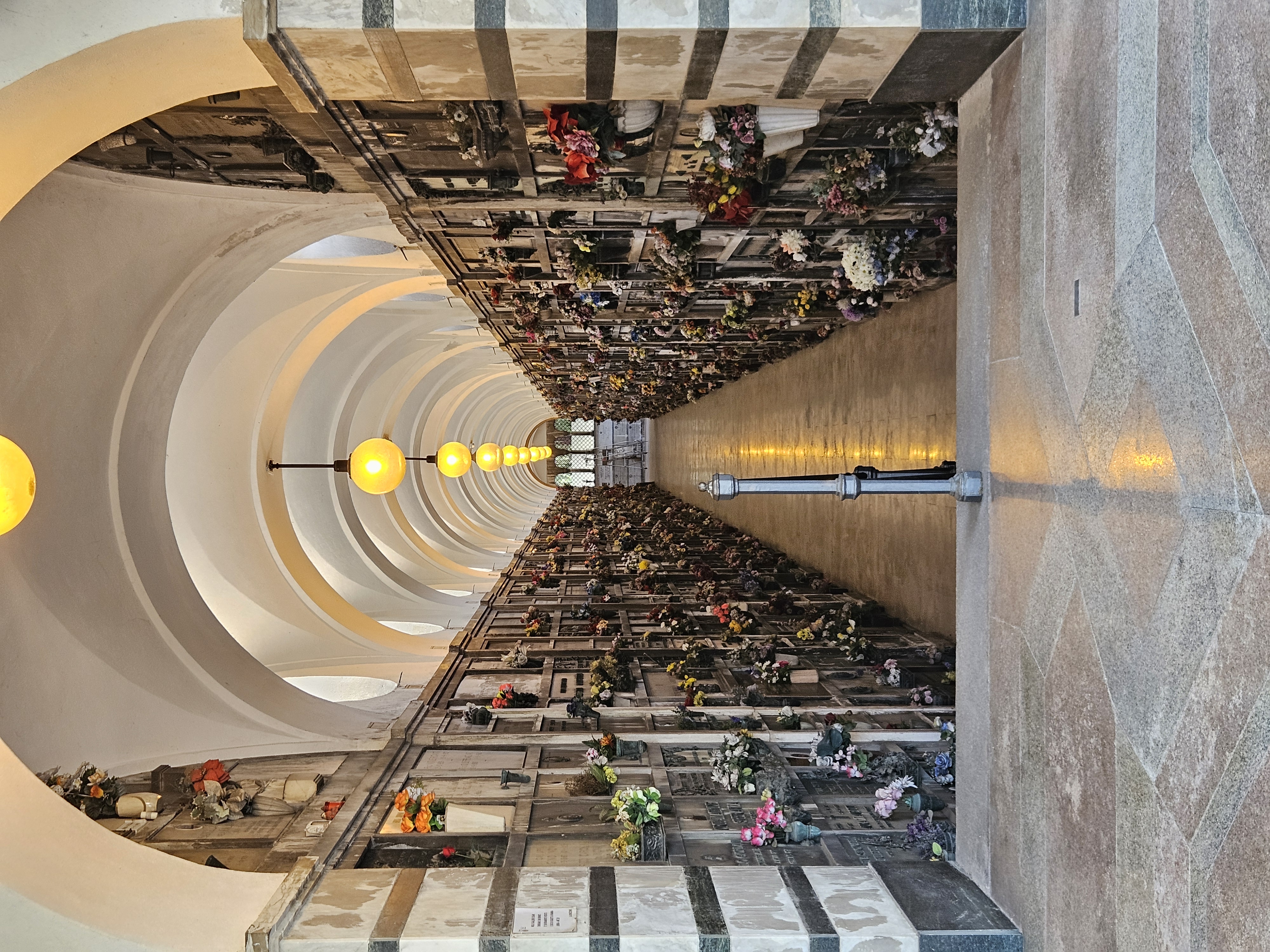
I turned the left. The space changes immediately. The walls have become a gallery of memories, these are long strings of tombs built directly into the wall, one to the other, without a break, without decoration. They act quietly, dignified, almost archive. Each panel tells silently, name, year, some messages, some flower.
Everything is arranged with a measure. There is no kic, there is no pomp just honor and memories. Some inscriptions are faded, other printed with golden letters. The view is sliding down the rows as per old shelves in the library, but books are not read here, but lives.

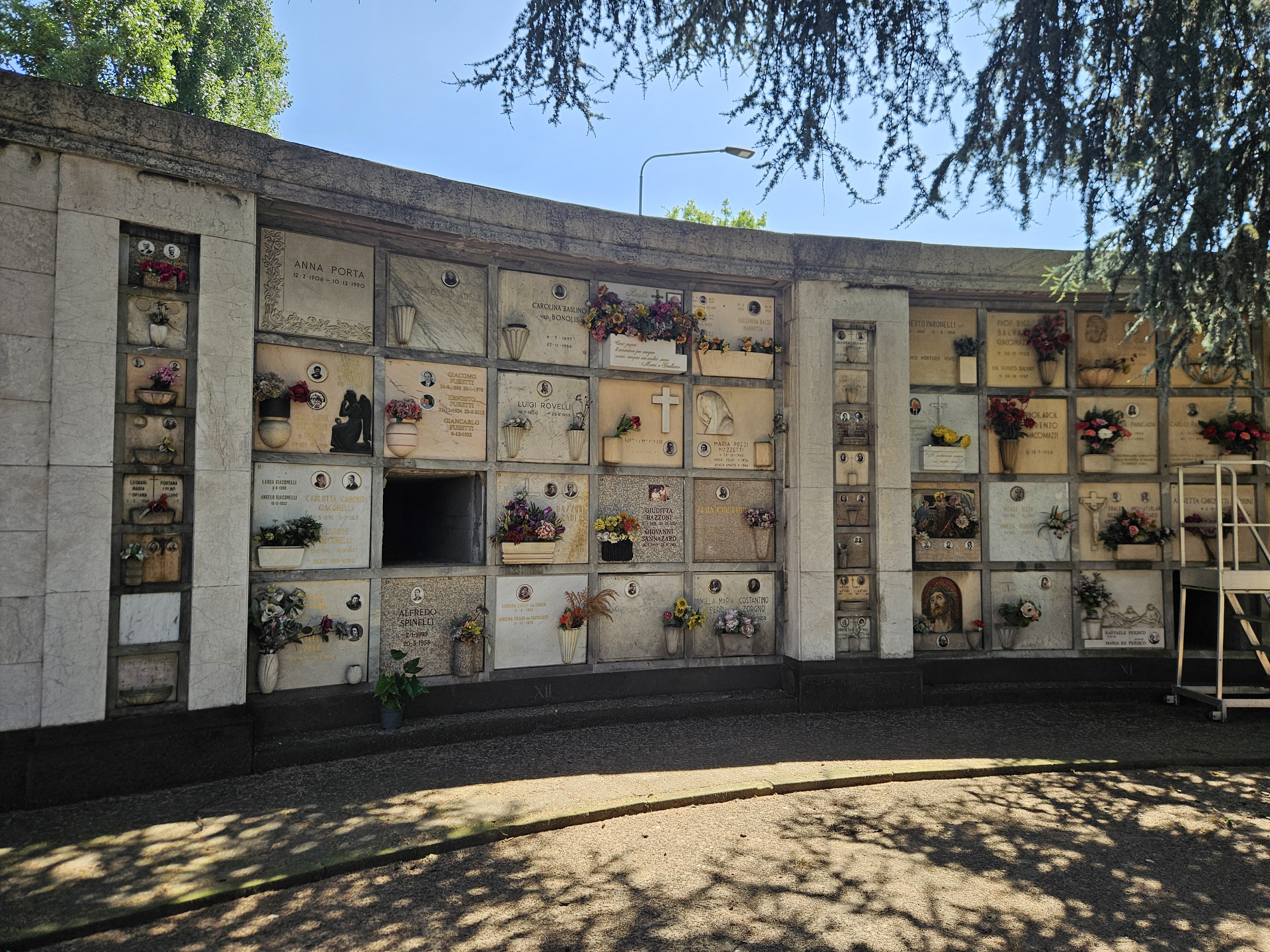
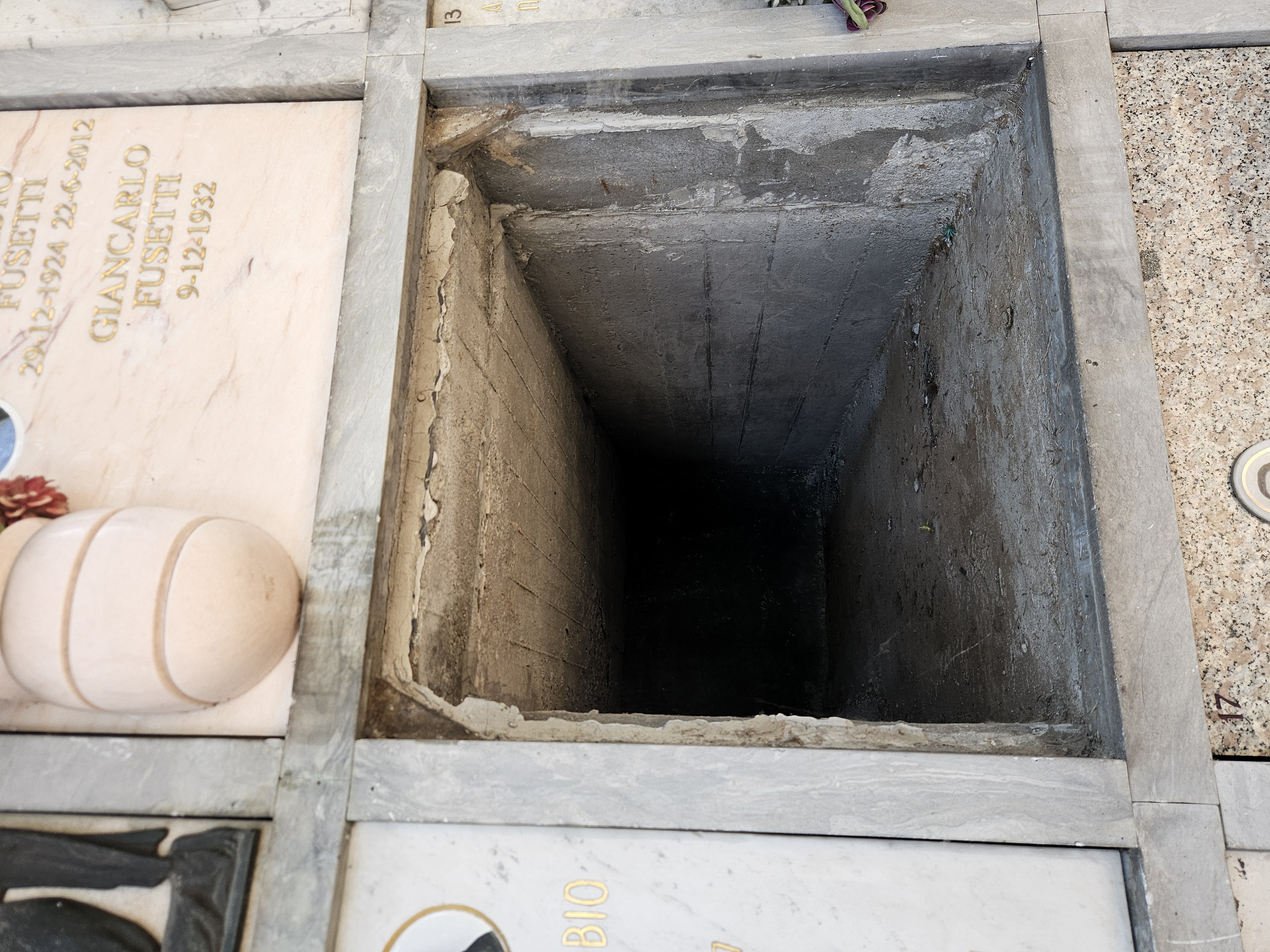
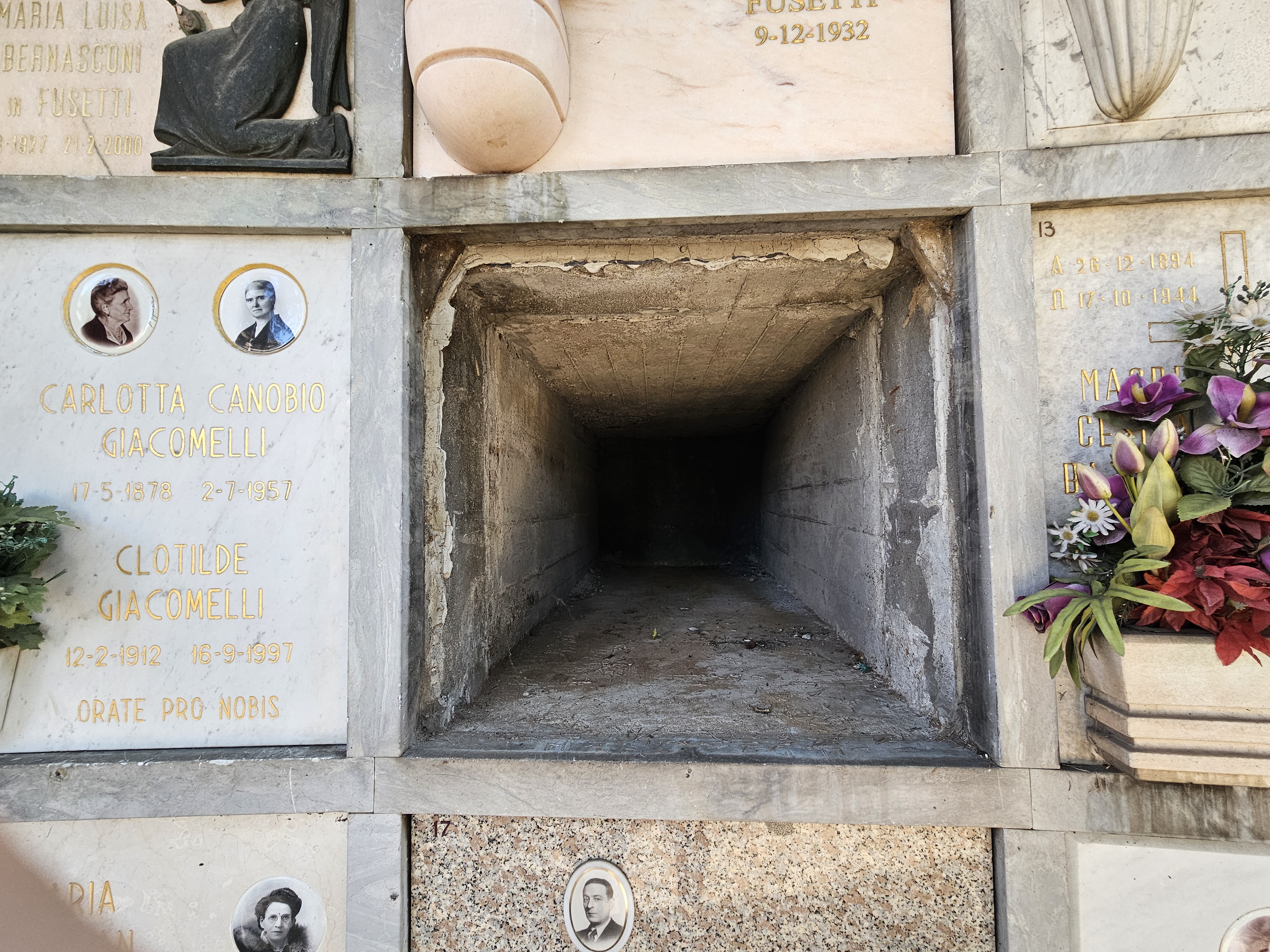
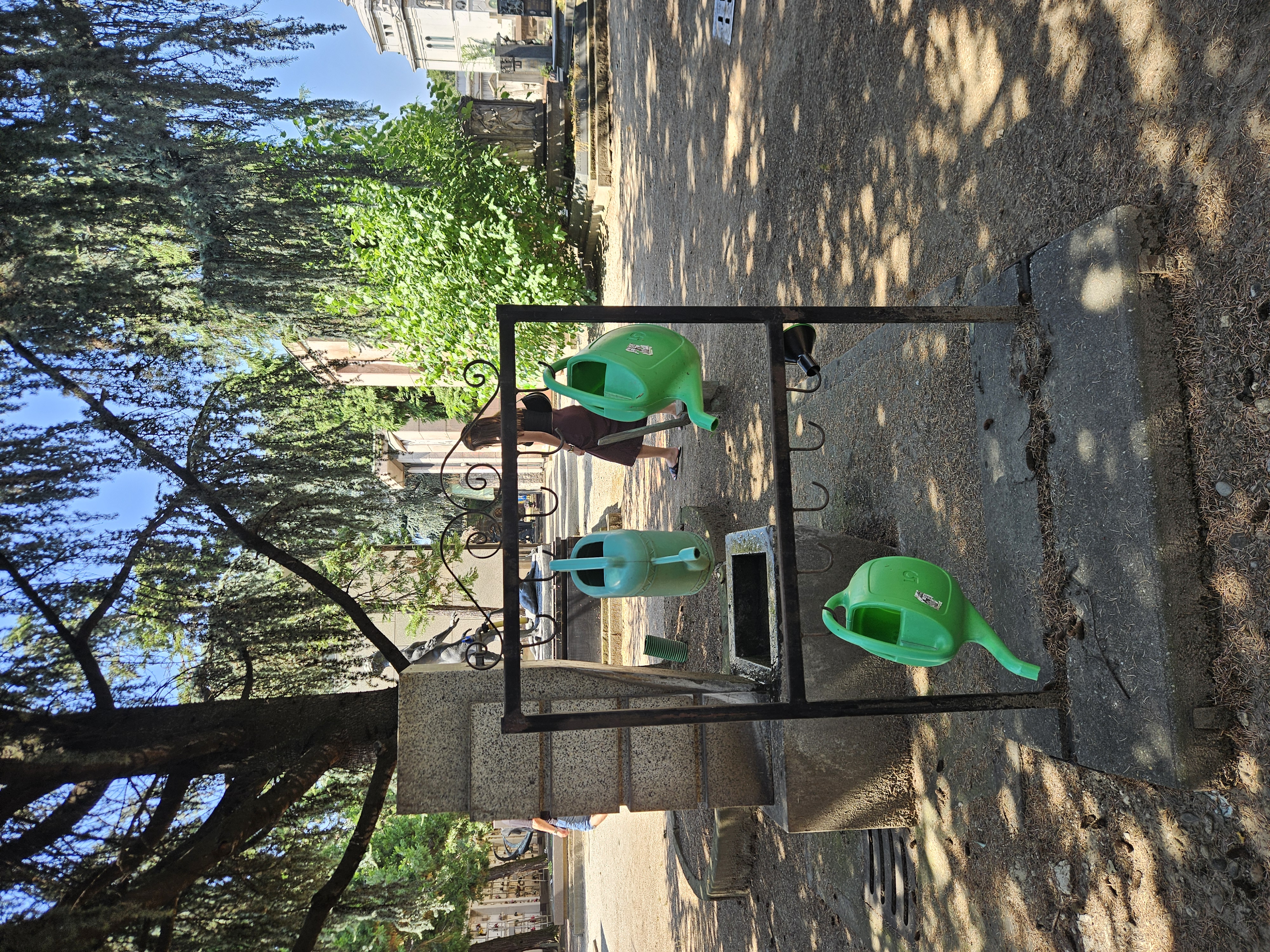
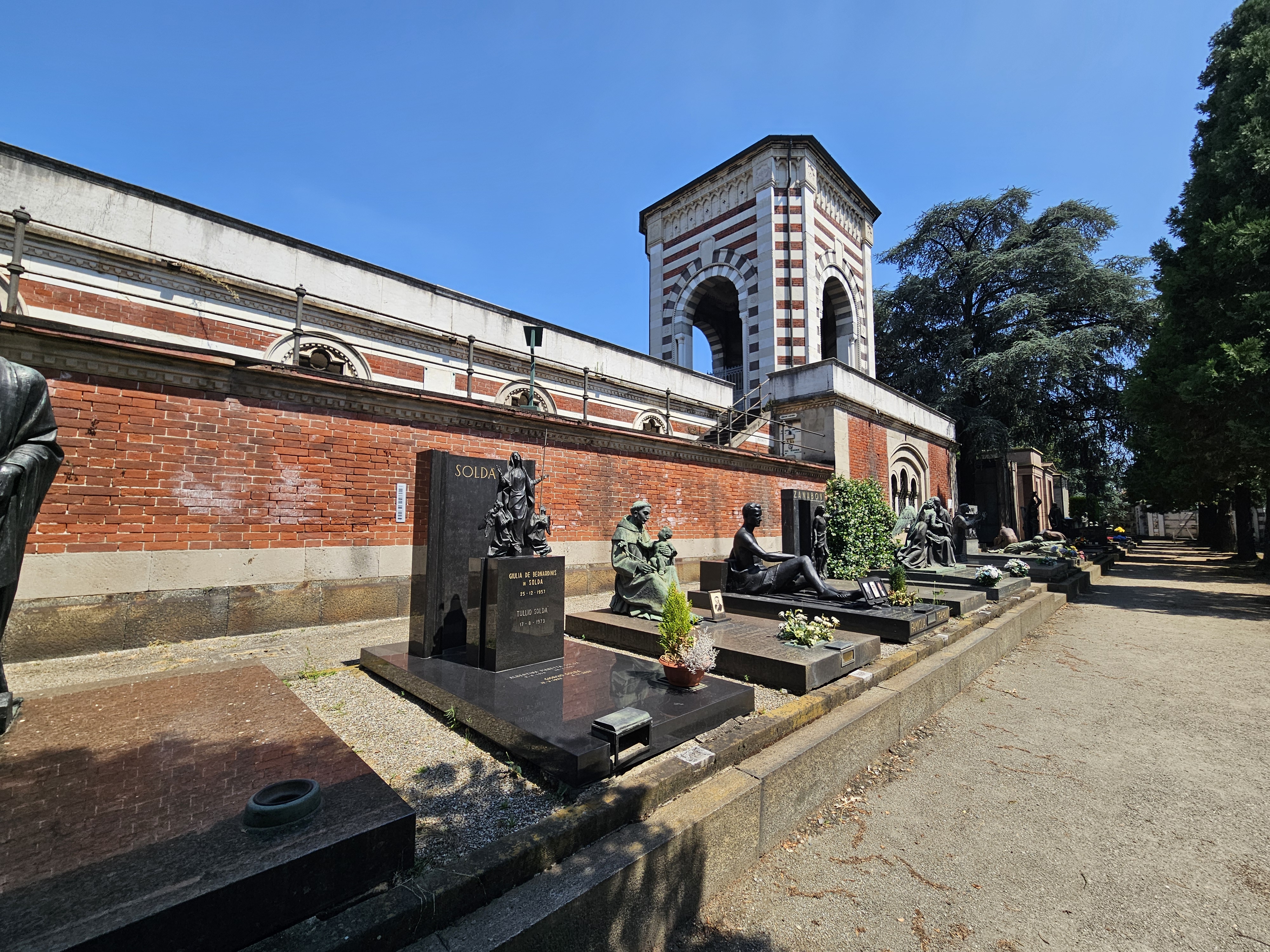
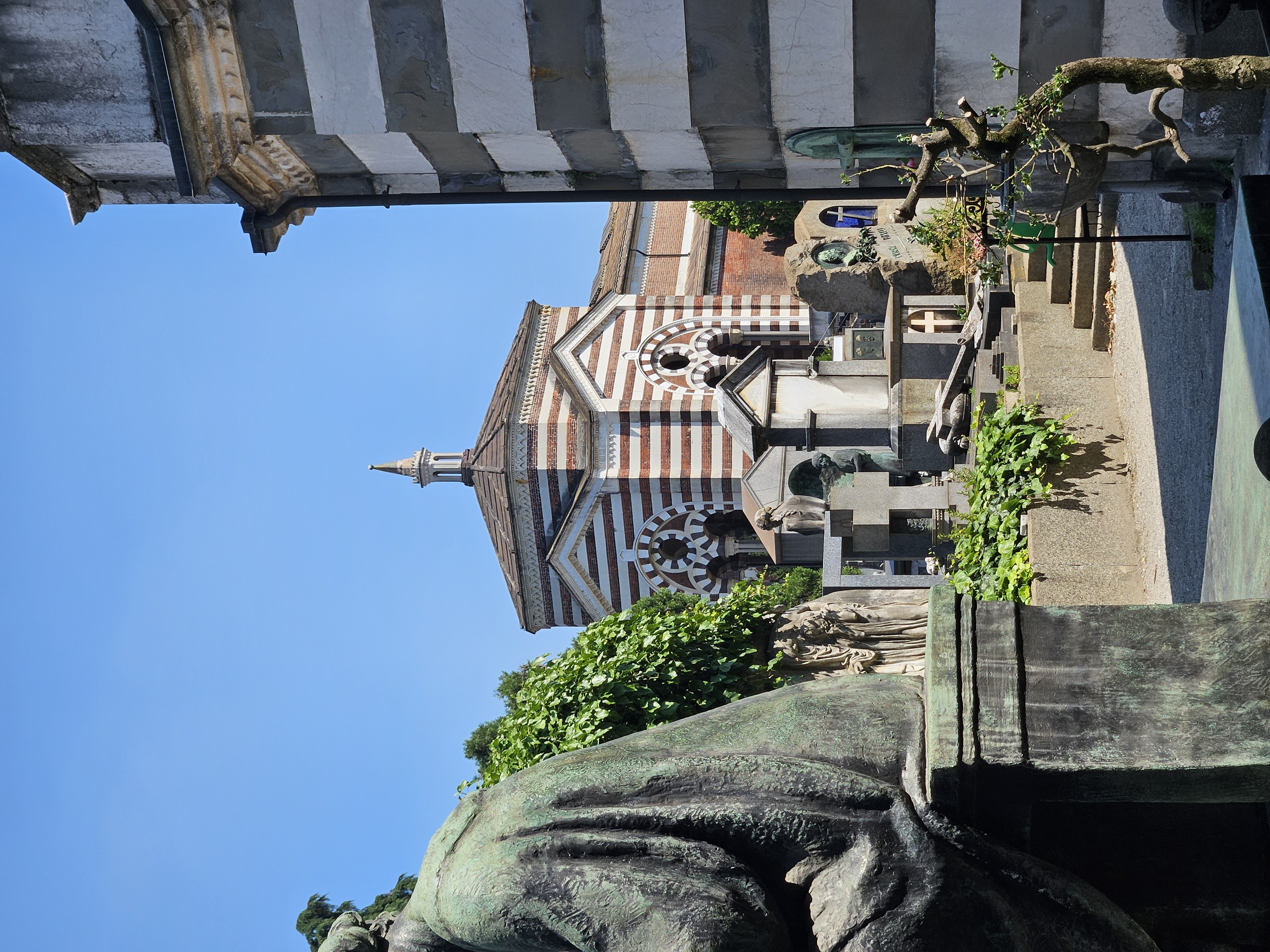
I get into one of the rooms that open from the wall. In the air of light through the upper opening and the magical silence.
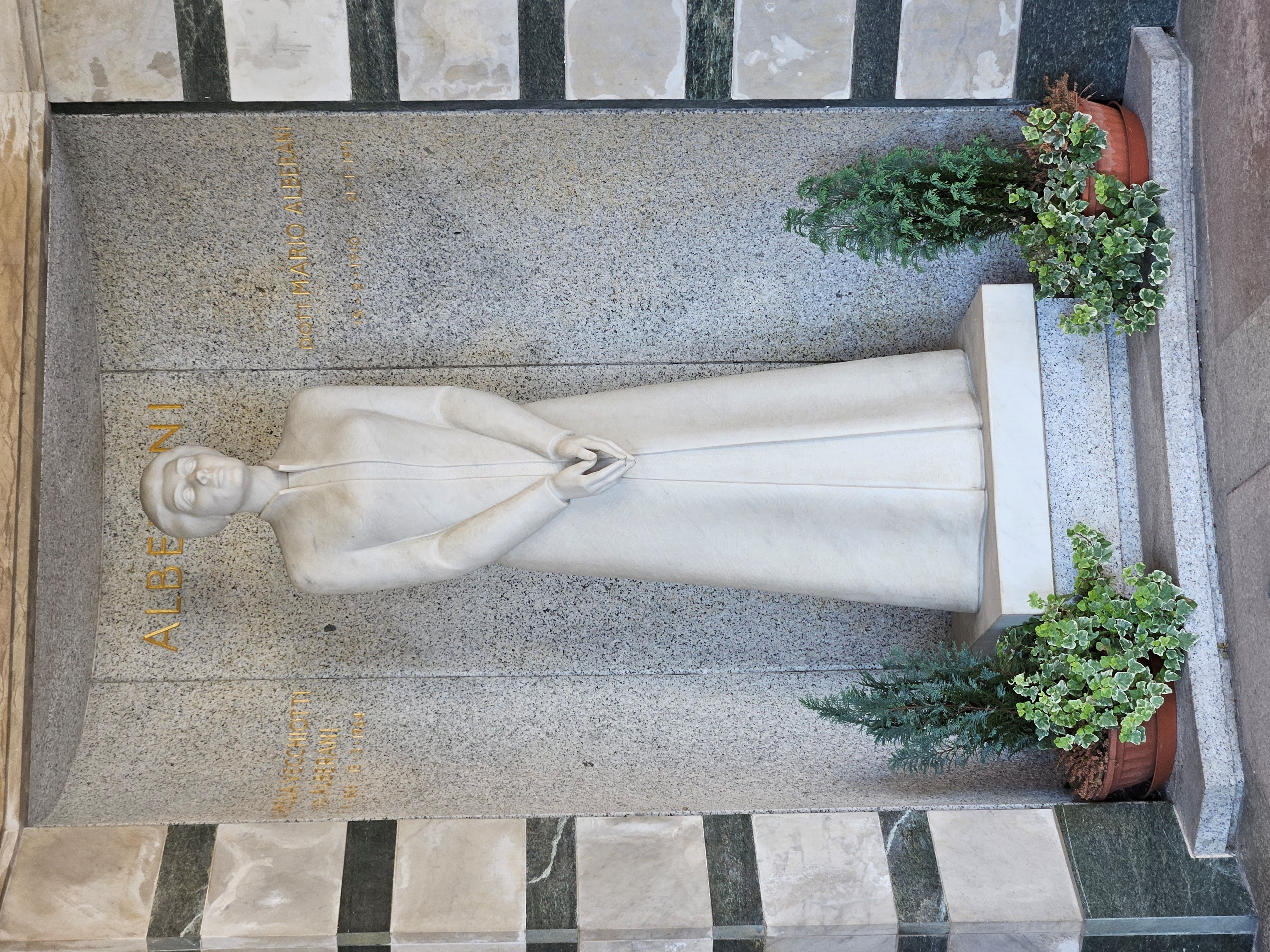
The walls are filled with the same tombs, neatly complex in height. But what stops the view are four statues, placed in a circle, one opposite another. You don't know if they keep space, or watching each other. They have a peaceful, somewhat sensible expressions. Like they wait, in silence, eternal.
The moment becomes almost spiritual. Not because of the religion, but because of the feeling you are at a place where time does not flow like else.
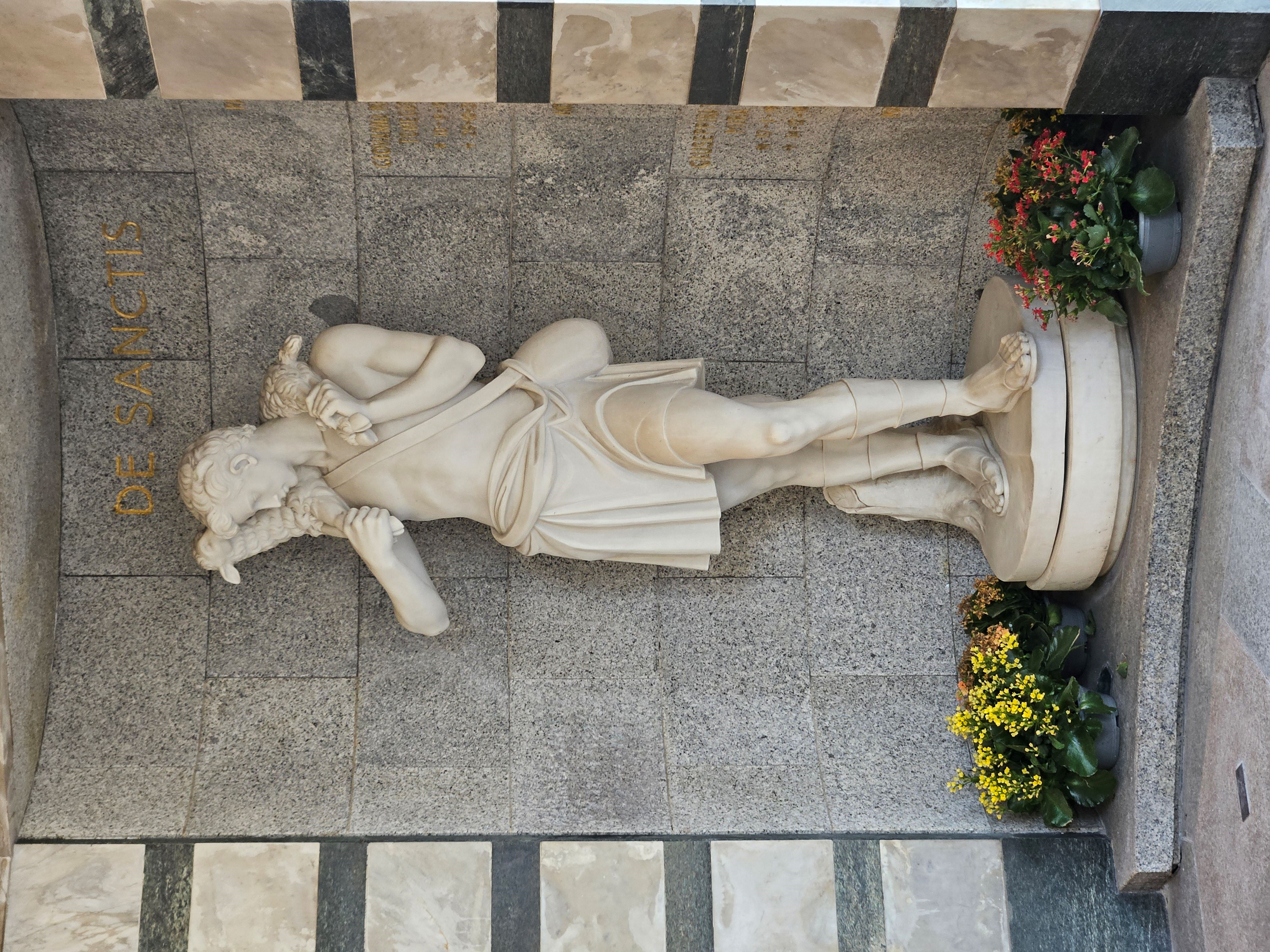
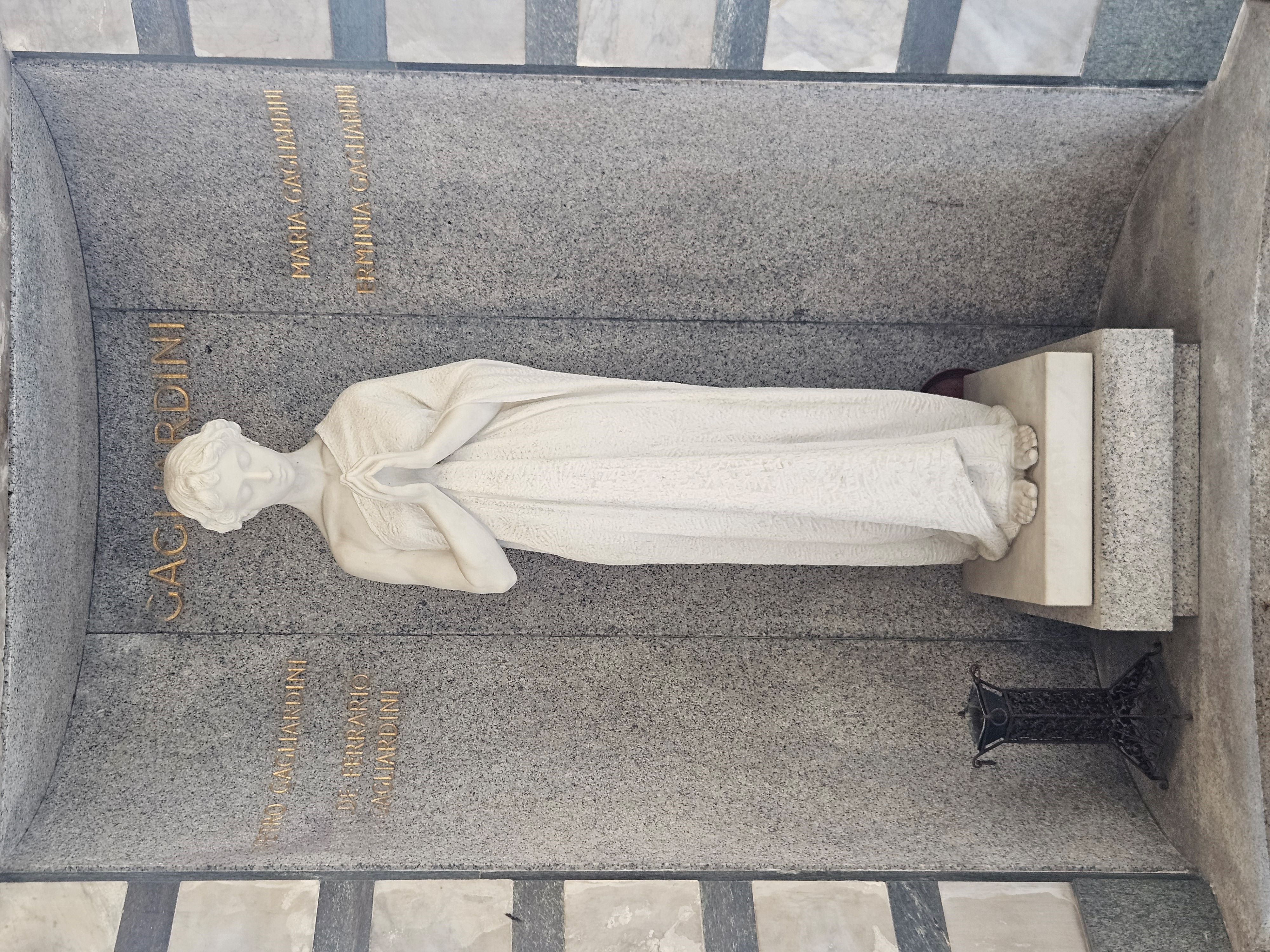
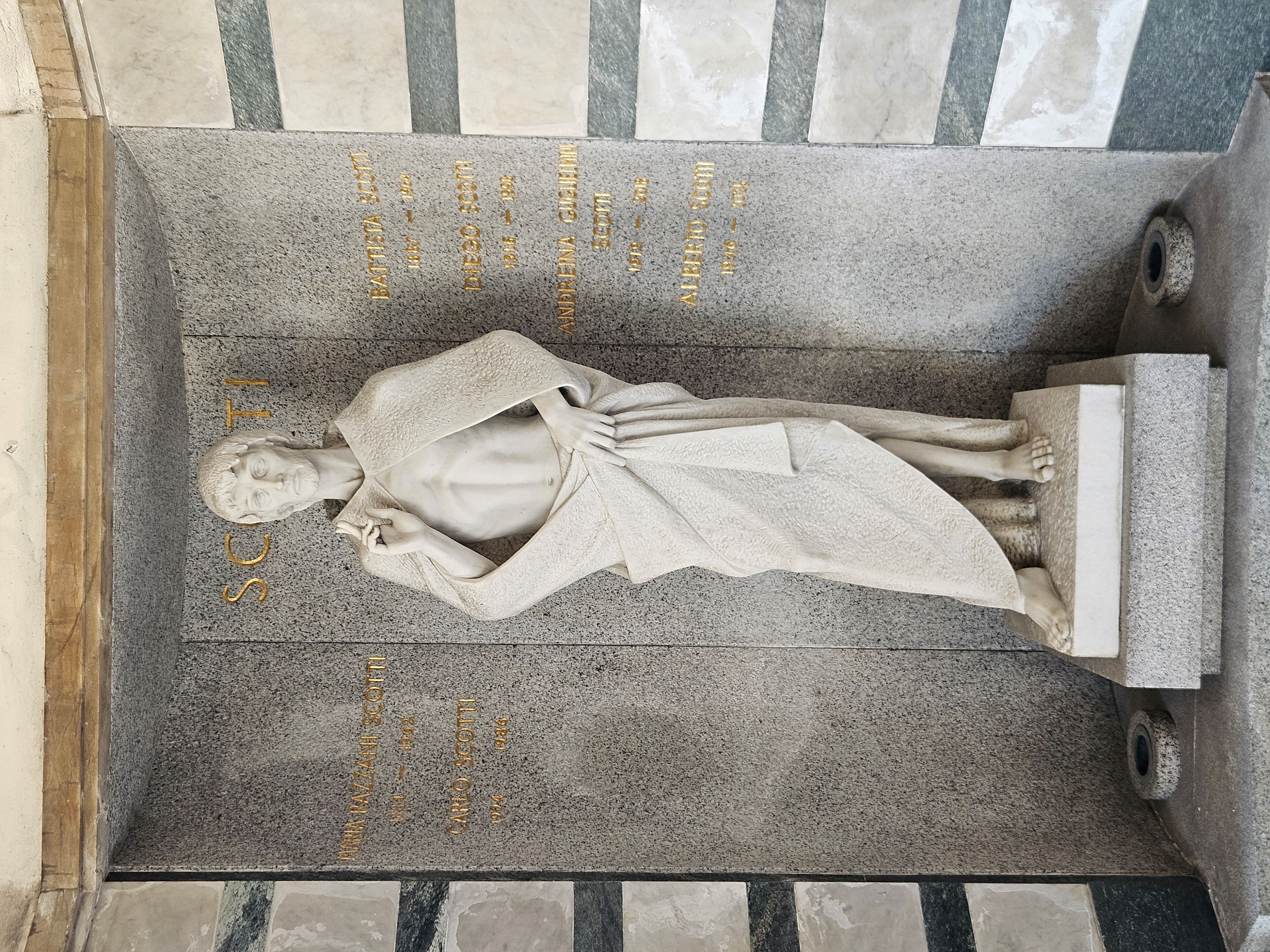

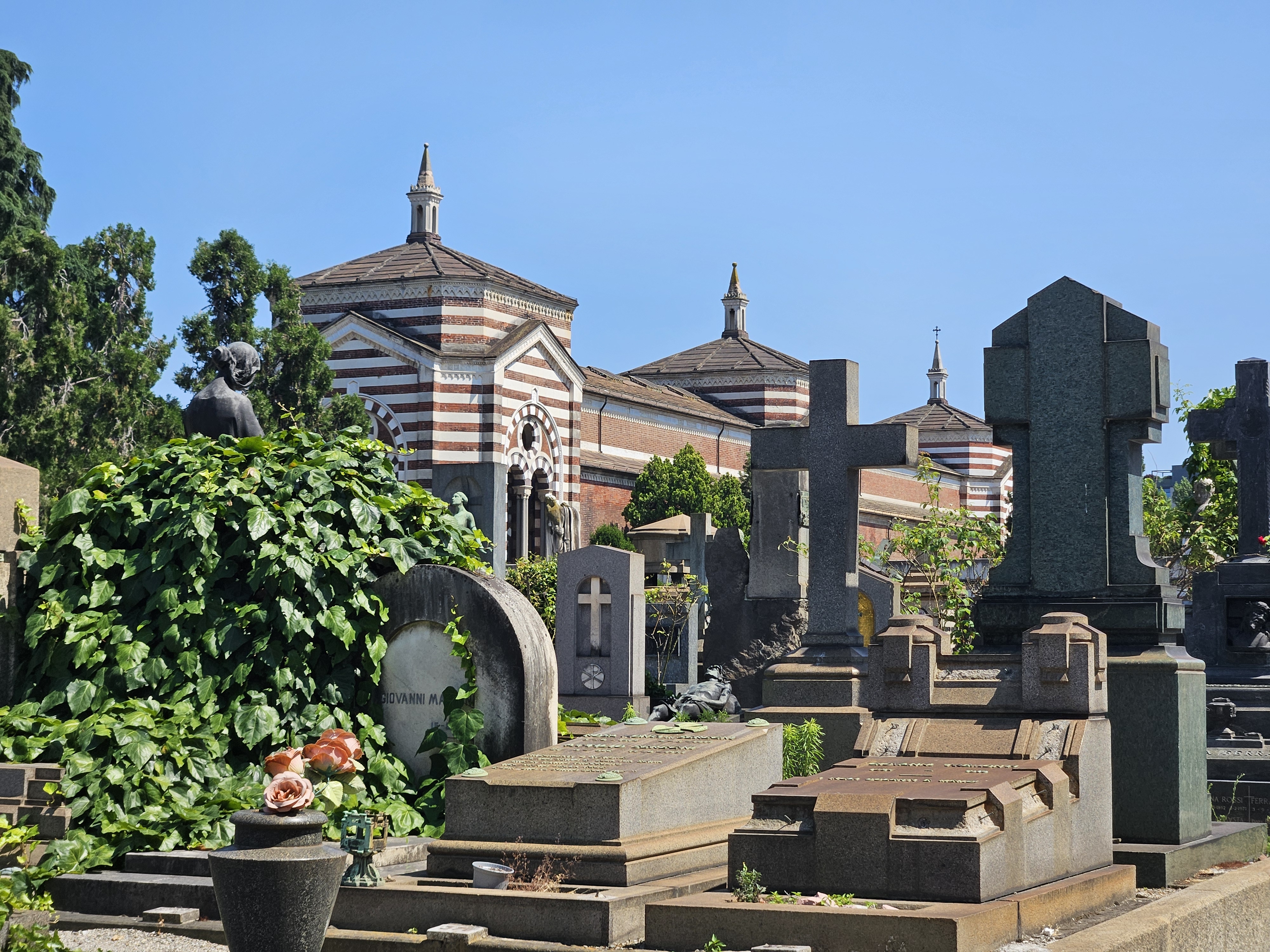
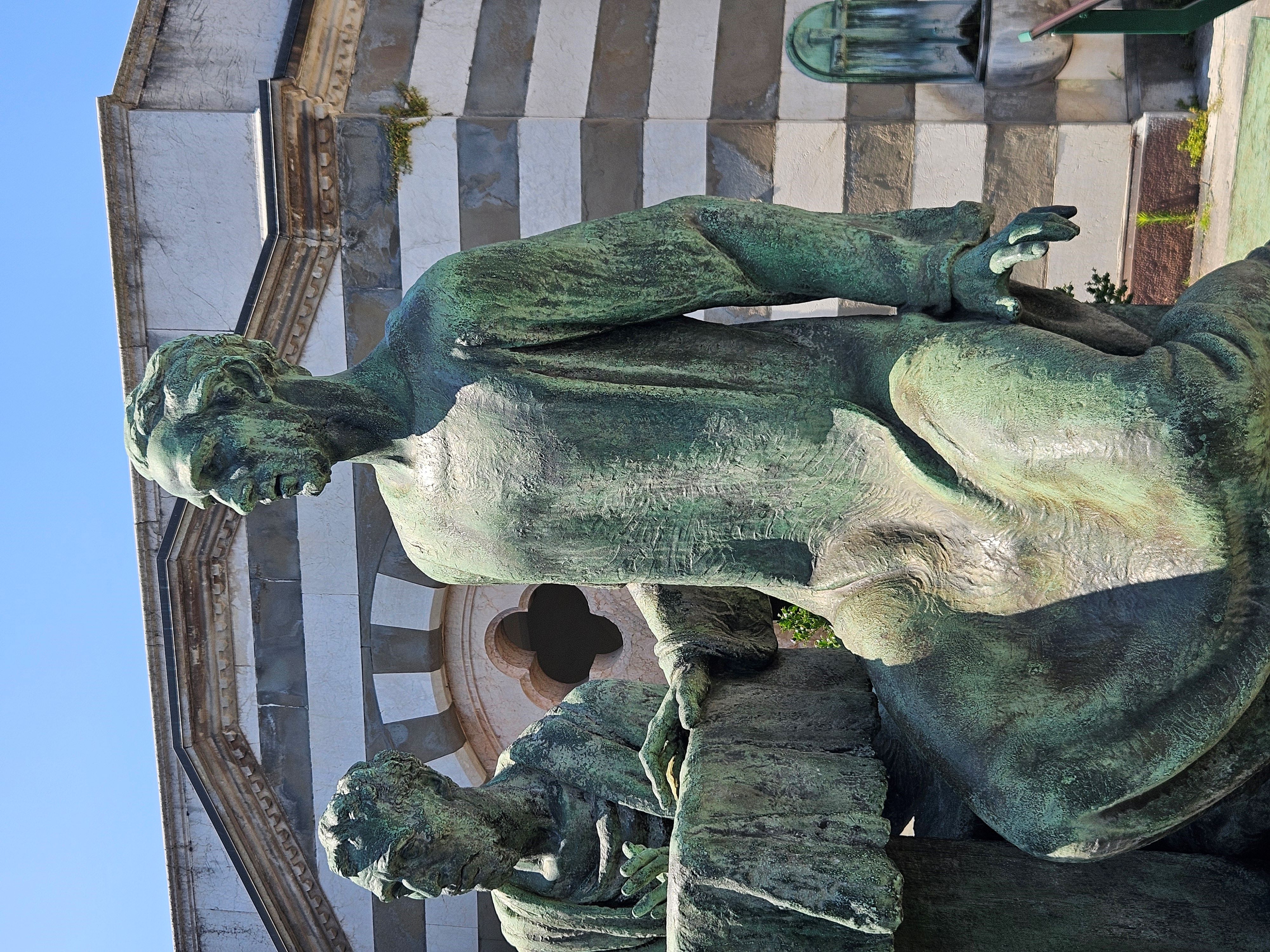
The Last Supper
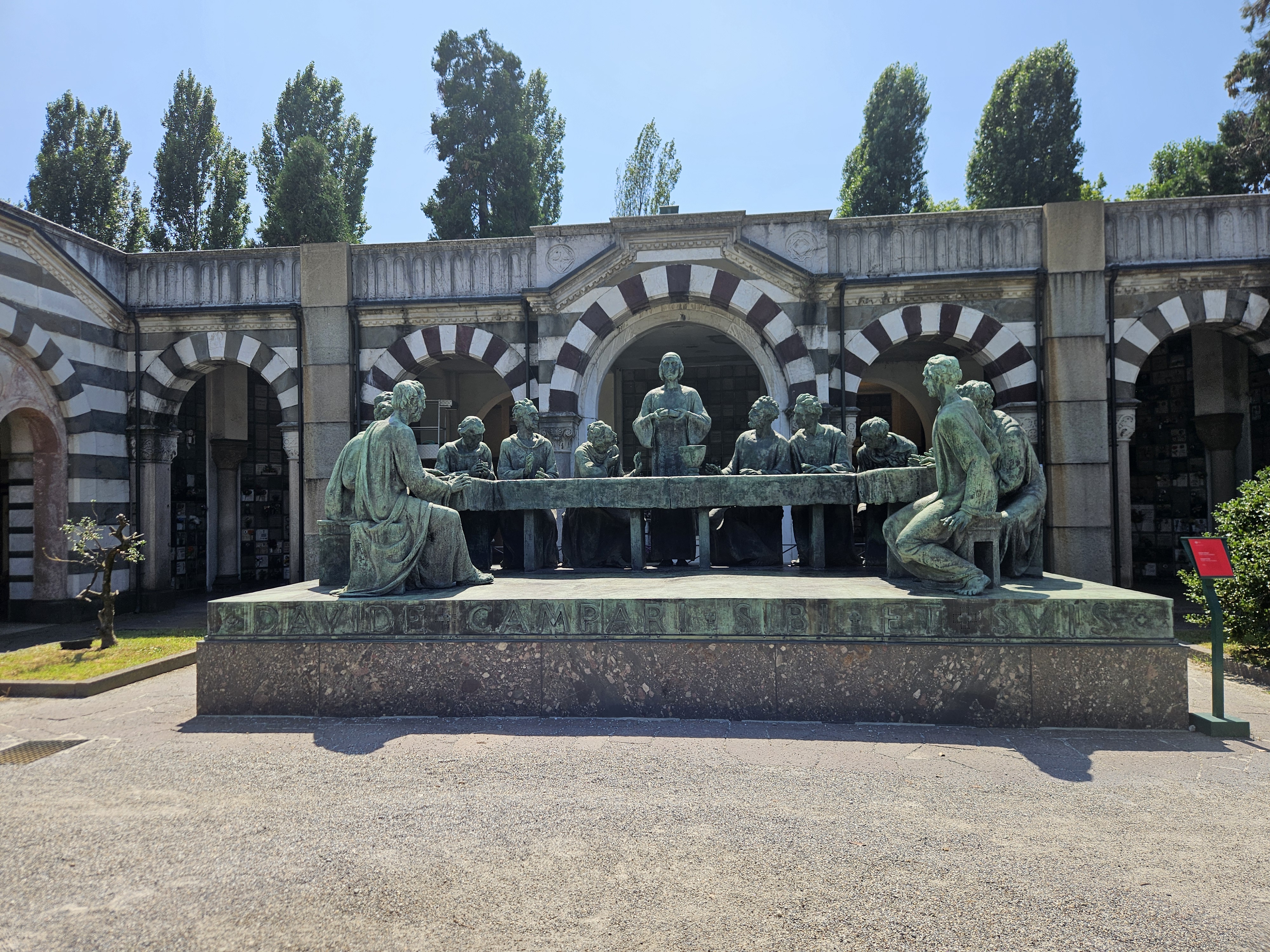
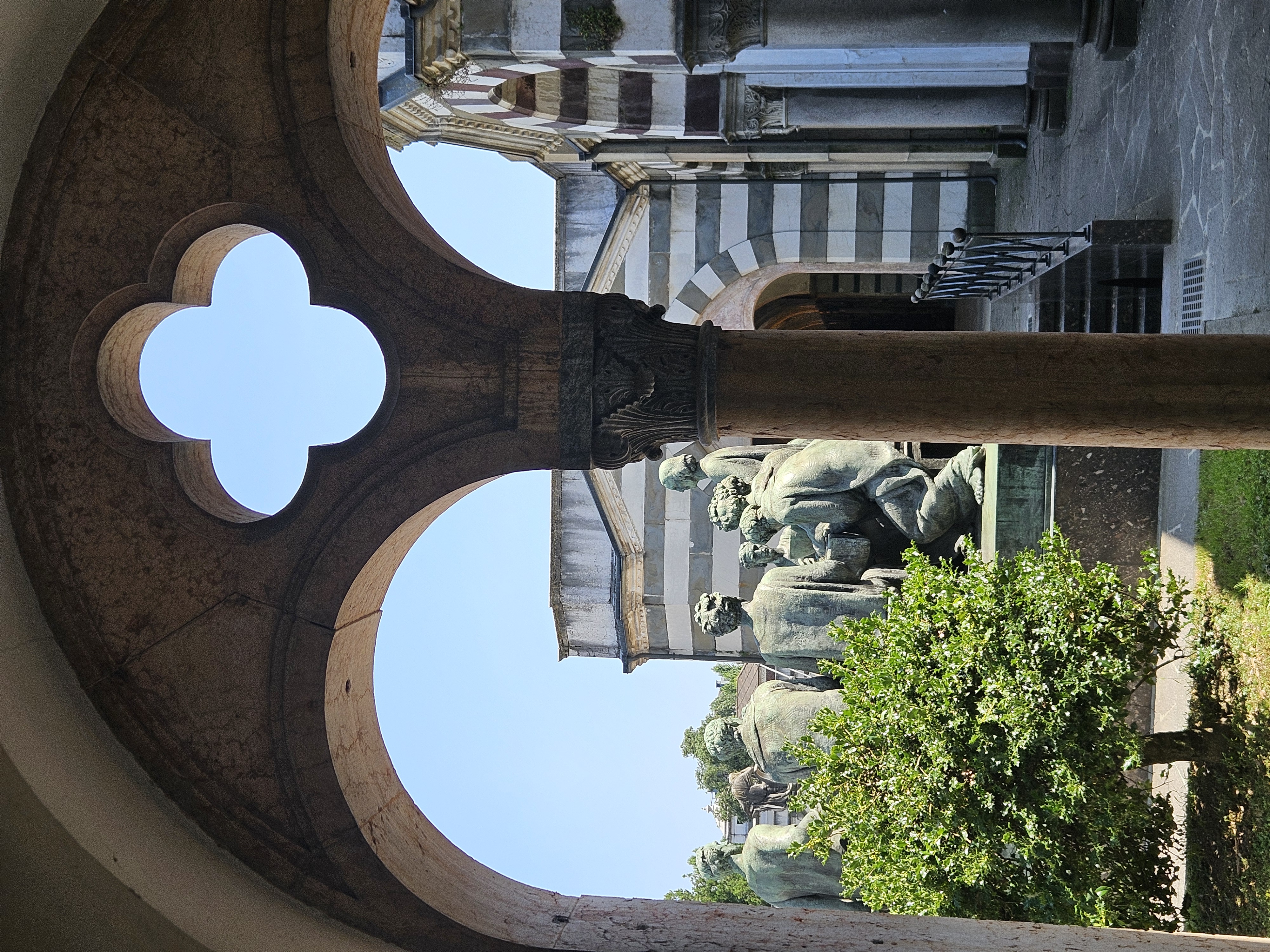
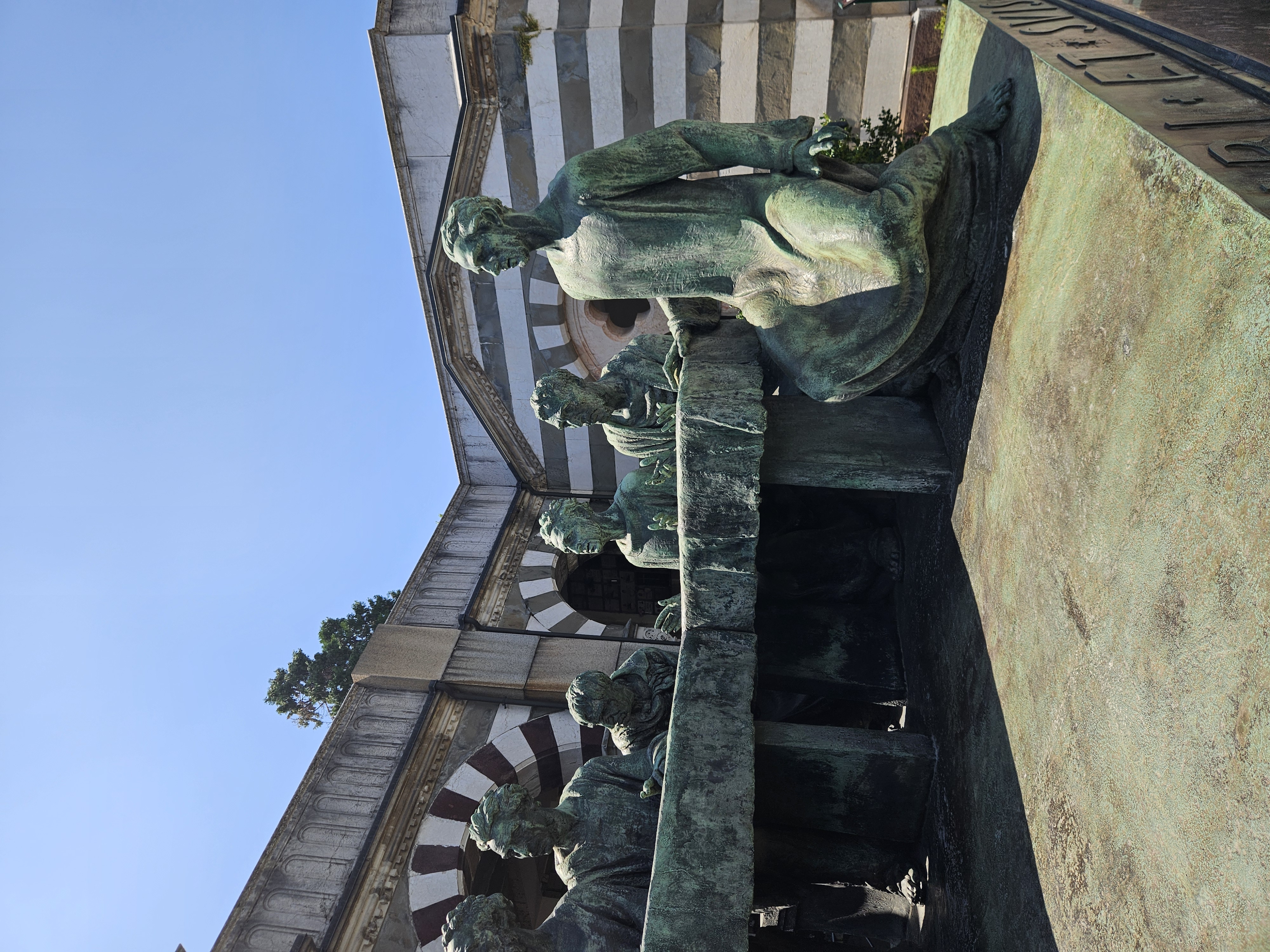
I continue on and I come to the wall that completely takes my breath away. Secret dinner, in full size. In stone. The sculptural version of Leonarda da Vinci, with each expression, each movement caught at the moment Jesus speaks:
"One of you will betray me."

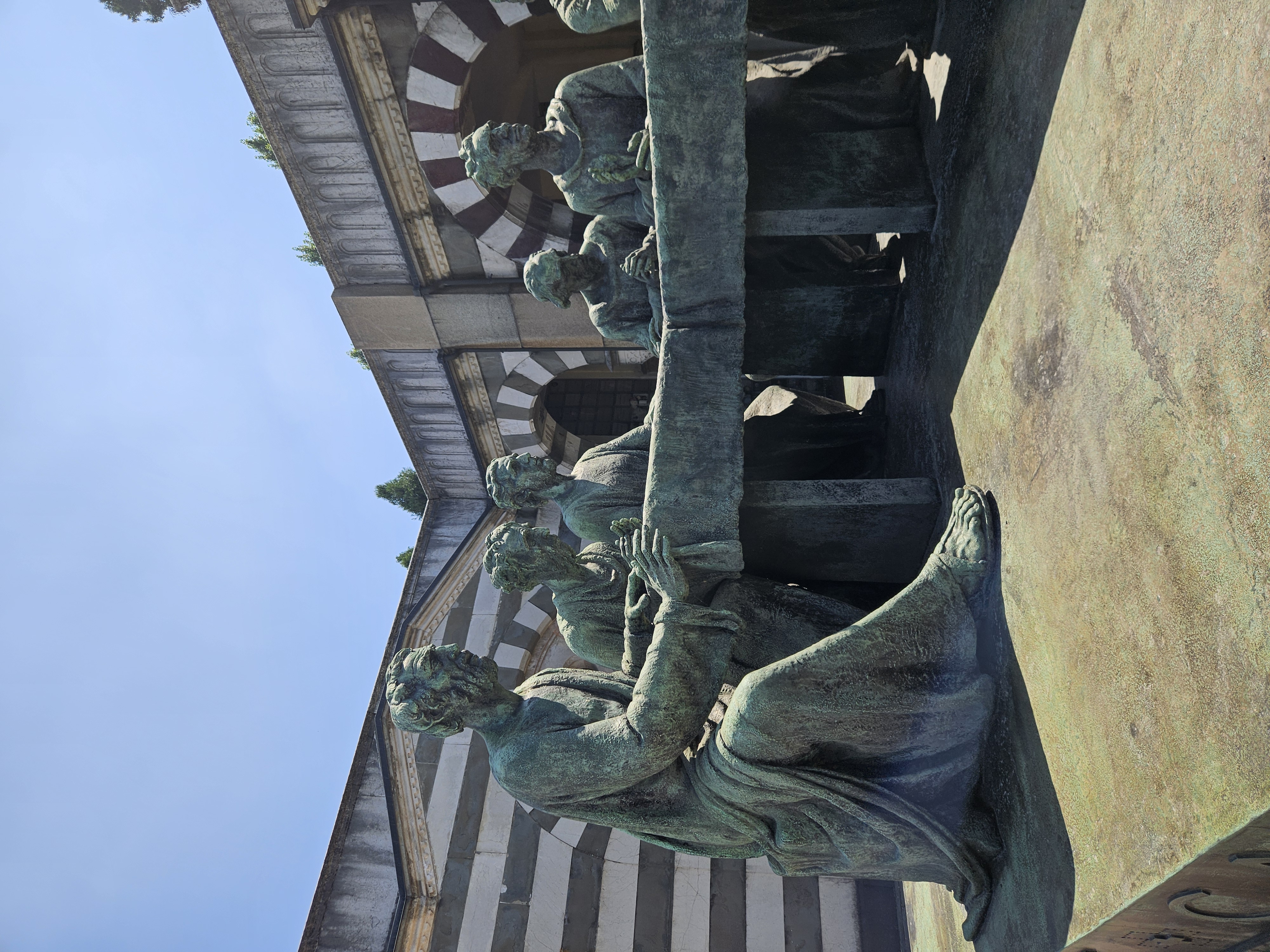
This interpretation is not trying to be a replica. It has its silence and depth, especially because it is here, here among the tombs. Set in the cemetery, "The Last Supper" stops being just a religious scene. It becomes a story of an end, about friendship, betrayal and what comes after.
The people who see her and the apartment remain a few minutes without words. And I am. Because in this context, this scene does not remind the church, but on the fate. We all sit for some of your table, we all have our moment of silence, and we all have someone we love, someone we have lost.
Alberto Keller
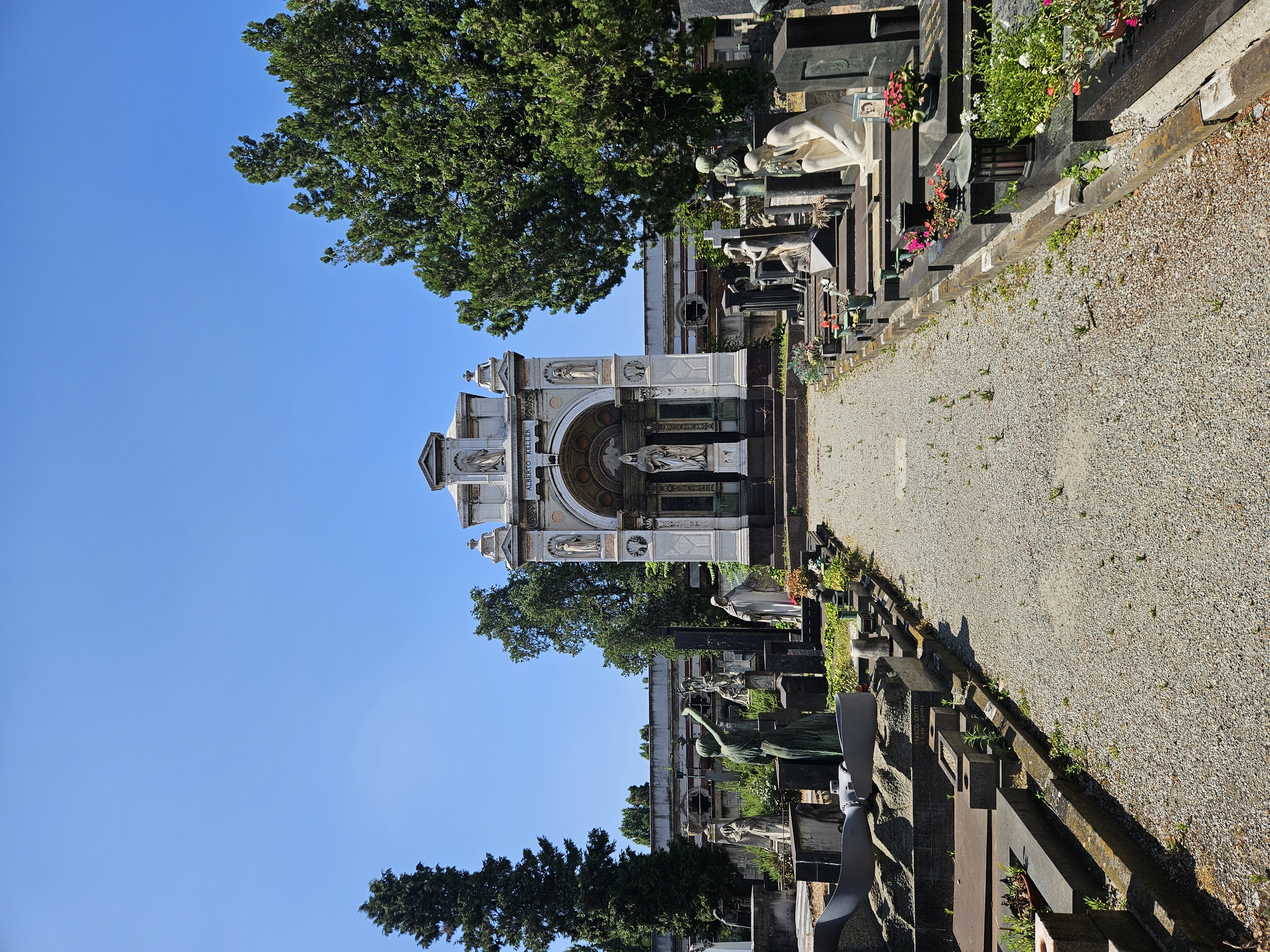
Alberto Keller (1800–1874) was a Roman of Swiss origin who moved to Milan at the age of twenty and became prominent in the silk industry and trade.
He was a protestant, with liberal ideas and a great supporter of the idea of cremation of the body instead of traditional burial.
Keller decided to finance the construction of the first crematorium in Italy, and one of the first in Europe, within the Cimitero Monumentale.
It was inaugurated on February 22, 1876, just two years after his death in a manner that was a display of modernization and civilization, and which was opposed to the dominant church views of the time.
With that symbolic act, his body became the first to be cremated in the crematorium built here, making him a living historical figure of change and progress.
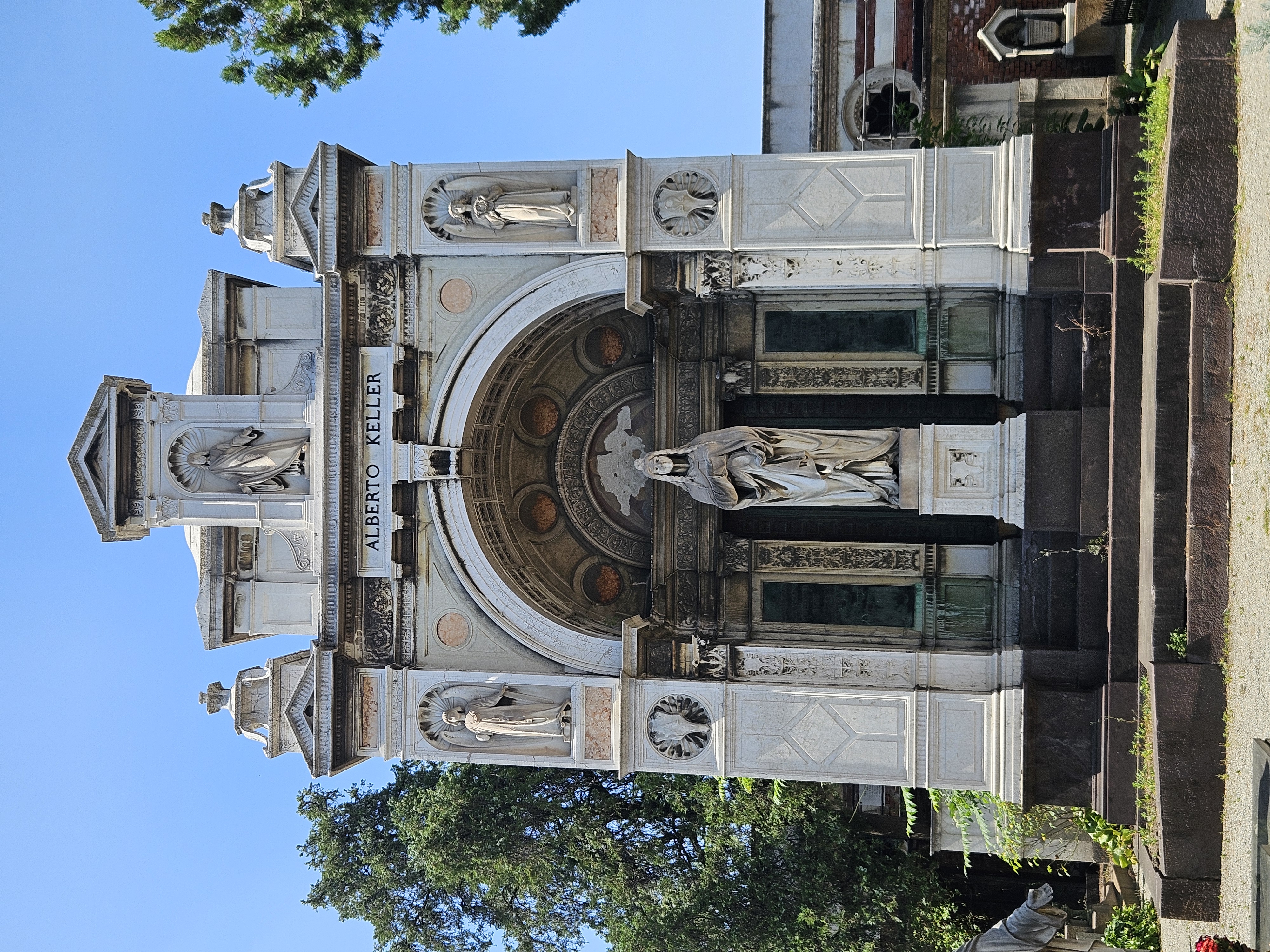
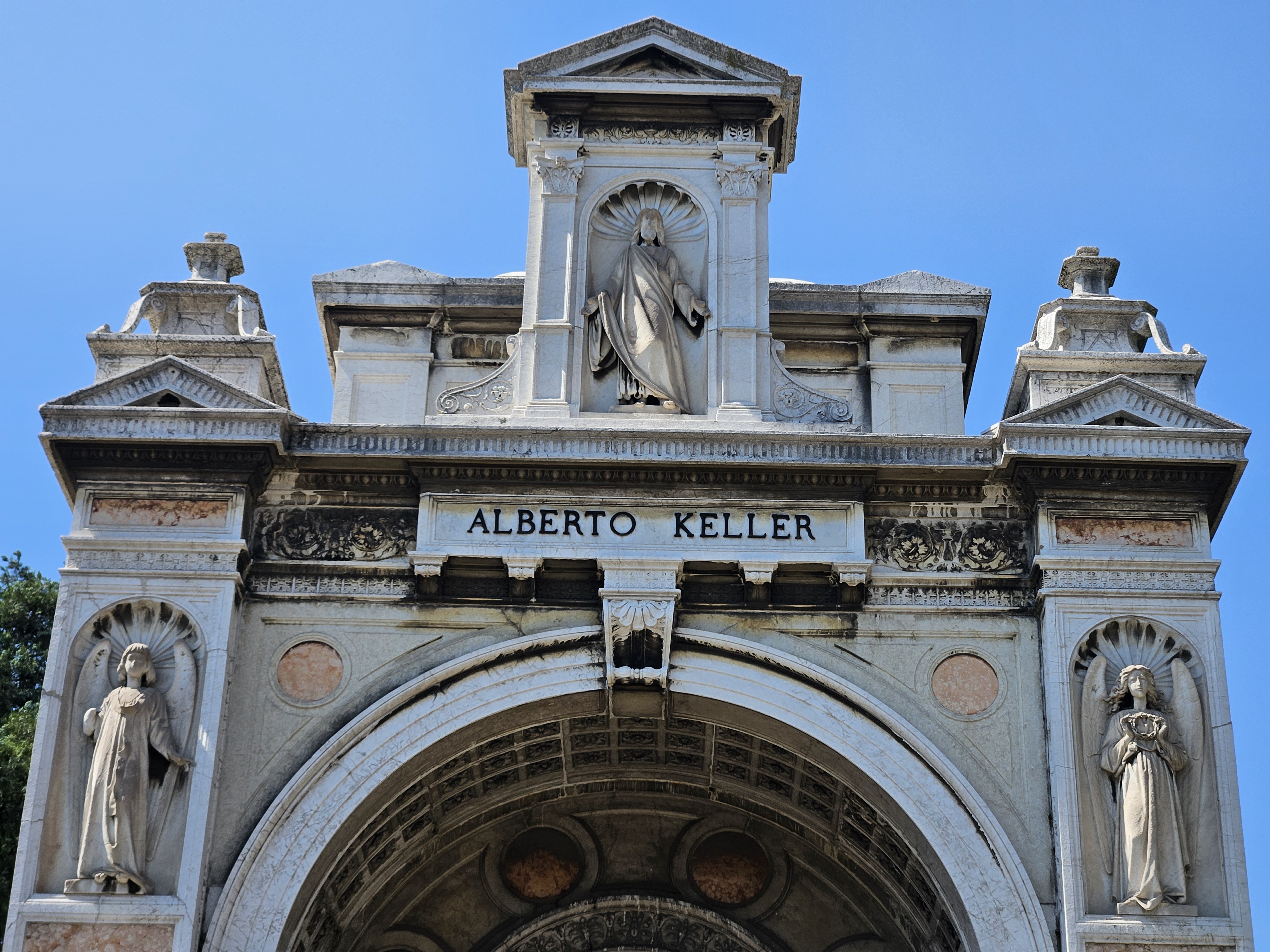
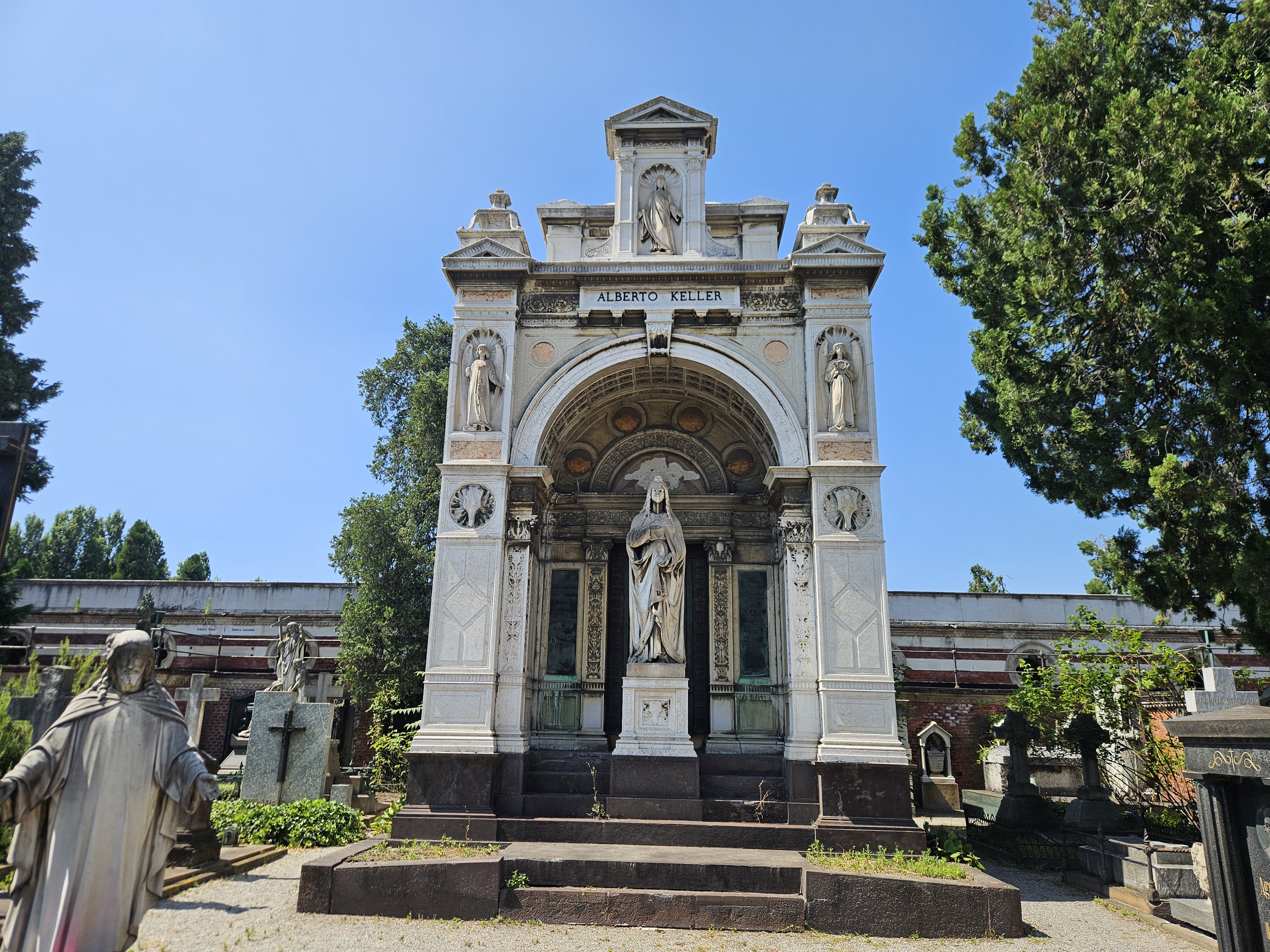
In the part of the cemetery known as the Riparto Acattolici (the section for non-Catholics), a static Edicola Keller sculptural chapel was built dedicated to him and his family.
It was designed by Carlo Maciachini and the sculptor Giosuè Argenti, in a neo-Renaissance style inspired by Bramante.
In front of the entrance is the statue "Protezione", symbolically the protector, made of white marble
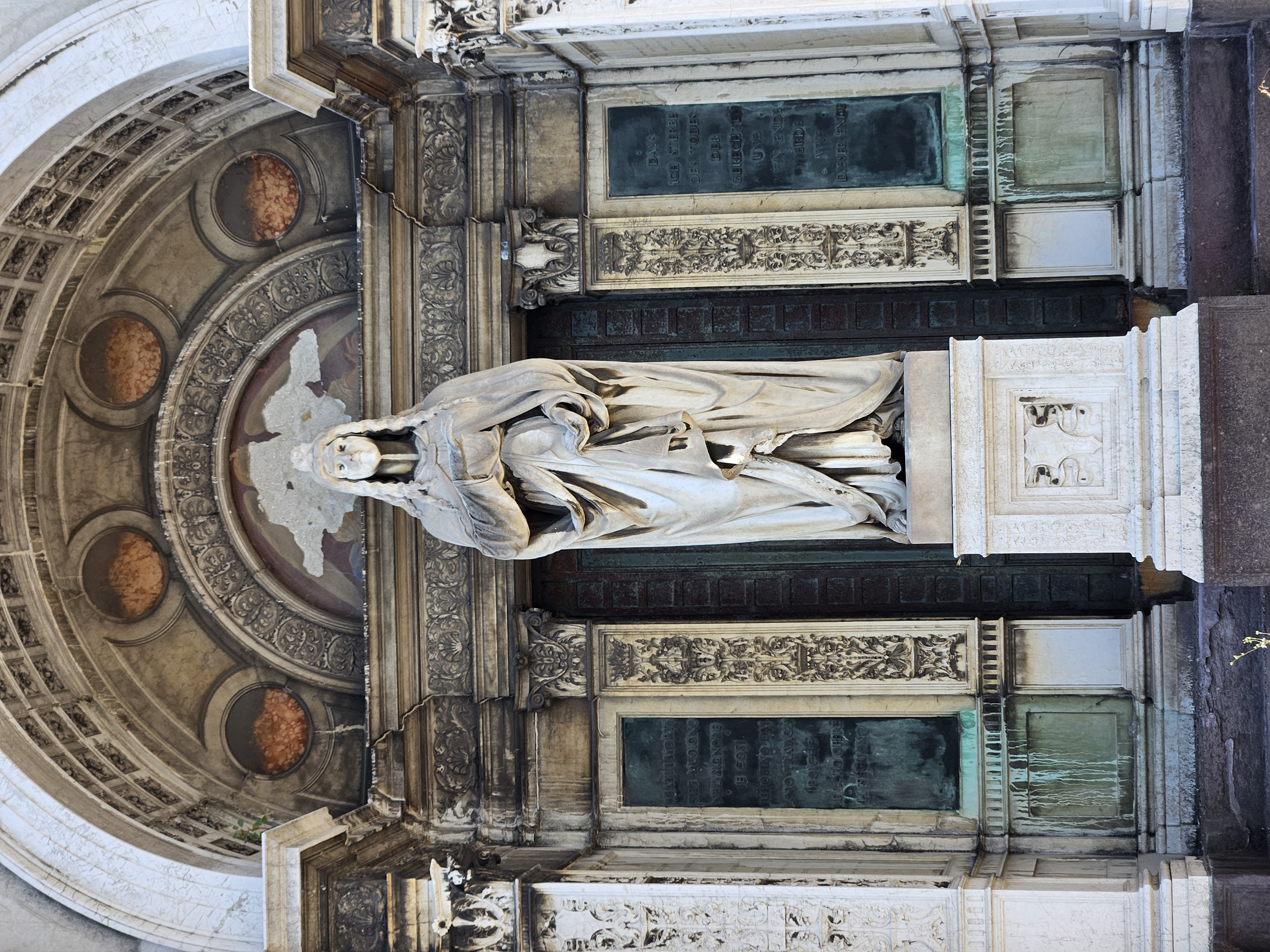
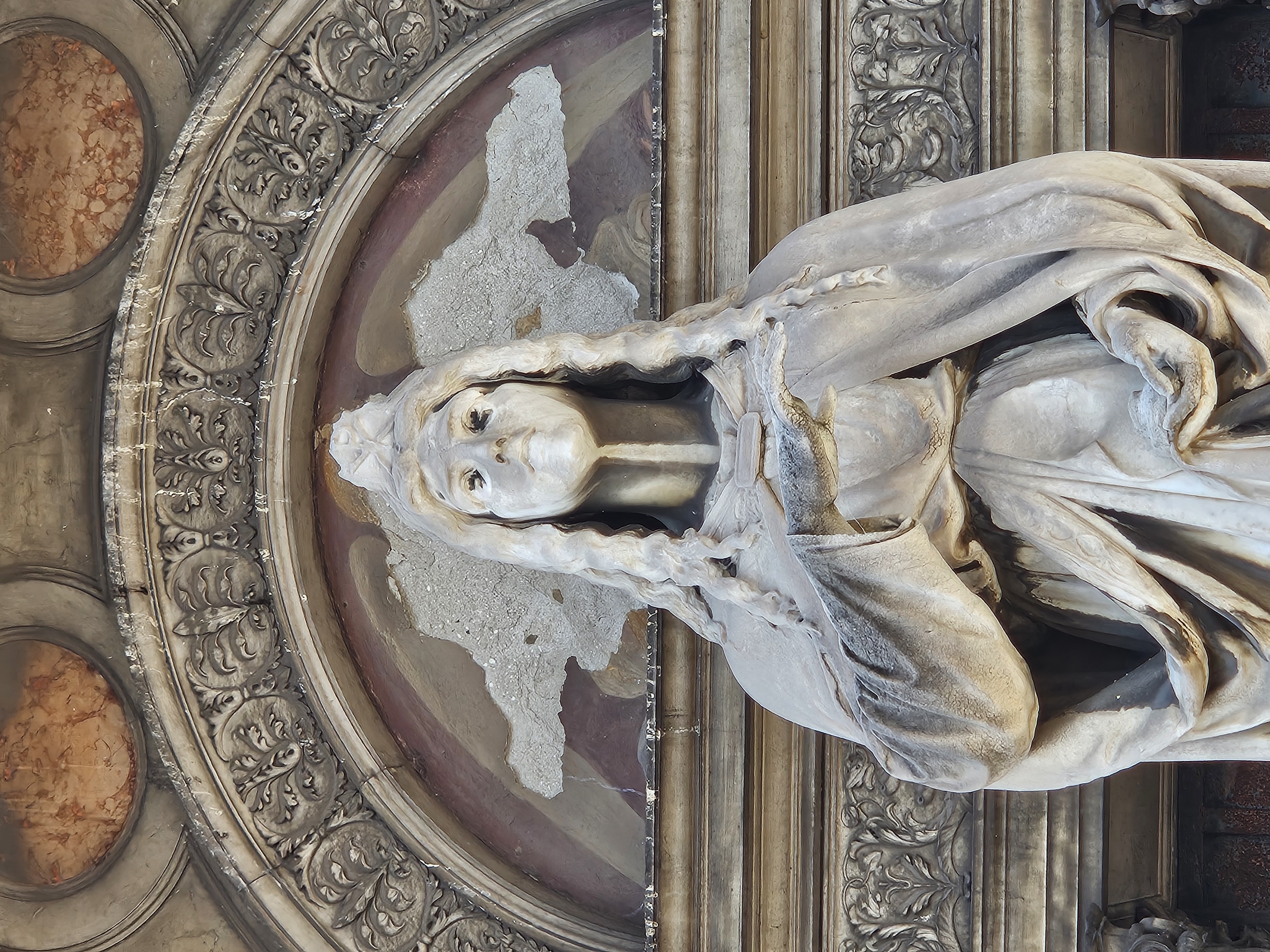
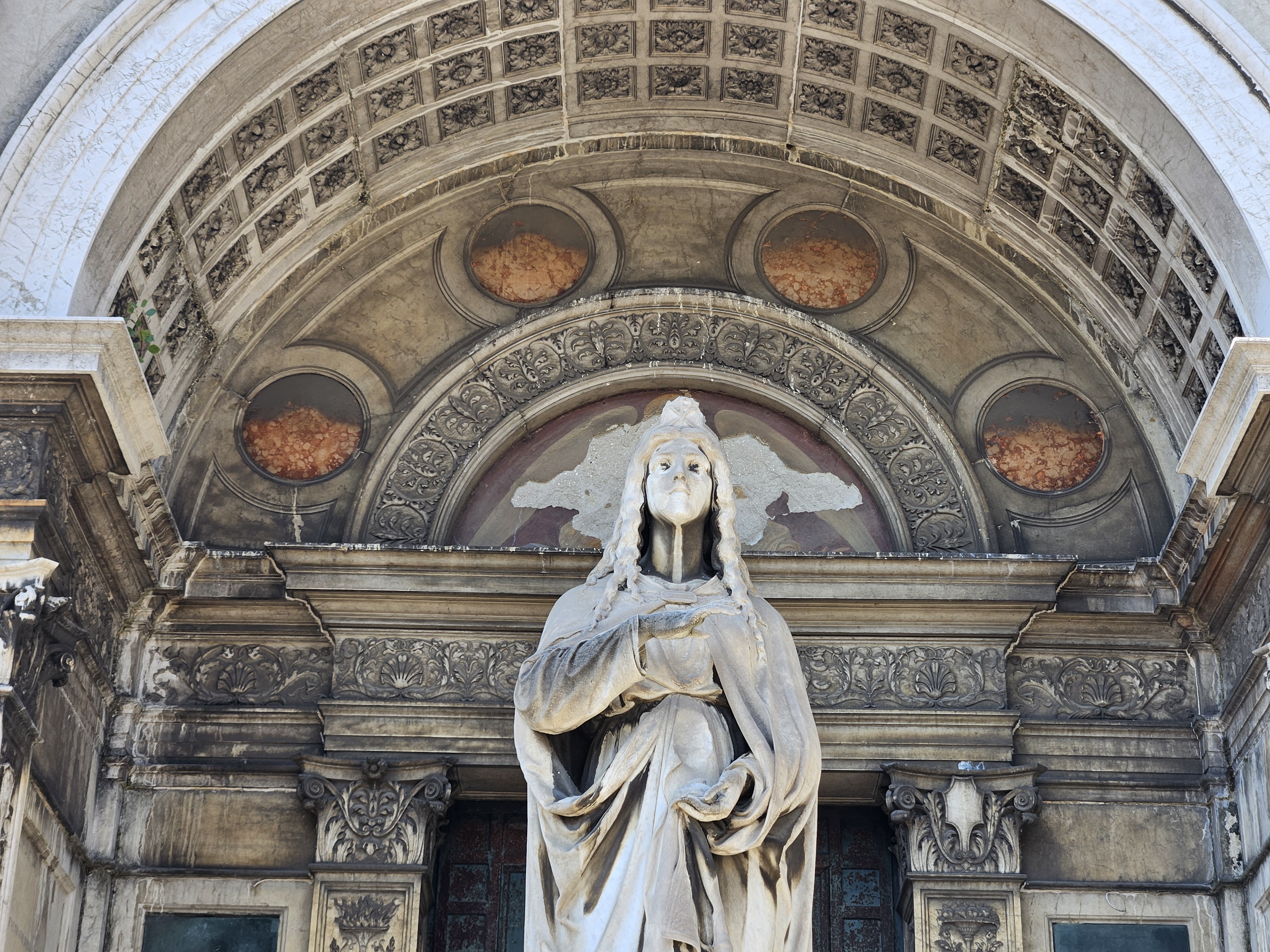
As I walked through these parts of the cemetery, it could not miss how full of symbols are architecture. Stars, circles, triangles, present states that are stories that architect Maciachini was prone to esoteria and masses, and that he consciously incorporated the symbolism of eternity, transience and internal knowledge in the design of this space.
Some tombs have symbols that do not work religiously. Some angels do not look at the sky already in the observer. All this creates a space that is not only a cemetery, but a maze of meaning. And although there are no confirmed "conspiracy theories", this part of the cemetery acts as a stage where time and space play some of their play.
This walk was not tourism. She was meeting her. Without a guide, no folder, just you and the time you don't have to chase.
The cemetery in Milan does not offer only monuments and names offers a feeling. And when he touches you once, you're coming back to his thoughts.
And that's why I'm not afraid to admit I enjoyed it. Although I was among the dead, I felt alive. Because art, silence and space as this reminds that death is not the end, but a story that continues, if someone remains to read it.


I hope you enjoyed reading and looking at the photos. I enjoyed making this blog, I hope you did too. Until next time, "Regards!"
Congratulations @sniki003! You received the biggest smile and some love from TravelFeed! Keep up the amazing blog. 😍 Your post was also chosen as top pick of the day and is now featured on the TravelFeed front page.
Thanks for using TravelFeed!
@for91days (TravelFeed team)
PS: Did you know that we have our own Hive frontend at TravelFeed.com? For your next travel post, log in to TravelFeed with Hive Keychain or Hivesigner and take advantage of our exclusive features for travel bloggers.
Thank you very much for the support means a lot to me 🤗
Hiya, @ybanezkim26 here, just swinging by to let you know that this post made it into our Top 3 in Travel Digest #2632.
Your post has been manually curated by the @worldmappin team. If you like what we're doing, please drop by to check out all the rest of today's great posts and consider supporting other authors like yourself and us so we can keep the project going!
Become part of our travel community:
Thank you very much for the support means a lot to me 🤗
You are very welcome @sniki003! it was well deserved. ☀️
We are already looking forward to reading more about your adventures!
You can check out this post and your own profile on the map. Be part of the Worldmappin Community and join our Discord Channel to get in touch with other travelers, ask questions or just be updated on our latest features.
Congratulations, your post has been added to the TravelFeed Map! 🎉🥳🌴
Did you know you have your own profile map?
And every post has their own map too!
Want to have your post on the map too?
- Go to TravelFeed Map
- Click the create pin button
- Drag the marker to where your post should be. Zoom in if needed or use the search bar (top right).
- Copy and paste the generated code in your post (any Hive frontend)
- Or login with Hive Keychain or Hivesigner and click "create post" to post to Hive directly from TravelFeed
- Congrats, your post is now on the map!
PS: You can import your previous Pinmapple posts to the TravelFeed map.Opt Out
Congratulations @sniki003! You have completed the following achievement on the Hive blockchain And have been rewarded with New badge(s)
Your next target is to reach 7000 upvotes.
You can view your badges on your board and compare yourself to others in the Ranking
If you no longer want to receive notifications, reply to this comment with the word
STOPCheck out our last posts: