Brain-computer bidirectionality.
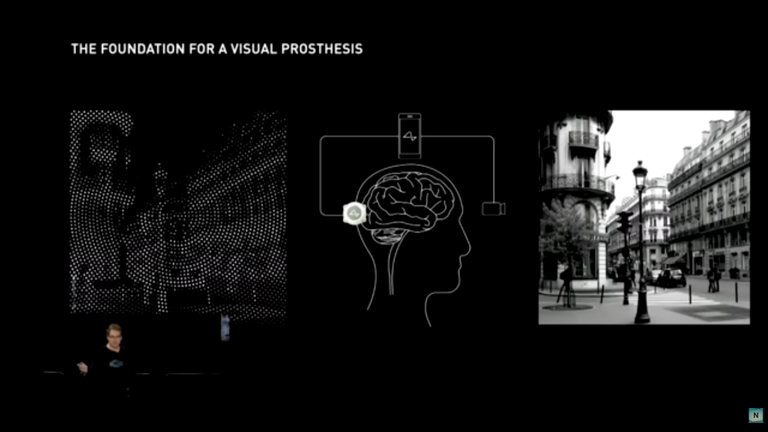

Neuralink is already attempting to transmit vision directly to the brain; the project is called Blindsight, and its goal is to use a brain implant to try to restore some level of visual perception to blind individuals. However, there is a specific detail that makes this technology particularly interesting. The concept involves creating vision without relying directly on the eyes. When we see something, the eyes are merely the starting point of the process: the retina converts light into electrical signals, which travel along the optic nerve to the regions of the brain responsible for visual processing; it is only there that these signals begin to transform into what we perceive as an image.
The great challenge lies in controlling many of those stimuli and transforming them into patterns the brain can interpret as useful information. While this might initially allow for the distinction of shapes, contours, or objects—or help someone navigate their surroundings—the underlying principle is far more profound. With Terry, we saw a machine attempting to learn how to interpret signals generated by the brain; with technology like Blindsight, the dynamic is reversed: the machine must figure out how to produce signals that the brain can interpret.
Posted Using INLEO
Thanks for your contribution to the STEMsocial community. Feel free to join us on discord to get to know the rest of us!
Please consider delegating to the @stemsocial account (85% of the curation rewards are returned).
Consider setting @stemsocial as a beneficiary of this post's rewards if you would like to support the community and contribute to its mission of promoting science and education on Hive.