
Cover of the October 1979 issue of Byte
I'm not sure if Byte was the first computer magazine but I think of it as the original computer magazine. It was around before home computers were even a thing. Nevertheless, Byte was covering "small systems" or microcomputers used by businesses and hobbyists starting in 1975. The October 1979 issue includes:
Foreground
- Tracing Your Own Roots - A type-in program to aid you in your genealogical research.
- Power Helps Analyze Electric Bills - A type-in BASIC program to help you analyze your power bill.
- Self-Refreshing LED Graphics Displays - A guide to building LED displays of various sizes including a 4x4 LED matrix.
- Interfacing The S-100 Bus With The Intel 8255 - The Intel 8255 is a programmable peripheral interface chip that could be used, for example, to interface to a printer.
- The XYZ Phenomenon: Stereoscopic Plotting by Computer - A way to print 3D images.

Table of Contents from the October 1979 issue of Byte
Background
- Picking Up The Pieces - A guide to recovering from floppy disk errors.
- Variables Whose Values Are Strings - A couple of methods for storing strings.
- IBM Compatible Disk Drives - The IBM PC was still in the future. IBM compatible in this case refers to the IBM 33FD 8-inch floppy drive which was originally create for the IBM 3740 Data Entry System.
- The TRS-80 Speaks - A guide to using BASIC to control the Speech Synthesizer Module for the TRS-80.
- Low Level Program Optimization - How to reduce the space required and execution time of your programs.
Nucleus
- Editorial - Designing a board for a 6809 processor.
- Letters - Letters from readers about light based communication, mapping phone companies, converting hexadecimal to ASCII, and more.
- Technical Forum - Implementing a finite state machine.
- BYTE News - A look at the future of the S-100 bus and competition from Apple, Radio Shack, Commodore, etc.; a new image sensor using a photo diode array; a new online service called The Source, automobile makers researching computer controlled cards; and more.

Back cover of the October 1979 issue of Byte
Read more: https://www.megalextoria.com/wordpress/index.php/2026/03/04/byte-october-1979/
Check out my other Social Media haunts:
Wordpress: https://www.megalextoria.com/wordpress
Tumblr: https://www.tumblr.com/blog/darth-azrael
Blogger: https://megalextoria.blogspot.com/
Odyssee: https://odysee.com/@Megalextoria:b
Rumble: https://rumble.com/c/c-2385054
Daily Motion: https://www.dailymotion.com/Megalextoria
Books I am reading or have recently read:
Harry Potter and the Chamber of Secrets by J.K. Rowling.
Thomas Cromwell: A Revolutionary Life by Diarmaid MacCulloch.
Harry Potter and the Sorcerer's Stone by J.K. Rowling.
Mine Monero in your browser!
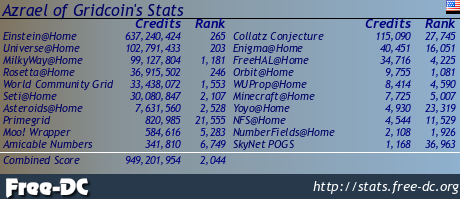
Earn Gridcoin while also helping various scientific projects by sharing your computer's idle CPU time!
It is interesting seeing these old magazines about computers and contrasting it with what we have today.
We live in the sci-fi of the past, but something like budget building computers never change.
Wao, that's really old. Older than me. 😁
!ALIVE
!LOLZ
a good flashback
https://bsky.app/profile/did:plc:ggtlieencodejd6phc7m3ea7/post/3mgltxfbtgc25
https://bsky.app/profile/did:plc:ggtlieencodejd6phc7m3ea7/post/3mgltxfbtgc25
The rewards earned on this comment will go to the author of the blog post.
@darth-azrael, I'm refunding 0.230 HIVE and 0.000 HBD, because there are no comments to reward.