Our Announcement Post gives you the highlights. This Deep Dive post covers the nitty-gritty details, with the buildings, resources, and changes landowners need to plan for.

Land 1.99 Update — Buildings, Worksites & Resources
Praetoria is growing beyond harvesting. The upcoming Land 1.99 update brings 8 buildings, 7 new worksites, and 32 new resources, connecting raw materials to refined goods, crafting, and new ways for players to work together.
Build a Foundry to turn ore into metal bars. Specialize a Mill in the foods your workers need. Put your Research to work creating blueprints, or open your buildings to other players through work orders. This release puts a substantial part of the Land 2.0 production chain into players' hands.
We are targeting Tuesday, December 8, 2026, for release, with QA testing planned to begin Monday, November 30. The release date may move if testing identifies issues that need more time.
This post covers the main changes and what existing landowners should prepare for. For formulas, recipes, costs, and the broader roadmap, explore the team's official Land whitepaper: The Secret of Praetoria.
Eight buildings—and a new way to produce
Worksites gather fundamental resources. Buildings take those resources and turn them into something more useful through queued work orders. Buildings can also advance through five levels, unlocking more capacity and faster production.
| Building | What it produces |
|---|---|
| Arcane Dispensary | Potions and Unbinding Scrolls |
| Artifice Assembly | Physical items, including Time Crystals, Phoenix Ashes, Capacity Fluxes, Fortune Tickets, Auction Marks, and Wagon Kits |
| Aura Lab | Aura |
| Sawmill | Planks |
| Blast Furnace | Elemental Stones |
| Runology Tower | Research and building blueprints |
| Foundry | Metal Bars |
| Mill | Elemental Foods |
Final artwork shown at building level 5.
| Arcane Dispensary | Artifice Assembly |
|---|---|
 |  |
| Aura Lab | Sawmill |
|---|---|
 |  |
| Blast Furnace | Runology Tower |
|---|---|
 |  |
| Foundry | Mill |
|---|---|
 |  |
Item availability depends on building level. For example, the Artifice Assembly unlocks Fortune Tickets at level 3, Auction Marks at level 4, and Wagon Kits at level 5. The Arcane Dispensary starts with Midnight, Lustrous, and Polymorph Potions, then unlocks Unbinding Scroll rarities as it advances.
The Mill and Blast Furnace specialize: choose one food or stone when construction begins, then add another specialty with each level. These choices are permanent, and a building can only fulfill orders for its selected specialties.
See building construction costs, refined-resource production costs, item production costs and unlocks, and building specialization.
Seven worksites unlock magical resources
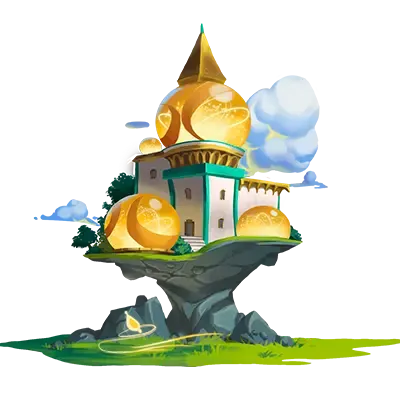
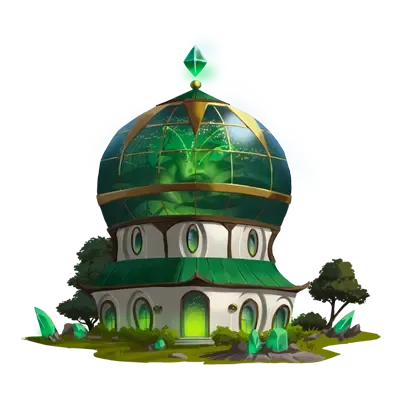
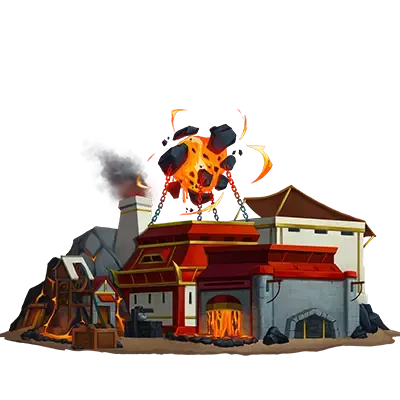
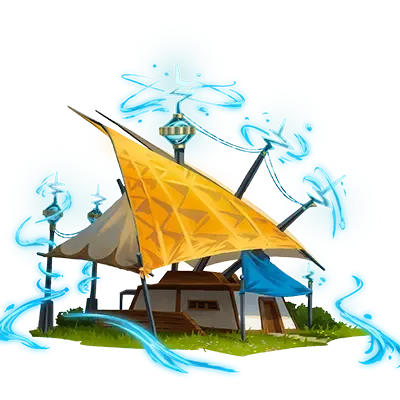
The new worksites harvest the magical resources available on suitable plots. Like Grain, Wood, and Stone, these resources accumulate between harvests according to their mint rates.
| Worksite | Resource |
|---|---|
| Sky Nimbus | Virtulium |
| Botanical Garden | Ulana Seeds |
| Ember Forge | Sparkstone |
| Storm Voltaic | Bottled Storms |
| Shadow Siphon | Reclaimed Souls |
| Weyr Pylon | Heliostones |
| Outpost | Essence |
| Sky Nimbus | Botanical Garden |
|---|---|
 |  |
| Ember Forge | Storm Voltaic |
|---|---|
 |  |
| Shadow Siphon | Weyr Pylon | Outpost |
|---|---|---|
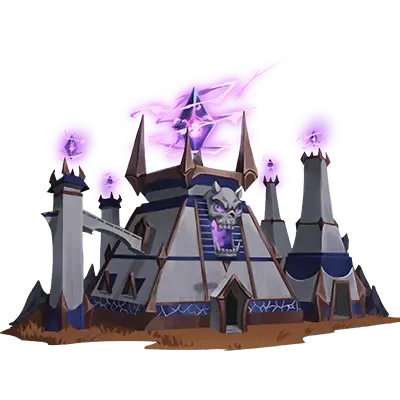 | 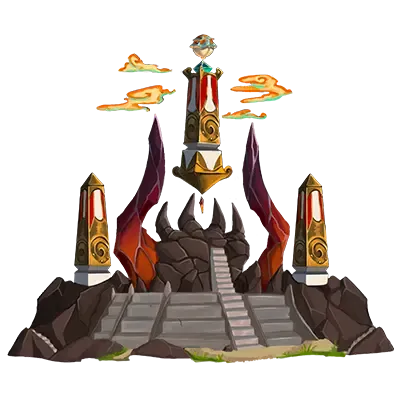 | 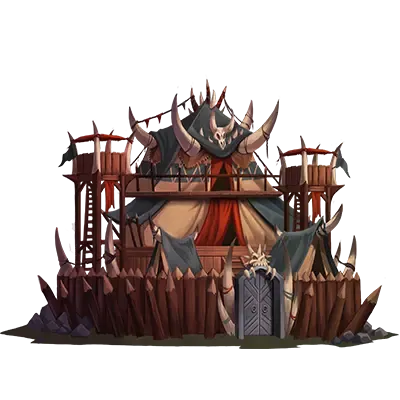 |
Magical resources
| Virtulium | Ulana Seeds | Sparkstone | Essence |
|---|---|---|---|
 |  |  |  |
| Bottled Storms | Reclaimed Souls | Heliostones |
|---|---|---|
 |  |  |

Inside the Outpost: a preview of the worksite used to harvest Essence.
See magical resources and worksite production rates.
Thirty-two new resources connect the economy
The new resource set includes:
| Category | New resources |
|---|---|
| Castle and Keep production | Trifoil Shards |
| Ores | Tin, Copper, Rhodium, Vanadium |
| Magical resources | Virtulium, Ulana Seeds, Sparkstone, Bottled Storms, Reclaimed Souls, Heliostones, Essence |
| Refined Wood | Planks |
| Metal Bars | Iron Bars, Tin Bars, Copper Bars, Rhodium Bars, Vanadium Bars |
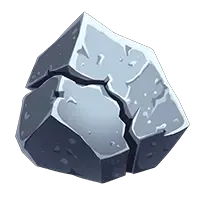
| Elemental Stones | Quartz, Limestone, Granite, Sandstone, Hematite, Obsidian, Basalt |
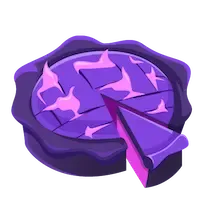
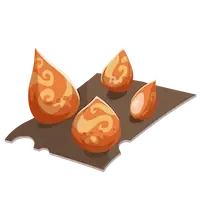
| Elemental Foods | Lathemeal, Elana Bread, Froxmash, Wrul Stew, Dekku Pie, Dreidak Bites, Karn Mix |
Ore Mines get a broader harvest
Ore Mines will produce all five ores, with random amounts and a chance to receive each type at harvest: Iron (common), Tin (uncommon), Copper (rare), Rhodium (epic), and Vanadium (legendary). Iron is an existing resource; the other four are part of the 32 additions.
| Tin | Copper | Rhodium | Vanadium |
|---|---|---|---|
 |  |  |  |
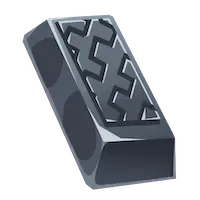
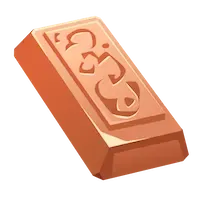
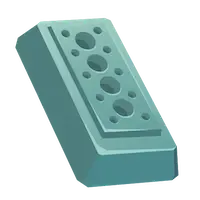
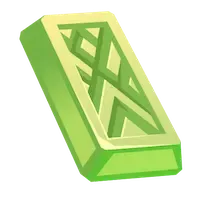
The Foundry refines ores into their corresponding bars; higher building levels unlock higher-rarity bars.
| Iron Bars | Tin Bars | Copper Bars | Rhodium Bars |
|---|---|---|---|
 |  |  |  |
| Vanadium Bars |
|---|
 |
See the resource catalog and how ore mining works.
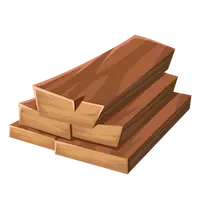
Sawmills turn Wood into Planks
The Sawmill turns Wood into Planks for the expanding construction economy.
Plan your building, workers, and food
Buildings introduce several important differences from worksites:
- Plot-based DEC staking: a building requires 50,000 DEC staked directly into its plot, rather than drawn from the regional worksite pool. Dark Discount can reduce this requirement. Keep enough DEC available in your account before beginning construction.
- An owned foreman: each building needs a card with Land abilities serving as foreman. The foreman and building level together determine the effective base Production Point (PP) cap; the lower limit applies. Without a foreman, the building has no productivity.
- Elemental Food: most building work orders consume the food matching the building’s terrain affinity. Mill work orders are the exception: workers eat Grain while producing Elemental Food. Building construction still requires Elemental Food; worksites use Grain.
- Upfront costs: construction materials, DEC costs, blueprints, and worker food are paid when construction begins. Work order ingredients and food are also paid upfront.
- Different card and boost rules: plot rarity does not boost building production. Runi cannot be used on buildings. Owned Land cards are eligible; rented or delegated Land cards are not.
Building construction uses base PP. Workers normally consume 0.0025 Elemental Food per PP for construction and most work order recipes, compared with 0.01 Grain per PP for worksites. Mill work orders use Grain instead; check the recipe tables for exact costs. Rationing and Light Rationing reduce work order food requirements, but do not reduce building construction food.
Read plot-based staking, foremen, food, and the full building/worksite comparison.
Terrain determines elemental affinity
A building's terrain determines the Elemental Food, Elemental Stone, and sometimes Magical Resource required for construction and production. This is separate from a plot's magical resource deposit.
| Affinity | Terrain | Food | Stone | Magical resource |
|---|---|---|---|---|
| Life | Plains, Hills | Lathemeal | Quartz | Virtulium |
| Earth | Forest, Jungle | Elana Bread | Limestone | Ulana Seeds |
| Fire | Mountain, Badlands | Froxmash | Granite | Sparkstone |
| Water | River, Lake | Wrul Stew | Sandstone | Bottled Storms |
| Death | Swamp, Bog | Dekku Pie | Hematite | Reclaimed Souls |
| Dragon | Desert, Caldera | Dreidak Bites | Obsidian | Heliostones |
| Neutral | Tundra, Canyon | Karn Mix | Basalt | Essence |
| Lathemeal | Elana Bread | Froxmash | Wrul Stew |
|---|---|---|---|
 |  |  |  |
| Dekku Pie | Dreidak Bites | Karn Mix |
|---|---|---|
 |  |  |
| Quartz | Limestone | Granite | Sandstone |
|---|---|---|---|
 |  |  |  |
| Hematite | Obsidian | Basalt |
|---|---|---|
 |  |  |
For examples, see elemental affinities.
Level up for more capacity and faster work
| Building level | Worker slots | Maximum base PP* | Queue slots | Work order PP discount |
|---|---|---|---|---|
| 1 | 10 | 20,000 | 3 | — |
| 2 | 20 | 40,000 | 4 | 10% |
| 3 | 30 | 60,000 | 6 | 20% |
| 4 | 40 | 80,000 | 8 | 30% |
| 5 | 50 | 100,000 | 10 | 50% |
Your foreman may impose a lower base PP cap. The work order discount reduces required production effort; it does not reduce ingredient or food costs. Some buildings also unlock new products as they level up.

A max-level Runology Tower in the development preview.
Blueprints and Building-in-a-Box
Construction and upgrades require a blueprint matching the building type and destination level. Blueprints are soulbound and single-use. Runology Towers produce them using Research and other required inputs.
Building-in-a-Box (BiB) offers another route. Existing packages detach from their plots into soulbound account tokens, usable on any plot you own. One BiB instantly constructs a level 1 building; three additional BiB upgrade it to level 2. BiB skips construction costs, including blueprints and food, but does not remove the plot's DEC staking requirement. It cannot be used for levels 3–5 or for worksites.
The first Runology Towers will need BiB to get started. Players without BiB can rent another player's Tower to produce their own soulbound Research and blueprints.
See blueprints, Building-in-a-Box, and the Building Quickstart Guide.
Work orders bring players' buildings together
A new Work Orders screen lets you select a product, quantity, and an eligible building you own or rent. Buildings process their queues in order, and completed output must be claimed.
Renting lets you use another player's production capacity for a fee instead of owning every building yourself. Compare capacity, completion times, and fees before placing an order: work orders cannot be canceled once submitted. Taxes and rental fees can reduce the output you receive, including leaving fractional amounts, so account for those deductions when ordering a whole blueprint.
Plots with buildings can still be traded, but their work order queues must be empty before listing. Any DEC staked into the plot stays with it when sold or transferred; it is not returned to the seller. Consider that attached stake when pricing a plot.
See placing work orders, claiming completed orders, and building rentals.
A clearer view of your land
Existing screens are being updated to support the expanded economy. A new resource-management sidebar helps you navigate your balances, while the regional Production Overview adds filters and building information.


Castles and Keeps gain Trifoil Shards
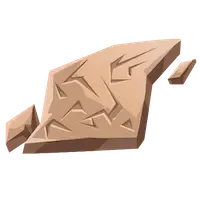
Castles and Keeps remain worksites, and begin producing Trifoil Shards, an input for Research production in Runology Towers. With equal PP, a Castle produces twice as many as a Keep.
You get Trifoil Shards when you Claim Taxes. They are not included in Harvest All, do not have the normal seven-day worksite accumulation cap, and are subject to the one-million-resource tax accumulation limit.
Castles and Keeps will also receive tax income from the new worksite resources and from items and refined resources produced through building work orders.
See Trifoil Shards and claiming taxes.
Totem fragment minting from Castle and Keep tax collections ends with this release. Any future opportunities to find additional fragments through Ancient Ruins Reconstruction belong to a later Land phase. See Totem Fragments for the broader plan.
What changes for your existing land setup?
Aura Labs and Research Huts transition
The existing Aura Lab and Research Hut worksites are being discontinued. Aura moves to the new Aura Lab building, and Research moves to Runology Towers.
At the first harvest after release, those old worksites transition to an appropriate natural-resource or magical-resource worksite, favoring a magical resource where one is available. Some transition during the release itself because their PP must be recalculated: plots with Land cards, or with an occupied or magical bonus. Those plots receive a final harvest automatically before transitioning.
The temporary magical and occupied plot bonuses are removed as their associated resources become available. SPS production, along with the final harvest of old Aura Lab and Research Hut worksites, requires Wood and Stone only; the Iron input is removed.
Permits become blueprints; crafting moves into buildings
Existing Aura Lab permits convert into level 3 Aura Lab blueprints, matching their Research cost. When an old Aura Lab worksite transitions, its permit is returned in that blueprint form. These blueprints are single-use, including when the building is later replaced.
The Artisan Quarter's Crafting and Permits tabs are removed. Current crafting products move to the Arcane Dispensary and Artifice Assembly, while Runology Towers provide building blueprints.
Aura becomes tradable
Aura becomes tradable and receives its own liquidity pool. Research remains soulbound. Liquidity pools for the new resources are planned to be available when the release is complete.
The liquidity-pool swap fee falls from 10% to 5%, with half of the fee going to liquidity providers and half burned, before any applicable regional reductions. See swap fees.
Land abilities update
- Bountiful Aura becomes Bountiful Essence.
- Bountiful Iron becomes Bountiful Ore, retaining its role of increasing Ore Mine output across all five ores.
- Toil and Kin bonuses from different bloodlines no longer stack together; the highest applicable bonus is used.
- Land abilities apply to buildings where relevant: Dark Discount reduces plot DEC staking, and Rationing/Light Rationing reduce Elemental Food for work orders, but not construction.
Join the Land Hall
See the new systems in action at the Land Hall on Tuesday, December 1, at 6:00 PM Eastern Time. Cryptomancer will join Clay and Dave, with time planned for a live demo followed by community questions.
Join the Land Hall on Discord.
Start planning your first building
Look at your plots, identify the resources they can supply, and decide where a building could fit into your production chain. Check terrain affinity, choose a foreman you own, set aside plot-staking DEC, and plan your blueprint and material requirements—or your BiB tokens.
You can build your own network or use rented buildings to fill the gaps. The Building Quickstart Guide walks through the process, and the official Land whitepaper provides the detailed rules.
This release is a major step toward the larger Land vision. Storage buildings, maintenance, the full deconstruction/salvage system, and the later Item and Spell Card phases are separate from this initial buildings release. Follow the whitepaper revision history for updates as testing continues.
What will you build first?
Disclaimer: All features, mechanics, resource requirements, costs, and release timing described in this post are subject to change based on testing.