
Seeing it all play out in slow motion.
There are three major technologies slogging along towards some kind of cohesive center.
All of these technologies thus far are largely quite optional within society:
- 3D printing
- AI
- Crypto
While all technology is technically optional to the individual there are many things that almost everyone has in the developed world. Most people have a car. Most people have internet and a dataphone. Most people have access to running water and soap. I'm starting to think that 3D printing, AI, and crypto will one day be added to this list of widespread adoption, but the way this is happening seems to be different than the tech of the past.
Walled gardens going up at the dumbest time?
The entire WEB2 model is crumbling and many companies are scrambling to do whatever they can to fill in the cracks appearing within the foundations. The Internet works best and synergizes the most when data is freely accessible and open to the world. We are currently seeing a reversal of this. Many companies are trying to cut off access to the outside world by limiting their APIs. Often the reason given for this is "bots", but bots have been around for decades. I've personally seen it happen on Discord and several other social media sites.
The problem is that WEB2 and AI do not mix.
AI is scraping the entire internet to train its LLMs. WEB2 says, "sure go ahead and connect to the API for free no problem." It's been that way for a long time, but this strategy is no longer working because there is simply too much automation out there looking to scrape all the free data. Free data is a thing of the past, and that's part of why WEB3 is so important.
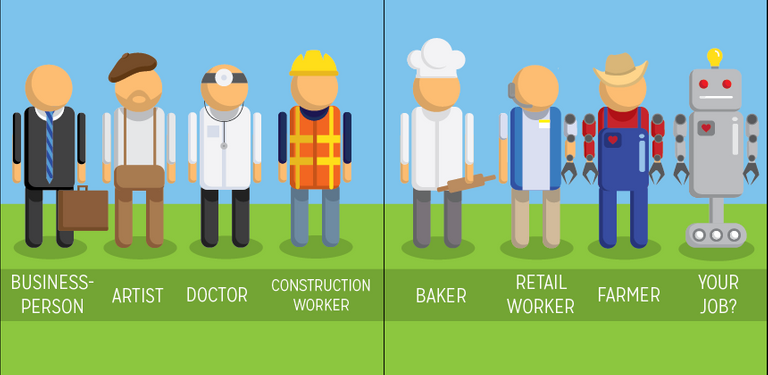
Pay for service, but also get paid for service.
The ultimate idea behind the WEB3 model is that you have to pay for bandwidth. At face value it sounds like a downgrade; it sounds like a retrograde back into WEB1 subscription models. However the main difference is that WEB3 allows the user to generate more value than they expend when following the rules of the protocol. At least that's the theory anyway. Thus far it is not a stretch to claim that WEB3 is still an unimplemented myth. We can see now with the current tech stack that it could be a thing (and often claim we've already solved the problem) but the reality of the situation remains illusive.
Think of it like a toll road.
You might have to pay to drive on a road, and that might be annoying to some people, but also you're driving to work on that road and the toll ensures that unnecessary traffic stays to a minimum. Crypto works in largely the same way: we have to pay the toll to use the network so that traffic stays within acceptable levels. Decentralization isn't cheap.
WEB2 is trying to make the switch but it's very difficult and awkward. The best example I can give here are the content creation sites that share ad revenue. We can see this on Youtube, Twitch, X, and elsewhere. Very popular accounts can make a quite decent living, but lesser known accounts hardly make anything. In a way it's somewhat like a job lottery jackpot situation. Of course the fact that these WEB2 services maintain domineering control of their products and ban users on a whim is not very conducive to a thriving stable economy that people can count on.
Boom and busts
Both AI and crypto have had massive boom and busts over their lifecycle. I believe this is due to the digitally abstract nature of these technologies. Everyone can see the potential and there is no physical limit imposed on the tech. That creates massive speculation and greed to flood both industries. 3D printing is different because creating that physical product requires raw materials that often kill most, if not all, of the profitability. That being said 3D printing may end up being the lynchpin that allows us to completely break away from goliath centralized production.
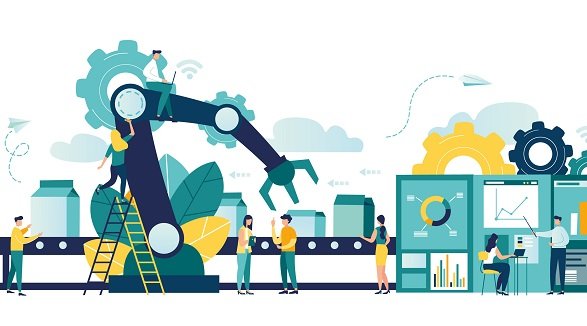
Own nothing and be happy, peasant!
People in power tend to want to stay in power. This is just human nature. However, we're reaching an irony inflection point. If power consolidates too much the entire economy breaks because that same economy depends on money cycling through itself just like a heart needs blood to pump. If we automate out all the jobs what's the endgame here? Give money away with a UBI to prevent companies that provide mass services from going out of business? Somethings tells me making citizens even more dependent on the state's handouts isn't going to end well.
Light at the end of the tunnel?
Looking at what AI has been achieving, especially in the realm of software development, shows me that these three technologies can theoretically decentralize production in a way that nothing else could have possibly attempted before. Those who hate AI, of which are many, have a grievance with how many jobs are being automated out of existence and the "theft" of intellectual property. At the same time AI is allowing smaller teams or even solo engineers the ability to accomplish tasks that were previously impossible before. Those who create good prompts and organization become their own one-man army. Sure, that means code monkeys are in a bit of trouble, but it also means that creatives have the world at their fingertips.
3D printing is largely the same idea but still needs a lot more work to become viable. The main concept is that printing physical products with a little magic gun means that one person or entity can build things that were previously impossible. Crypto is the same story. Before crypto you needed to be a literal country to print money and define the rules of that asset. Now one person can do it.
Wen convergence?
My theory is when these technologies begin to work together we'll see the real magic happen. Imagine being able to 3D print an object who's blueprint was developed with AI, and then selling product or blueprints through some kind of crypto. It can get crazy pretty fast once the secret sauce for these things is contained within a working template that anyone can copy and know how it works up front. It's the development of such things that take forever to get to, and often require a bit of luck as well to create something viable.
Conclusion
WEB2 companies can see the writing on the wall. Free data is no longer a working model, and it only gets worse as time ticks forward. What these companies don't understand is that hunkering down and cutting themselves off from the internet with more walled gardens is only going to work in the short term. Eventually WEB3 will come around and make them completely obsolete. Unfortunately it's hard to imagine the CEOs of these mega-corporations being able to make a transition to the new tech stack. Intellectual property is a thing of the past, and all the real value is stored within the community itself. It's essentially the opposite of what we have now, which is why it's taking so long to come to fruition. Slowly, then all at once.
Have a look at what xTool is offering with AI integrated design tools where you can put in a prompt for a design, have it LLM AI enhanced, edit it, then have a visual AI create a design that you can have CNC lasercut with the Metalfab and then you weld together with the laser welder.
Extraordinary stuff. You don't even need to be "creative" in the artsy way, just have an idea about what you want.
It is already possible with 3D printing (incl tough resin SLA), this sort of home laser CNC machine & a regular CNC machine to create almost any product, including unique engineering solutions, that you might ever want.
Its just a matter of finding the off the shelf standard bits on Ali Express etc and then creating parts to link them together to do what you want. With Open Source the electronics and software can be endlessly adapted.
In my experience, once you get outside of mainstream products and into specialised areas it is often cheaper to design & build your own bespoke product that meets your specific needs than to buy something off the shelf.
In specialised physical product areas prices are vastly more than actual production costs because there is such regulatory overload and marketing is very expensive low volumes.
Your reply is upvoted by @topcomment; a manual curation service that rewards meaningful and engaging comments.
I have been giving this a lot of thought lately, and watching the US close the Strait of Hormuz is a terrible sign of things to come. This is an engineered economic catastrophe in the making, and the US will not be unscathed. Medication, fertilizer, and all plastic are petroleum products, not just fuels. As dozens of refineries around the world are mysteriously being destroyed by fires, this makes the coming catastrophe even worse.
On top of this coming economic nightmare, countries all over the world are turning the internet into a surveillance tool as bad as cell phones.
That will not be true when every word we say is permissioned because our use of the internet requires KYC. I've been reading that people are pushing for operating systems to be KYC, which means even using a computer will be dependent on permission from overlords. You mentioned Goolag banning people on a whim, and this actually dramatically understates the problem that is social credit scores are going to be applied to everyone, and if we don't say the things the Big Tech gods want to hear, we will be silenced and cut off from not just the internet, but computing devices themselves.
I am unwilling to tolerate such tyrannical oppression, and have begun an initiative for Community Association to Manufacture consumer Products (CAMP) and I intend to enable us to crowdfund producing products from shampoo to cars, without being dependent on our benevolent overlords largesse, because I don't think they have any. I think they're deliberately crashing the economy to do us dirty, and I think we'll have to make an economy that works for us whether they like it or not.
Highwaymen used to kill travelers and take their money. I think Big Tech are planning to kill most of us and take our wealth from our cold, dead fingers. I am making moves locally to get some industrial production going, and expect that things will get a lot worse economically very soon. Things like fuel, electricity, medicines, food, and every product that requires fuel to make - which is all of them - are going to become, first, much more expensive, and second, far less available at any price. The lack of fertilizer is causing a catastrophe for farmers right now, as many cannot get the fertilizer they need to plant crops now, and this means that a lot of food will not be available this fall. I live in dairy country, and it's impacting people here today. I also paid $.20 more per gallon for gas today than I did one week ago, and if that keeps up, things are going to get desperate, because trucks that can't get diesel can't ship goods. Diesel is ~$7 a gallon now, and that adds to the price of every item shipped. While they are still being shipped.
If the KYC requirement for even booting up a computer becomes law, I expect censorship and social credit score managed by AI to eradicate free speech completely. These are fatal to entrepreneurial development, and we will not like the Web3 Palantir may allow us to use, if we're good enough in their eyes to participate.
Hedge. Plan B, C, D, and so forth may be necessary to have any quality of life if the Strait of Hormuz stays closed, and alternative communications may be necessary very soon, for everyone that has ever said anything Peter Thiel doesn't like. They've been harvesting our data for a long time, and I don't think that they won't use what we've said against us. I'm pretty sure that's why they spied on us and kept the files until now, so they could use our words against us.
I hope I'm completely paranoid, and nothing at all bad happens to anyone ever. But I wish in one hand and work with the other, and the only hand that ever turns up anything worth having is the working hand.
Thanks!
Edit: I thought to share this video about what's going on in the ME as a result of the war and blockade of the Strait of Hormuz, such as the total collapse of Dubai, the desperate situation of the UAE, which is exiting OPEC as of Friday, and the larcenous avarice of the Trump empire. A pic from that video:
I actually have been thinking that 3D printing and AI have a real kinship. Remember when it first came out and it was just people making useless junk to sit on their desk? Like a novelty. It's only now that we are starting to see some real useful stuff being created. I feel like AI is following a similar path.