Hi Everyone,

I discussed in my two posts, Multi-Tiered Society – Part 1: Engineered Two-Tiered Society and Multi-Tiered Society – Part 2: The Real Multi-tiered Society, the nature of our multi-tiered society. In this post, I want to discuss elements of Western justice systems.
In 2020, my post, Crime – Prevent, Fix, or Manage, I discussed crime in the context of prevention and reduction. In this post, my focus shifts to fairness and ensuring crimes are actually solved.
Law and Order
When a crime has been believed to have been committed, it is the role of law enforcement (police forces) to apprehend suspects and the role of prosecutors to charge suspects of the alleged crime.
In the US and most European countries, law enforcement and prosecution come under the Executive Branch of Government. In the UK, they are considered partially under the Executive Branch. For prosecutors, authority leads back to the Executive Branch in terms of the Attorney General. For law enforcement, authority sits with mayoralty and Police and Crime Commissioners; these elected officials are almost always connected to the main political parties.
Government oversight of public law enforcement can cause conflicts of interest when Government officials commit crimes. Law enforcement cannot be trusted to investigate themselves or the people providing the oversight. This is a problem inherent to most systems. The problem presents itself differently for dictatorships than Western-style democracies.
In dictatorships, law enforcement could be permanently blocked from pursuing crimes of their leadership. This is because there is no formal path to obtaining a new leadership, which would authorise law enforcement to act against them. The most likely paths to a change of leadership are coups and revolutions. This is often done through military or militia uprisings. This usually leads to the imprisonment and sometimes execution of the leader/leadership (CTech). The former leadership are not apprehended because of crimes committed but because they are the enemy.
The new leaders, if they follow a similar dictatorship model, will continue to provide themselves legal immunity until another authoritarian leader takes over and imprisons them for being the enemy. Western Governments could back the new leaders. They might be allowed to have a dictatorship model, or they might be forced to adopt a quasi-Western-style democracy. Either way, they become puppets of Western Governments. Once again, they will gain legal immunity until they disappoint their masters.
In Western-style democracies (two-party systems in particular), pursuing the crimes of ‘elected’ officials is not straightforward. Ministers and the more prominent Members of Parliament are the face of leadership. I discuss in my post, Would You Rather Live in a Democracy or a Dictatorship?, in some detail the nature of Western-style democracies.
Most forms of dictatorships and other authoritarian regimes are fundamentally unstable. Western-style democracies offer greater stability, as they provide the people with an avenue to remove the people they believe to be their leaders. There is no need for coups or revolutions. This gives the real leaders greater security. I discuss this at length in my post, Multi-Tiered Society – Part 2: The Real Multi-tiered Society. The real leaders of Western countries are mostly unknown to the public. We can speculate that most belong to families with generational wealth.
The ‘elected’ officials, the face of leadership, are protected from prosecution while in positions of ‘authority’ and normally after they have left these positions. Many of them move on to prestigious positions within NATO, the IMF, the UN, or the EU bureaucracy; this is arguably a reward for pushing the Establishment’s agenda when they were in national leadership. The leaders who do not push the Establishment’s agenda are accused of various scandals; this often finishes their careers. However, few are prosecuted. Former French President Nicolas Sarkozy might be an exception.
Sarkozy was sentenced to five years for various corruption charges. He served only 20 days of this sentence. The conditions of his release are not strict. He is not on house arrest. He no longer needs to wear an angle bracelet. He is barred from leaving the country and not permitted to speak to certain officials (France 24).
Sarkozy is a prominent ‘right-wing’ figure in France. He promoted and supported conservative values (e.g., accused of being anti-LGBT+). He had a strong stance against immigration (e.g., accused of racism). He supported economic liberalism (e.g., wanted to reduce public expenditure). These are positions that are against the current EU strategies of promoting ‘woke’ values, high immigration from third-world countries, and high wasteful Government expenditure. Removing him from the picture in that aspect makes sense. However, it is far more likely that he is a controlled opposition figure than someone the Establishment wants to be permanently disposed of.
Nicolas Sarkozy remains a prominent figure on the ‘right-wing’ of politics in France. He is working with populist ‘right-wing’ Presidential candidate Marine Le Pen to rally the ‘right’ behind her (Il Foglio). If Le Pen wins the election to become President, Sarkozy will likely receive amnesty or a pardon.
Marine Le Pen has been convicted of embezzlement. This ruling initially disqualified her from running for President. However, her sentence has been reduced to three years, two years suspended and one year with an electronic tag. She is yet to wear the tag.
The convictions against both Le Pen and Sarkozy are widely considered political witch-hunts against the two leaders because of their policies. If the Establishment really wanted to silence them, they would not have given them such a large platform to still express their views. Their role is to stir anger on the ‘right-wing’ side of politics towards the ‘left-wing’ side. Are they guilty of the crimes they have been convicted of? To the Establishment it does not really. Perception of guilt for the ‘left’ and the perception of a witch-hunt for the ‘right’ are more important.
The politicians are the puppets, and the celebrities are propagandists of the Establishment. Just like the politicians, celebrities are given protection from prosecution. The Epstein files are an example of how both groups are protected.
The Establishment tend to reward criminal activity rather than desire to punish it. It allows them to control their puppets and propagandists. This protection does not always last for all of them. The Establishment will expose their propagandists if it is beneficial to them. This could be to silence them. If this is the case, the propagandists will cease to receive any further attention from the media. This could be to push a narrative. If this is the case, the propagandist will continue to receive plenty of media attention.
In the UK, in 2026, the witch-hunt of the ‘right’ has become increasingly prominent.
British actor and comedian Russell Brand was convicted of rape and has been sentenced to ten years and six months. The alleged rape took place over sixteen years ago (ABC News). In recent years, the media have claimed that Russell Brand supports ‘far-right’ agendas. It is unlikely the Establishment is finished with Russell Brand yet. More possible 'victims' are emerging (The Guardian) and he and his wife might be investigated for a message she read out on Brand's behalf (The Mirror).
British journalist and activist Tommy Robinson has been convicted of two counts of harassment causing fear of violence. He still awaits sentencing but could be imprisoned for up to 10 years (The Guardian). Tommy Robinson is a prominent nationalist, who openly criticises mainstream political parties and the Establishment. He frequently speaks out against mass immigration and the Islamification of the UK. The media frequently call him far-right.
Tommy Robinson’s friend Danny Tommo pleaded guilty on charges of criminal damage for slashing the dinghy of a group of illegal immigrants. Tommo has been denied bail and still awaits sentencing (Rebel News). He could also face a sentence of up to ten years. Danny Tommo has very similar beliefs to Tommy Robinson.
The most recently accused celebrity is David Walliams (comedian, actor, and author). He has been accused of grooming young girls. These allegations go as far back as 2003 (Al Jazeera). David Walliams has been accused of promoting ‘far-right’ conspiracy theories. He has a podcast called ‘MSM is the Matrix’. Interestingly, his shift towards the ‘right’ only occurred after the allegations were made public about him.
All of the above have been prosecuted to push the ‘left’ narrative that the so-called ‘far-right’ are bad and the ‘right’ narrative that there is a witch-hunt of those on the ‘right’. Are all the above guilty, or have they been wrongly prosecuted? To the Establishment it does not matter.
I would strongly argue that almost all puppet leaders are willing participants. This is not always the case for less prominent politicians, celebrities and activists. In many cases, they are unwilling participants. They use their fame to promote things they believe in that happen to align with the Establishments’ agenda at the time. When they are no longer useful, they lose prominence. When they become a problem, they are silenced. When the Establishment needs to stoke division, they sometimes resort to punishing or publicly humiliating them. This is most likely the case for Russell Brand.
UK politician, Nathan Gill pleaded guilty to accepting bribes from pro-Russian Ukrainian politicians to say favourable things about Russia in the European Parliament. For this, he was sentenced to ten years and six months (Reuters). He would have been sentenced to at least fourteen years if he had been found guilty (Judiciary UK). He most likely pleaded guilty because he had an unwinnable case. The Establishment wanted him out of the way because they need to maintain the narrative that Russia is evil.
We should also consider the tragic case of Peter Lynch. He was not a politician or famous. He was at a protest outside a Holiday Inn, which was housing illegal immigrants. The protest turned into a riot. He was arrested for holding a placard accusing the Government of corruption and allegedly shouting at police. He was pressured to plead guilty by his court-assigned barrister. He was sentenced to two years and eight months. This is an absurd sentence for merely using language perceived as offensive.
Two months into his sentence, he committed suicide (The Expose). He was called racist by the media and the courts. He was called racist again in prison for calling immigrants ‘rapist and paedophiles’. This led to him receiving a disciplinary report, which is believed to have played a factor in his suicide (The Star).
It appears police are encouraged to act aggressively towards people over the use of words, which may cause offence. It also appears many police officers do not hesitate to use force. In 2023, an autistic 16-year-old girl was dragged from her home and arrested because she made a comment about a police officer looking like her lesbian nan (Daily Mail). This is not surprising considering that police officers are more likely to possess psychopathic traits than the general population (Psychology Today).
Other noticeable figures who have faced dubious convictions and detainment in recent years include:
- Alex Belfield ('right-wing' UK radio host) was convicted of aggravated stalking and sentenced to five years and six months.
- Julian Assange (anti-establishment) pleaded guilty to espionage and was released on time served.
- Calin Georgescu ('right-wing' Romanian politician) has been charged but not convicted of three crimes relating to fraud, inciting a coup, and fascist propaganda. He could face up to twenty years in prison.
- Chay Bowes (anti-Ukranian leaderhip, Irish journalist) has not been charged with any crime but has been heavily sanctioned (frozen assets in the EU) by the EU for allegedly spreading disinformation and Russian propaganda (probably facts).
Public law and enforcement has become as much about ideology as it has about handling crime. The UK has the highest number of arrests of any country in the world relating to social media posts. In 2025, there were over 12,183 arrests relating to social media posts. This is twice that of the next highest country (Belarus) (UK Fact Check Politics).
Public law and enforcement is being heavily weaponised in Western countries, such as the UK, to push agendas and narratives and punish those who question it.
Jury Trials
Jury trials are often associated with Western justice systems. This is only partially true. The modern jury trial originated in England. It spread to most of its settler colonies; these included the US, Canada, Australia, and New Zealand (Wikipedia). Trials were common across many European countries after the 1789 French Revolution when European countries adopted the Napoleonic code (Britannica). Most European countries no longer practise jury trials or only partially include jurors in some trials (The Legal Guide).
In the UK and US, it is claimed that jury trials are an integral part of a democratic society. Only the people themselves should have the right to deprive people of their liberty. It is also considered a safeguard against state tyranny. In the US, jury trials are protected by the Sixth and Seventh Amendments in the Constitution.
Jury trials are deeply flawed, and the arguments for them have lost considerable validity.
It should not be a question of who was the right to remove a person’s liberty, but if a person/s is guilty of the crimes that they have been accused of. It should also not be assumed that removing a person’s liberty is the only method of dealing with someone who has committed crimes. A person’s guilt should be determined by evidence. The people best able to interpret that evidence should be the ones that determine the guilt of the accused.
Jury trials do not offer a reliable safeguard against tyranny. There is little to no transparency regarding how juries reach their verdicts. Aggressive jurors could use manipulation or bullying and intimidation tactics to influence other jurors who oppose them. For non-jury trials, judges are allowed to disclose the reasons for the verdict they have given, thus creating far greater transparency and a better safeguard against tyranny.
Juries typically consist of people with no legal background. In the US, people with legal backgrounds are typically excluded from juries through the selection process. In the UK, people with legal backgrounds are prohibited from being on a jury. The jurors do not have a thorough understanding of the law. They may not even have any understanding of the law. How can a jury determine someone’s guilt if they do not fully understand the nature of the crime the defendant is accused of?
A lack of legal background also affects how the jury is able to interpret the evidence presented to them. This includes both physical evidence and testimonies of witnesses. A juror’s lack of legal knowledge and experience of court proceedings makes them vulnerable to persuasive and skilful lawyers (prosecution or defence).
Juries are strongly biased in favour of wealthy defendants. This is because they have better representation. They often have more preparation time for trials; this is because their defence can find reasons to delay trials and wealthy defendants are likely to be granted bail, which gives them a better environment for them to prepare (News and Politics).
The wealthy often hire trial consultants. They help present a core narrative that is clear, memorable, and persuasive to jurors. Trial consultants prepare and coach witnesses on how to respond to questions. They conduct pre-trial research that sometimes includes mock trials. They study jurors’ behaviour and body language to determine if a change in approach is required.
In the US, trial consultants can play a key role in jury selection. Their role can lead to the selection of a jury that is more sympathetic to their client, thus giving them a better chance of winning (Trial Odyssey and The Atlantic).
The clever manoeuvring of a good defence team or even a highly skilled prosecutor is far less effective in a non-jury trial. Judges are far less likely to fall for their tactics and less likely to be emotionally moved by witness testimonies. Some judges may have biases, but a panel of randomly selected judges are less likely to have the same biases.
According to the National Judicial College, judges agree with the verdicts of juries roughly 75% to 80% of the time. According to a study from Northwestern University, juries in the US reach the wrong verdict in one of every six cases. In another study, the National Center for State Courts estimated that there was a 25% chance a factually innocent person (the methodology used to determine this is explained in the paper) would be convicted by a jury. This level of accuracy is low considering what is at stake for people’s lives. A wrong conviction either way means the real perpetrator remains free to commit more crimes. A wrongful guilty verdict also means an innocent person is locked up.
Jury trials are significantly more time-consuming and expensive than non-jury trials. More time is needed to select jurors, to explain evidence in a format that jurors can understand, and for jury deliberations. Longer trials are more expensive than shorter trials. Longer trials also lead to delays in other trials, thus creating long backlogs. This occurs in both the UK and the US.
Replacing a jury with one judge may not offer much of an improvement. The Northwestern Study indicated that overall judges were more likely to reach an accurate judgement than a jury but were more likely to wrongly convict than a jury. It estimated that judges would wrongly convict 37% of the time. Therefore, a panel of independent judges (five or more) from both the private and public sectors would greatly improve the chances of reaching an accurate verdict.
Conclusion
My previous posts regarding crime have focused on achieving outcomes based on the assumption that the right perpetrators and victims have been identified. The system has a duty to perpetrators, the victims, and the society in general. Rehabilitate the perpetrators, provide justice for the victims, and provide protection to society in general.
Before we can even discuss the above approaches, we need a system that accurately determines the right perpetrators and victims of crimes. For this to be ever possible, the structure at the top of the systems needs to be completely changed. After that has been achieved, a fairer process to determine guilt can be better explored.
The Sapien Loop Series
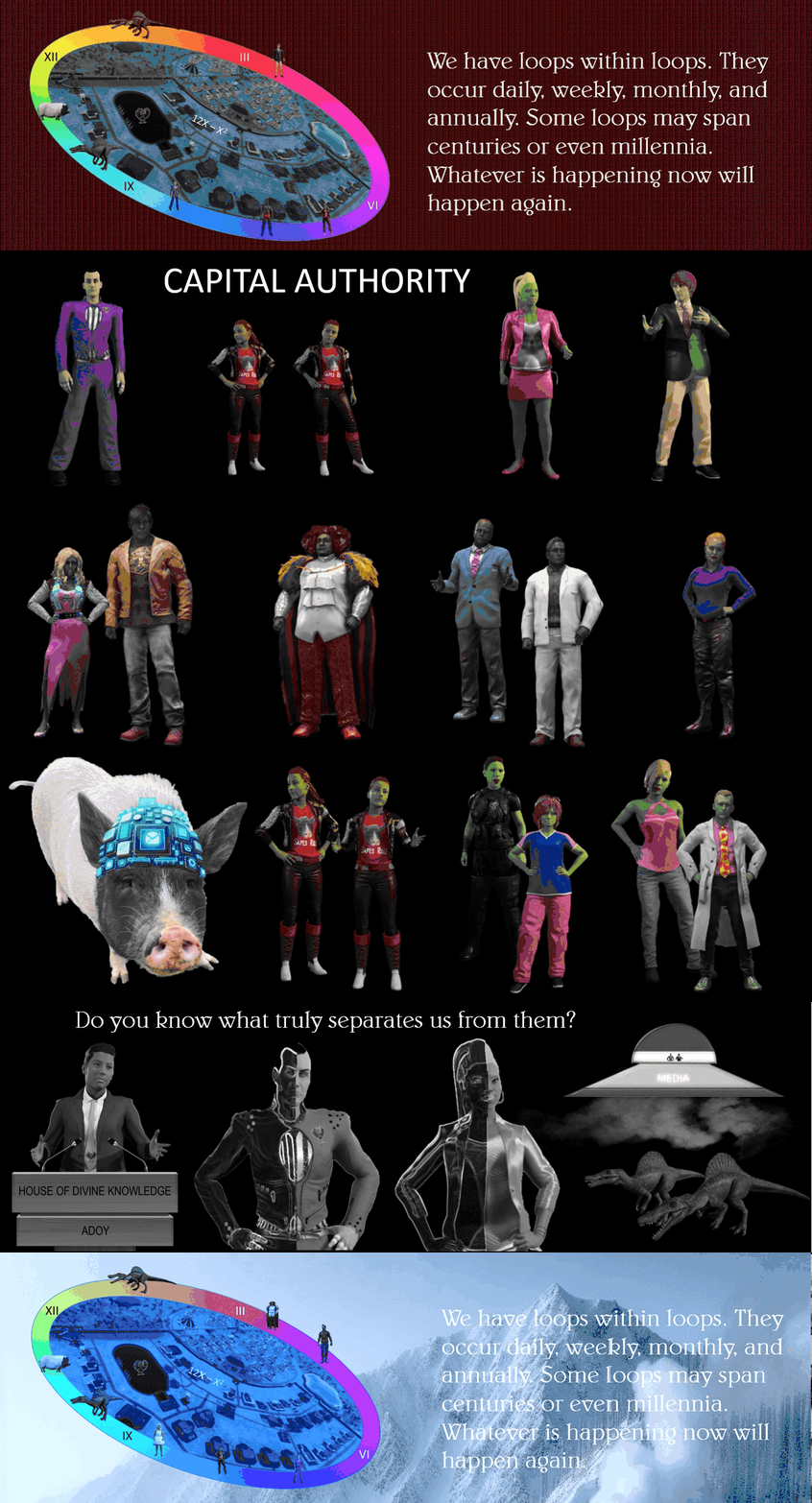
I have written a trilogy of books titled Sapien Loop. The first in the series is Sapien Loop: End of an Era, the second is Sapien Loop: Frozen in Time, and the third is Sapien Loop: Worlds Collide. I published the whole series as ebooks on Amazon, and I have posted completed chapters to my @captainhive
In 2025, I wrote a short stories book about some of the characters and their adventures. This book is now available on Amazon. I have also posted these stories to my @captainhive account.
Brief Summary of Sapien Loop: End of an Era
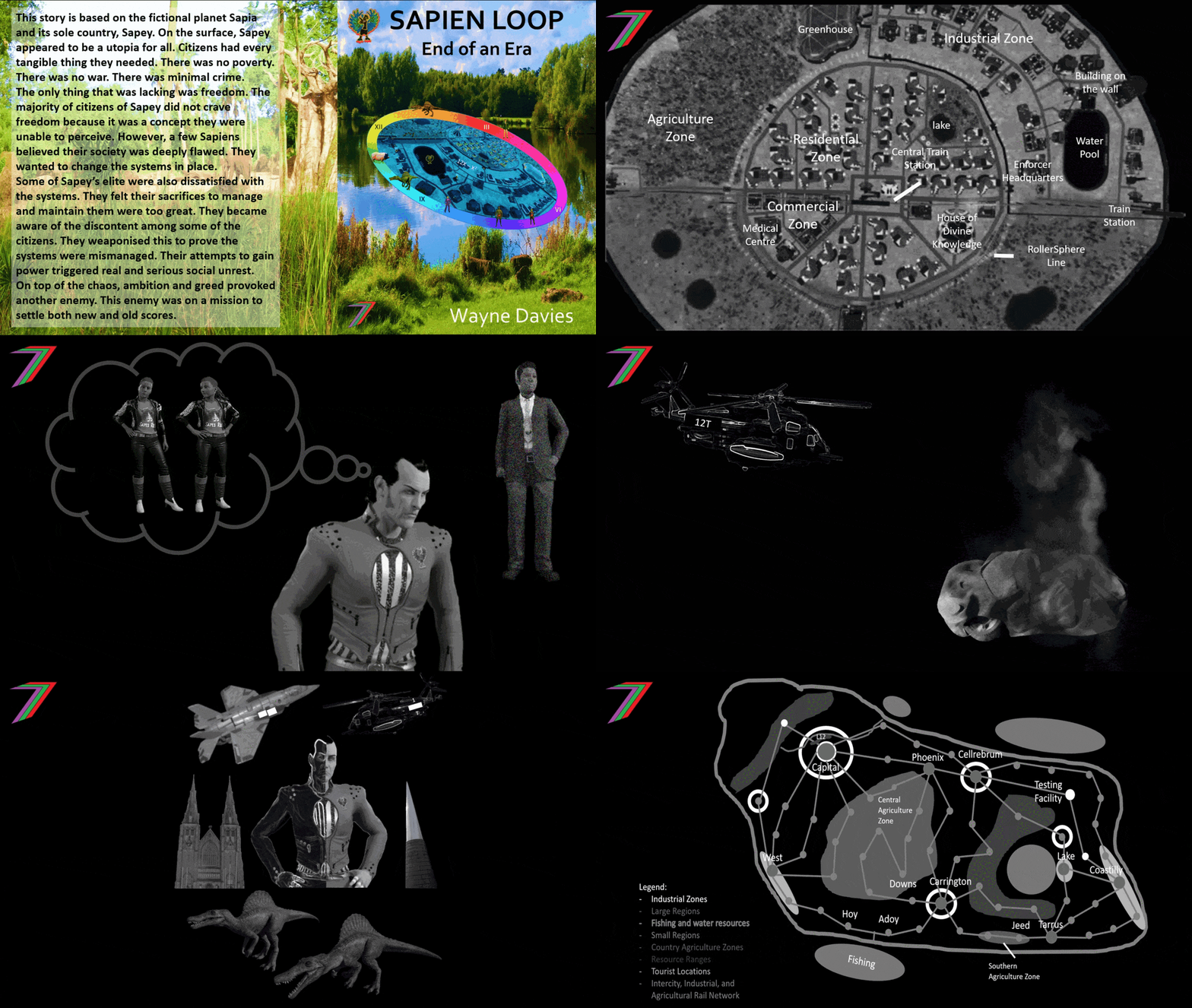
This story is based on the fictional planet Sapia and its sole country, Sapey. Sapey is portrayed as a form of utopia for all its citizens. No poverty. No war. Almost no crime. Opportunities for all.
This was enough for most citizens, but not all. In one of the small regions, some of the citizens had become discontent. They felt something important was missing in their lives. Their discontent did not go unnoticed. Some of the Sapey elite wanted to weaponise this discontent to gain more power. This created more chaos than they anticipated. This led to further widespread social unrest.
On top of the chaos, ambition and greed provoked another enemy. This enemy was on a mission to settle both new and old scores.
Brief Summary of Sapien Loop: Frozen in Time

This story is based six years after the original story. The Downs Region is still suffering from a serious health crisis caused by the contaminated water. The main characters are desperately trying to find a cure for the illness that has been caused by the water.
One of the main characters has discovered frozen humanoids in hidden chambers. It appears they have been frozen for a long time. These chambers connect to a vast network of tunnels. While exploring the tunnels, one of the frozen humanoids disappears. It appears he has been stolen.
The story takes a step back in time to tell the story of the frozen humanoids. How and why were they frozen? This part of the story also explains the fall of ancient Sapey and the birth of the Sapiens. Can those from the past be able to coexist with those from the present?
Brief Summary of Sapien Loop: Worlds Collide

Sapien Loop: Worlds Collide continues the story directly after the events of the second book. Orcilla and Yassmay continue their journey to find help. In doing so, they encounter a dissident group from the underground world.
Tiberius is secured as the puppet leader for the underground Linap. He is being used to control the surface world from the Downs Region. Tiberius is unhappy with this arrangement and desires to be fully in control.
Resistance has formed to take back the Downs Region from Tiberius and the underground Linap. They aim to turn the underground population against Tiberius. If that fails, their only hope is to join forces with the dissident group Orcilla and Yassmay encountered.
All worlds may be destined to collide. Will Sapey finally be free of tyranny, is it destined to be destroyed, or is it locked into another loop of oppression?
Hive: Future of Social Media

Spectrumecons on the Hive Blockchain

The bit about law enforcement not being able to investigate itself really stuck with me, since that is the part nobody in power ever seems keen to fix.
It is to their benefit, so they won't fix it. We need greater transparency and proper checks and balances. Our systems don't allow for it.
it is pretty telling how rarely high ranking officials actually face any real consequences when things go wrong
The system is designed that way.
Yes it is really important to hundred percent determines correctly the perpetrators and victims of the crimes
One hundred percent is going to be impossible. However, we can do much better than what we have now.
There is a lot of injustice happening in the world because of the process that is not fully fair to the victims or to the suspects
It fails badly, but that's mostly by design.
Maybe the real justice system is a secret club where only the rich can pay the membership fee
It's more complicated than that.