Por supuesto que no iba a dejar que acabara el año sin hacer uno de mis dulces favoritos, aunque esta vez con toque muy personal. Los cascos de guayaba o la guayaba en almíbar, como también es conocido este exquisito postre, es un plato delicioso, uno de mis preferidos después del casco de toronja, pero estos cascos de hoy tienen un detalle en particular que quise experimentar, y es que llevan miel y limón.
Hello, friends. Greetings to all. With great pleasure, I return to this community to share this end-of-year recipe with you.
Of course, I couldn’t let the year end without making one of my favorite sweets, although this time with a very personal touch. Guava shells, or guava in syrup, as this exquisite dessert is also known, is a delicious dish—one of my favorites after grapefruit shells. But today’s guava shells have a particular detail I wanted to experiment with: they include honey and lemon.

La miel y el limón, además de ser alimentos clásicos, son excelentes remedios naturales. La miel, con propiedades antibacterianas y suavizantes, calma la irritación de garganta. El limón, rico en vitamina C y antioxidantes, ayuda a combatir infecciones, juntos alivamuan gripes y malestares. En un post anterior sobre el jugo de guayaba, hablé mucho sobre sus propiedades y otras cosas relacionadas con esta fruta, de manera que no voy a repetir lo que ya se dijo, aunque aún así, siempre se puede abundar en el tema.
Honey and lemon are not only classic foods but also excellent natural remedies. Honey, with its antibacterial and soothing properties, calms throat irritation. Lemon, rich in vitamin C and antioxidants, helps fight infections. Together, they relieve colds and discomfort. In a previous post about guava juice, I talked extensively about its properties and other things related to this fruit, so I won’t repeat what’s already been said, though there’s always more to explore on the topic.

La guayaba es una fruta tropical de piel verde y pulpa rosada o blanca, aromática y jugosa. Originaria de América, se cultiva en climas cálidos. Su sabor es dulce con un toque ácido, ideal para comer fresca o en jugos, mermeladas y postres. Este es un dulce perfecto para aprovechar la fruta completa. Con la pulpa y la cascara se pueden gacer jugos, batidos y mermelada.
Guava is a tropical fruit with green skin and pink or white flesh, aromatic and juicy. Native to the Americas, it is grown in warm climates. Its flavor is sweet with a hint of acidity, ideal for eating fresh or in juices, jams, and desserts. This sweet treat is perfect for using the whole fruit. The flesh and peel can be used to make juices, smoothies, and jam.

Rica en vitamina C (más que los cítricos), también aporta fibra, vitamina A y antioxidantes. Sus hojas se usan en infusiones medicinales para dolencias digestivas y también sirve para secar lesiones en la piel cuando se hierve y se utiliza para bañarse. Es una fruta económica y muy nutritiva, presente en muchas gastronomías latinoamericanas y asiáticas.
Rich in vitamin C (more than citrus fruits), it also provides fiber, vitamin A, and antioxidants. Its leaves are used in medicinal teas for digestive ailments and can also be boiled and used for bathing to dry skin lesions. It is an economical and highly nutritious fruit, present in many Latin American and Asian cuisines.

A veces es importante hacer pequeñas innovaciones en la cocina, flachazos diferentes, para alejar el aburrimiento de comer lo mismo y de la misma forma, hay que romper con la rutina. De manera que aquí les dejo mi receta.
Sometimes it’s important to make small innovations in the kitchen, try different twists, to avoid the boredom of eating the same thing in the same way. We must break the routine. So here’s my recipe for you.

INGREDIENTES:
· 2 kg de guayabas maduras pero firmes (preferiblemente de pulpa rosada, dan mejor color).
· 1 libra de azúcar (puede ser blanca o morena, la morena da un sabor más profundo). Utilizaré blanca.
. 1 limón.
. Un vaso de medir arroz lleno de miel (160 ml)
· 1 y 1/2 litro de agua (aproximadamente).
. Una pizca de sal.
Es importante utilizar una olla grande de fondo grueso para que no se pegue. Yo usaré la olla multipropósito.
INGREDIENTS:
· 2 kg of ripe but firm guavas (preferably pink-fleshed, for better color).
· 1 pound of sugar (white or brown; brown adds a deeper flavor). I’ll use white.
· 1 lemon.
· One rice-measuring cup filled with honey (160 ml).· 1.5 liters of water (approximately).
· A pinch of salt.
It’s important to use a large, thick-bottomed pot to prevent sticking. I’ll use the multi-purpose pot.


ELABORACIÓN:
· Lavar bien las guayabas y pelarlas con cuidado, tratando de hacer cortes finos a la cáscara para que los cascos queden lo más gordos posible.
· Córtalas en cuartos y proceder a sacar la masa con una cuchara.
PREPARATION:
· Wash the guavas well and peel them carefully, making fine cuts to the skin so the shells remain as thick as possible.
· Cut them into quarters and scoop out the pulp with a spoon.


. Sacarle el jugo al limón y colocarlo en un recipiente, evitando que se mezcle con la resina natural porque esto da un sabor amargo.
· En la olla grande pon el agua y agrega el jugo de limón y la miel, en ese orden. (Disolver bien ambos, esto para que cuando se echen los cascos tomen un sabor firme y uniforme).
· Juice the lemon and place it in a container, avoiding mixing it with the resin, as this gives a bitter taste.
· In the large pot, add the water, then the lemon juice and honey, in that order. (Dissolve both well so the shells absorb a firm, uniform flavor.)


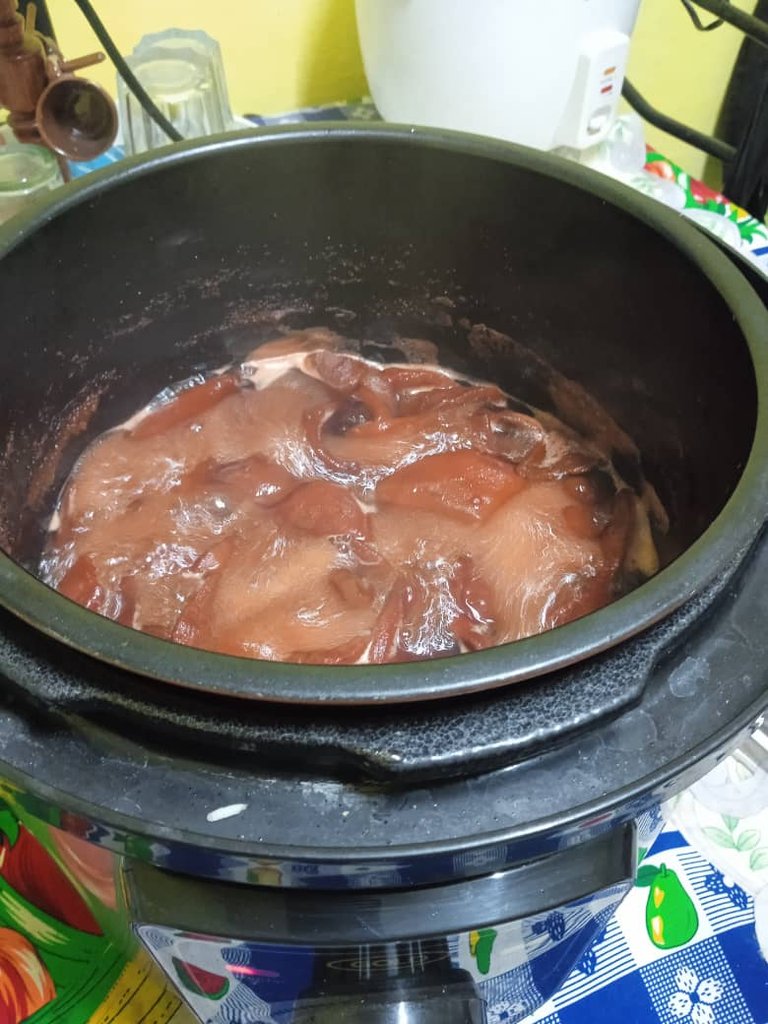
. Echar los cascos, luego el azúcar y la pizca de sal.
· Cocina a fuego alto hasta que los cascos estén blandos, luego a fuego medio en busca de que seque y haga el almíbar.
. Es importante no remover para que los cascos no se deshagan y estar atentos porque en un descuido se puede quemar el dulce.
· Add the shells, then the sugar and a pinch of salt.
· Cook over high heat until the shells soften, then reduce to medium heat to reduce and form the syrup.
· It’s important not to stir so the shells don’t fall apart, and to stay attentive because the sweet can burn if neglected.


· Cuando ya esté el punto del almibar (ni muy espeso ni muy líquido) retirar del fuego y deja enfriar.
. Servir y degustar.
Los cascos de guayaba caseros tienen un sabor incomparable a los industriales. Son un verdadero manjar y con el toque de limón y miel mucho más, se los garantizo.
¡Tengas todos un feliz fin de año e inicio del
· When the syrup reaches the right consistency (neither too thick nor too runny), remove from heat and let cool.
· Serve and enjoy.
Homemade guava shells have an incomparable flavor compared to industrial ones. They are a true delicacy, and with the touch of lemon and honey, even more so—I guarantee it.
May you all have a happy end of the year and a wonderful start to 2026!



Gracias por visitar mi blog
Texto e imágenes de mi propiedad
Thanks to visite my blog
Text and imagen are my own

 |  |
|---|
Se ve exquisito
Y si que lo está. Jjj. Abrazo
Thank you so much.
Amiga, me encantan tus recetas tan cubanas, tan criollas.
!LADY
View or trade
LOHtokens.@neuropoeta, you successfully shared 0.1000 LOH with @kpoulout and you earned 0.1000 LOH as tips. (2/4 calls)
Use !LADY command to share LOH! More details available in this post.
Muchas gracias. Abrazo
Ami me encantan tanto los casco como la mermelada de Guayana y si se ha vuelto una tradición colocar este dulce en la cena de fin de año.
Saludos y espero que recibas un feliz Año Nuevo .
Muchas gracias. Abrazo grande y bendiciones.
Casquitos de guayaba, qué delicia. Yo no les echaba miel (no se me ocurrió) y tampoco limón. Casi nunca tenía. Jjjj
Jjj. Esos ingredientes le dan un toque especial y sabroso. Abrazo.
We appreciate your work and your publication has been hand selected by the geography curation team on behalf of the Amazing Nature AN Community. Keep up the good work!
Thank you so much.
Nunca los he probado con miel y limón, bueno eso creo nunca he visto cuando los hacen pero puedo decir que soy fans de los casquitos, los buñuelos, dulce de leche en cualquier versión, torrejas, yemitas de huevo, mermeladas, merenguitos, etc.
Una delicia.